





Wood Pulp Sponge and Scouring Pad Composite
Wood Pulp Sponge and Scouring Pad Composite from FoamTech. Made from natural wood pulp cellulose, factory-direct with custom printing, die-cut shapes, and eco packaging for own-brand programs.
Product Details
The Wood Pulp Sponge and Scouring Pad Composite is made from natural wood pulp cellulose and holds many times its dry weight in water, produced on our own line for eco-focused retail and own-brand programs.
- Fully Biodegradable Natural Fibers: Crafted from premium plant-based cellulose fibers, providing a fully sustainable, zero-plastic cleaning solution that composts naturally
- Dual-Action Cleaning Efficiency: Combines a durable scrubbing pad layer for lifting stubborn food residues with a highly absorbent wood pulp base for fast wiping and rich foaming
- High-Performance Rapid Absorbency: Advanced open-pore cellulose fiber structure absorbs water instantly and dries fast to inhibit bacterial growth and prevent sour odors
- Non-Scratch Multi-Surface Protection: Safely removes grease, grime, and baked-on stains from delicate surfaces without leaving scratches
- Factory Direct OEM/ODM Customization: Direct manufacturer supporting custom die-cut shapes, tailored sizes, custom sponge and pad colors, private logo branding, and customized retail packaging
Plant-Based Cellulose Sponge vs Plastic Sponge Cloth
| Specification | This FoamTech Sponge | Generic Alternative |
|---|---|---|
| Material origin | Natural wood pulp cellulose, plant-based | Synthetic polyester/PU foam |
| Absorbency | Holds many times its dry weight in water | Lower saturation, drips quickly |
| End of life | Cellulose breaks down naturally after disposal | Persists as plastic waste |
| Scrubbing | Gentle wipe with optional scouring layer | Varies; often needs a separate pad |
| Best use | Dishes, countertops, wipe-and-dry routines | General light cleaning |
| Biodegradation | Breaks down in 4-6 weeks after disposal; zero microplastic fiber shedding | Persists as microplastic waste |
Comparison provided for sourcing reference only. Magic eraser is a registered trademark of its respective owner. FoamTech is an independent OEM/ODM manufacturer and is not affiliated with, sponsored, or endorsed by any trademark holder.
Related Sourcing Guides
- Microplastic Regulations: Why Brands Are Shifting to Biodegradable Dishcloths – regulation drivers behind the shift to plant-fiber cleaning products
- OEKO-TEX Standard 100 for Cleaning Sponge Importers: What Class II and Class IV Actually Mean – what the OEKO-TEX classes mean for your market compliance

Application Scenarios
1. Two Working Faces Bonded Into One Item
An absorbent wood-pulp body is bonded to a scouring face across the full contact area. The pad side lifts dried food and grease film; flip it and the cellulose body carries the water and wipes the loosened soil off. One item replaces the pair of tools most kitchen drawers end up holding.
2. The Layer Grades Are Chosen Separately
Because the body and the face are specified independently, the same composite can be built as a gentle version for coated cookware or a heavier version for stainless, cast iron, and baking trays. Tell us what your market actually cooks with and we will set the face grade to match.
3. Kitchen, Outdoor and Hardware Channels
The format sells across supermarket houseware, camping and outdoor retailers, barbecue accessory ranges, and hardware catalogues, because it reads as a tool rather than a consumable. Bulk cartons and printed multi-packs are produced from the same line.
4. Layer, Size and Print Set to Order
Face grade, body density, block dimensions, layer thickness ratio, printed sleeve, and pack count are all produced to order. We hold the tooling so a reorder reproduces the approved sample.

FAQ
Q1: How are the two layers held together?
A: The scouring face is bonded to the cellulose body across its whole area during forming, not stitched or edge-glued. That is what stops the corner lifting after a few hot-water cycles. Bond strength is checked on the line, and we recommend a body thickness based on how much water you need the sponge to carry.
Q2: Which side should we use on what?
A: The scouring face handles dried food, grease film, and stubborn marks on stainless, enamel, and cast iron. The cellulose body wipes up the loosened soil and does the everyday plate-and-glass pass without marking. Rinsing between the two stops grit being carried onto the delicate surface.
Q3: Does the composite stay flat after repeated soaking?
A: The body is a formed cellulose block rather than a loose fibre mat, so it returns to shape when squeezed out and does not curl at the corners. If a customer needs the assembly to hold a specific thickness in use, tell us the duty level and we will set the layer ratio accordingly.
Q4: Which certifications and compliance documents can you provide?
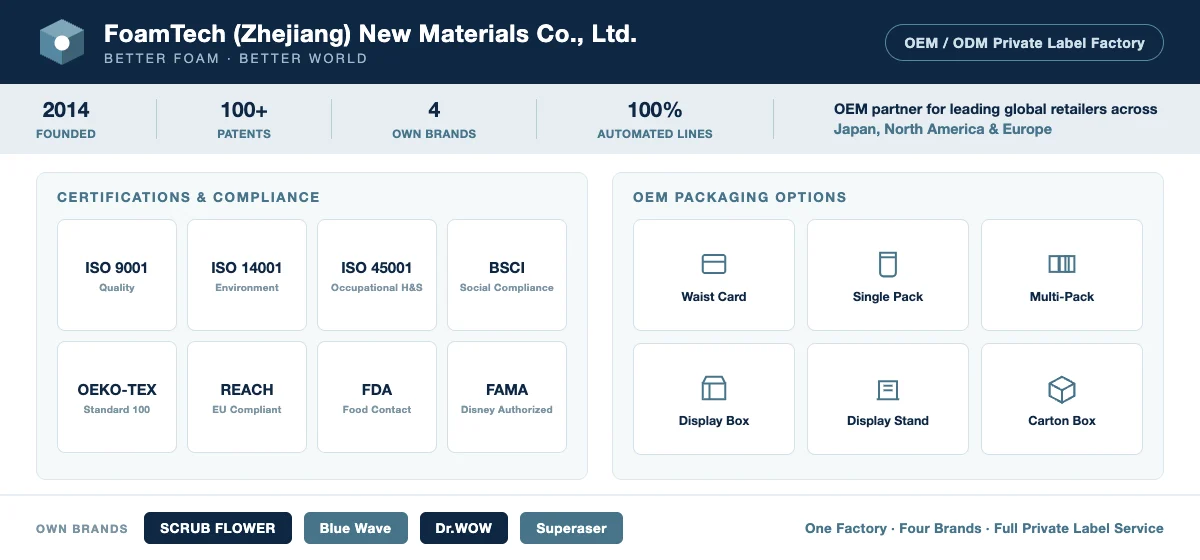
A: FoamTech operates ISO 9001, ISO 14001, and ISO 45001 certified management systems. OEKO-TEX Standard 100 test reports, EU REACH compliance documentation, and an MSDS on request. Social compliance is audited under BSCI, and we hold FAMA authorization for licensed merchandise programs.
Q5: What can be customized?
A: Scouring face grade, cellulose density, layer thickness ratio, block size and shape, printed sleeve or card, and pack count. Face and body combinations are set per SKU so a two-strength range ships as one order.
Q6: What is the MOQ for bulk and custom orders?
A: Unbranded bulk composites start at 1,000-3,000 pieces depending on size. Private-label runs with printed packaging typically start at 10,000 pieces. A pre-production sample covering both layers is supplied for approval.
Related Product
-
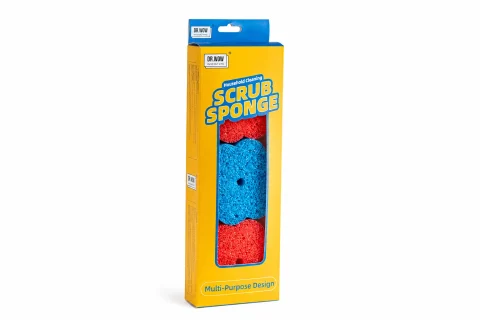
Tricolor Gift Box Set Melamine Sponge
-
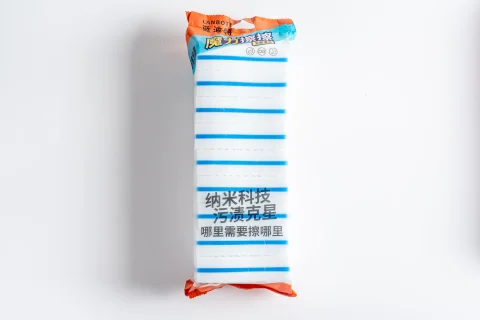
Assorted 10-Piece Multipack Melamine Sponge
-
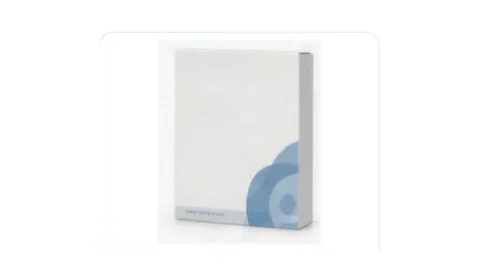
Korean Market Poly Bag Melamine Sponge Packaging
-
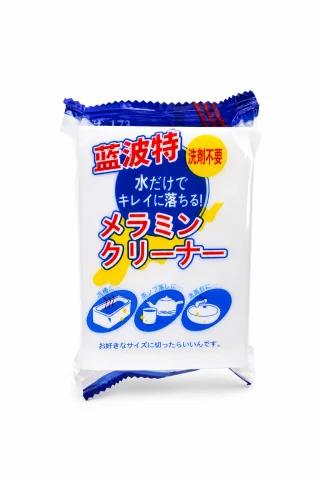
Japanese Hook Bag Melamine Sponge Retail Packaging
-
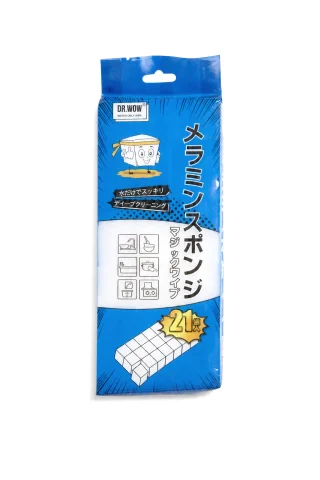
Japanese 21-Piece Melamine Sponge Poly Bag
-
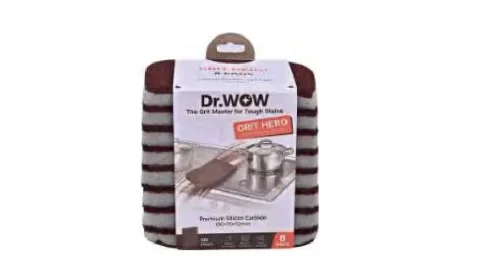
8-Piece Scourer Sponge Retail Pack from the GRIT HERO Line
-
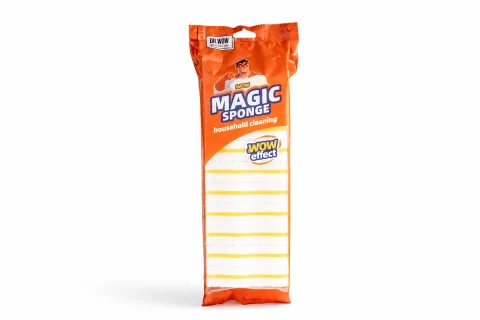
Multipack Sleeve Melamine Sponge Retail Packaging
-
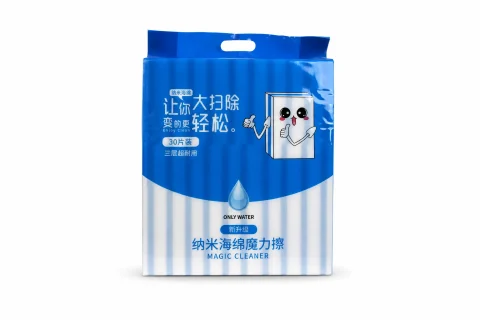
Chinese Big Bag 30-Piece Melamine Sponge Bulk Pack
Contact FoamTech
Reply within 12 hours
Any requests or questions about products or anything else are welcome.
- +86 18530085611
- +86 18530085611
- [email protected]
- 500 meters east from the intersection of Shenzhou Road and Yanhe Road, Xinzheng, Zhengzhou, Henan Province, China.
- Fengte Industrial Park, Logistics Park Road, Yangguang Avenue, Yiwu City, Zhejiang Province, China.