




If your kitchen sponge smells sour only a day or two after you open the pack, the problem is not your nose. It is the material and the way the sponge dries. An odor-resistant dish sponge is not a regular sponge with perfume added. It is a sponge whose structure, density and daily handling make it difficult for odor-causing bacteria to settle in the first place. This guide explains why dish sponges smell, how open-cell melamine foam changes the equation, and what home users and wholesale buyers should check before choosing one.
Odor is more than an unpleasant detail. In a family kitchen it decides whether a sponge stays in the sink or goes into the bin early. For retailers and private label brands, it drives one-star reviews and repeat complaints. So it is worth understanding what actually happens inside a damp sponge.
Why Does a Dish Sponge Smell in the First Place?
A used sponge is close to an ideal bacterial habitat: constant moisture, warmth from the dishwater, and a steady supply of food residue. The sour, musty smell does not come from the foam itself. It comes from the waste products of bacteria multiplying inside the sponge body.
The Smell Comes From Bacteria, Not From the Foam
Every sponge collects the same combination of water, food particles and skin contact. The difference between sponges that stay fresh and sponges that turn sour is how quickly the material releases water and how deeply food particles work their way inside. A sponge that dries out within a few hours gives bacteria far less time to multiply than one that stays damp overnight.
Where Odor-Causing Residue Hides
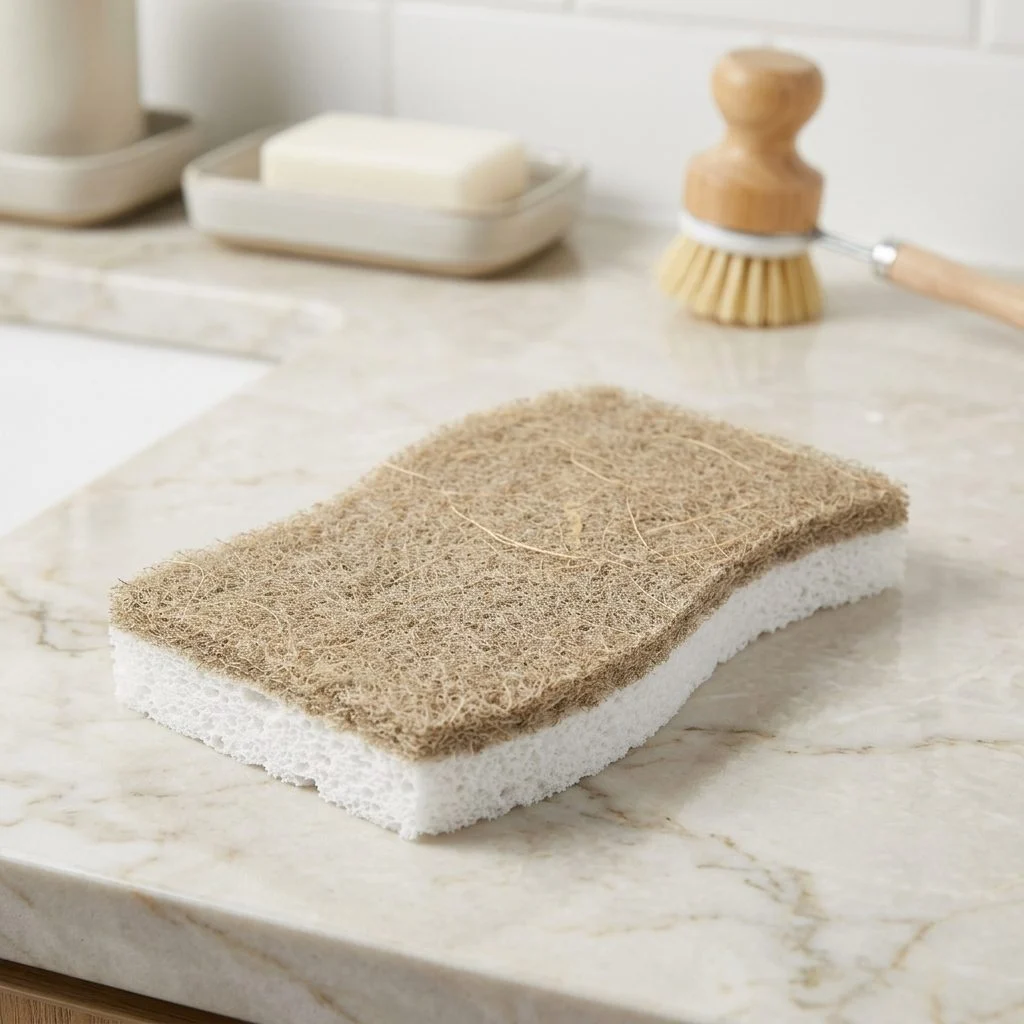
Traditional cellulose sponges have large, soft, closed pockets. They absorb a lot of water, which makes them pleasant to use, but the same pockets trap milk residue, oil and small food crumbs deep inside where a quick rinse cannot reach them. Polyurethane scrub sponges have a similar weakness in the scouring layer, which holds grease against the sponge even after washing up. Once residue settles inside, no surface rinse will fully remove it, and the odor returns within a day.
What Makes an Odor-Resistant Dish Sponge Different?
An odor-resistant dish sponge attacks the problem at the material level. Instead of relying on chemical treatments, it relies on structure: an open pore network that drains quickly, and a dense foam body that does not soak up residue like a filter.
An Open-Cell Structure That Dries Fast
Quality melamine foam has an open-cell rate of about 99.4%. In practical terms, the sponge is a lattice of microscopic hard threads rather than a sealed block of pockets. Water flows through it instead of being locked inside. After a rinse and a squeeze, a melamine dish sponge typically dries to the touch within a few hours, which is exactly the window bacteria need to multiply. Less trapped moisture means less bacterial growth and noticeably less smell between washing sessions.
Higher Density Means Fewer Places for Grime to Settle
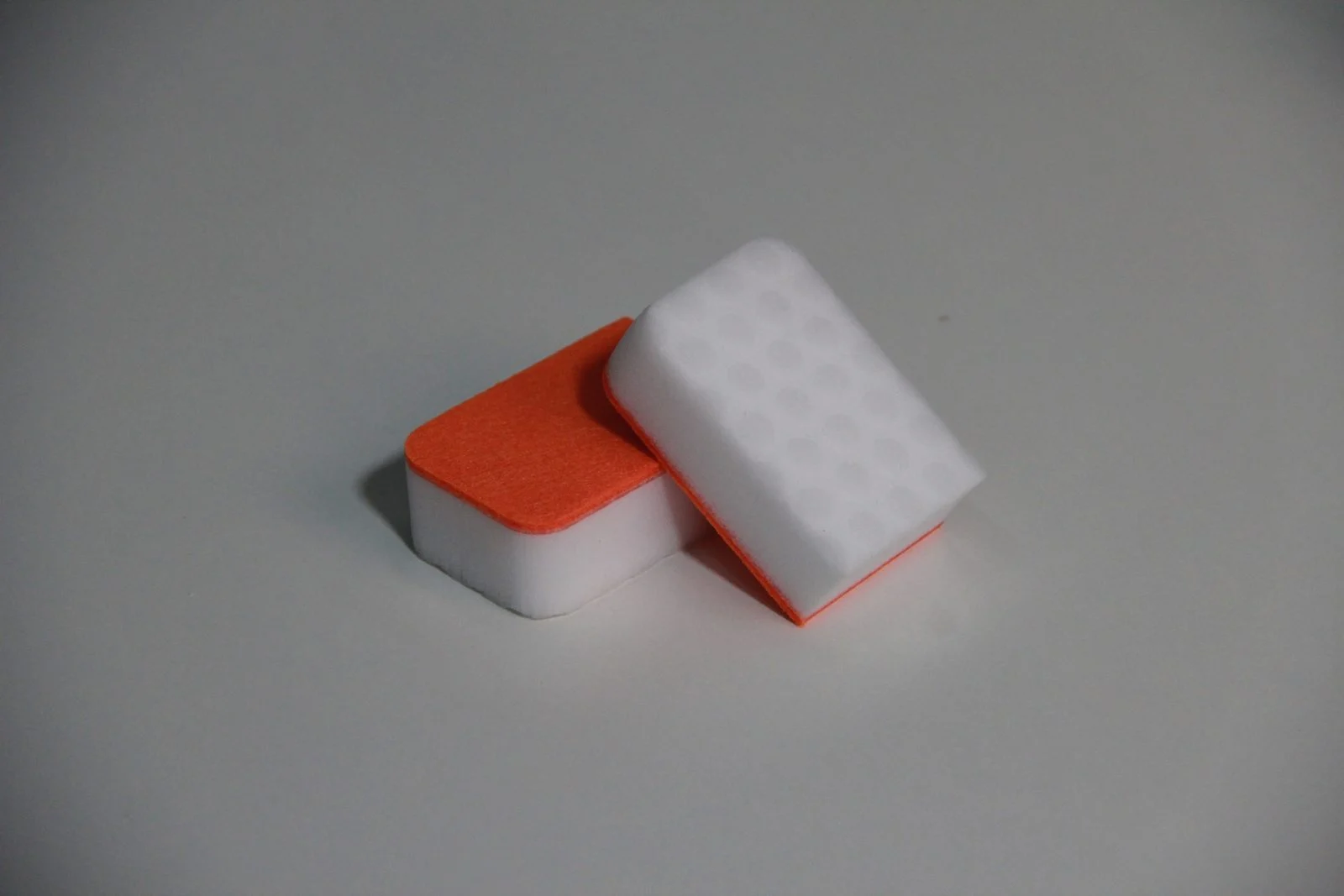
Hot-pressed melamine sponges go one step further. The hot-press process compresses the foam to roughly twice the density of a regular melamine sponge, producing a firmer body that resists tearing and absorbs far less residue. On the production line this is not a marketing claim but a controlled parameter: hot-pressed sheets in the 1–3 mm range are held to a thickness tolerance of about ±0.6 mm (0.02 in), and each batch is checked before it leaves the factory. For a dish sponge, that consistency means the surface wears evenly instead of soaking up grease halfway through its life.
Melamine Foam vs. Cellulose vs. Polyurethane: Which Sponge Stays Fresh Longest?
Better sponge life starts with choosing the right material for the job. Here is how the three most common kitchen sponge materials compare on odor resistance:
| Material | Drying Speed | Residue Trapping | Odor Resistance | Meilleur pour |
| Cellulose sponge | Slow – holds water for a day or more | High – deep pockets trap food | Low – smells fastest, needs frequent replacement | Wiping counters, absorbing spills |
| Polyurethane scrub sponge | Moyen | Medium – scouring layer holds grease | Modéré | Everyday dish washing with detergent |
| Open-cell melamine foam | Fast – dries within hours | Low – open lattice releases water and residue | High – stays fresh between sessions | Water-only stain removal, daily dish washing |
The honest trade-off: a melamine sponge is a mild abrasive that gradually wears down like a pencil eraser, so it will not outlast a thick cellulose sponge in pure volume. What it offers instead is a cleaner lifecycle – it stays odor-free for the period it is in use, cleans with water alone on most stains, and is cheap to rotate. Hot-pressed versions close most of the durability gap while keeping the fast-drying structure.
5 Habits That Keep Any Dish Sponge Fresher for Longer
Material choice does most of the work, but handling habits decide how long any sponge stays fresh. These five habits cost nothing and work for every sponge type.
1. Rinse and Squeeze Right After Use
Rinse the sponge under hot running water, then squeeze it firmly until water stops foaming out. Ten seconds of proper rinsing removes most of the food residue that would otherwise feed bacteria overnight.
2. Store It Dry and Ventilated
Never leave a sponge lying flat in a puddle at the bottom of the sink. Stand it on edge in a caddy or drainer so air can move around it. A sponge that dries between every session can last several times longer than one kept permanently damp.
3. Sanitize Once a Week
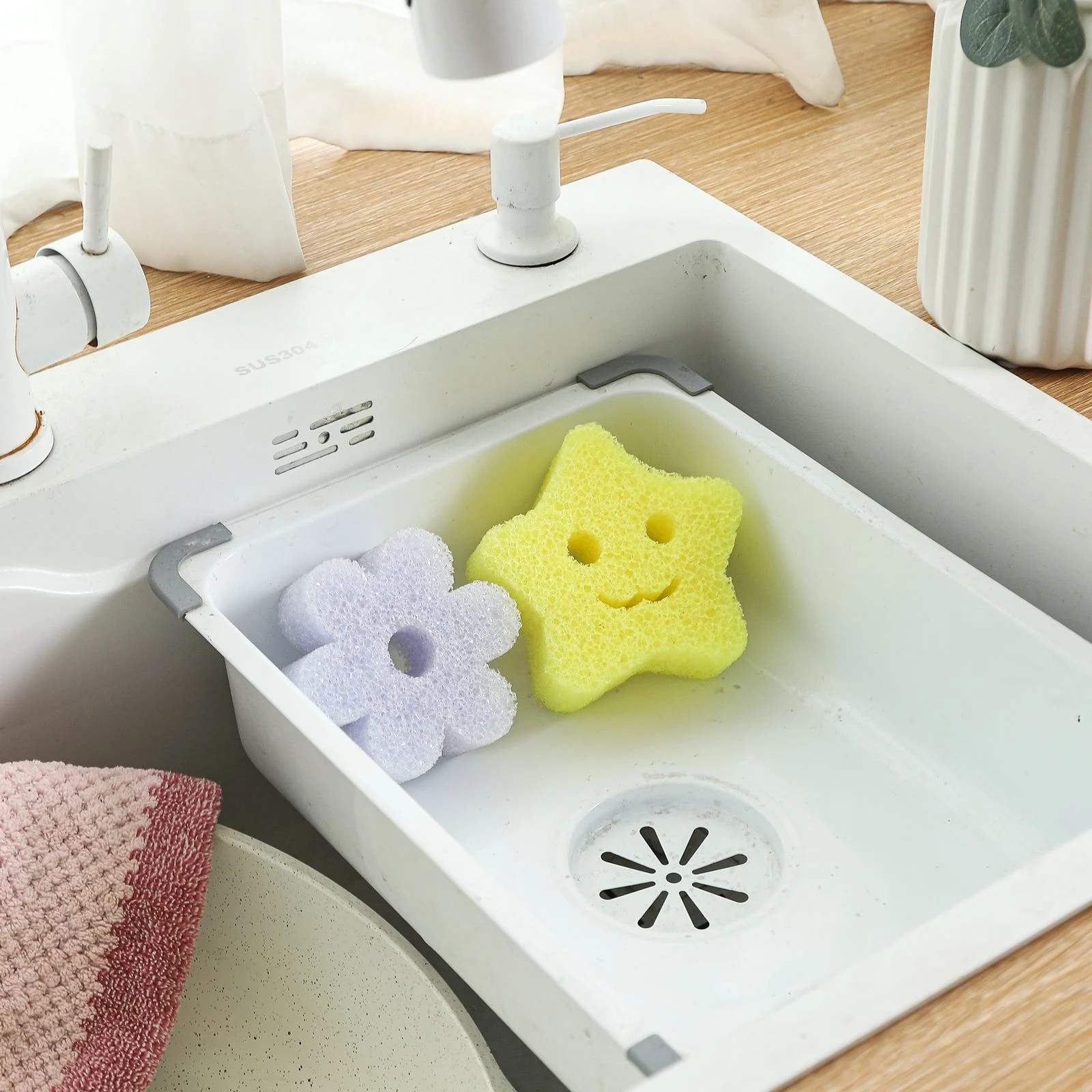
For cellulose sponges, a damp one-minute run in the microwave or a soak in diluted bleach solution kills most of the bacterial load. For melamine sponges, a thorough rinse in hot water and a full air dry is enough – the open structure does not shelter bacteria the way closed pockets do.
4. Rotate Two or More Sponges
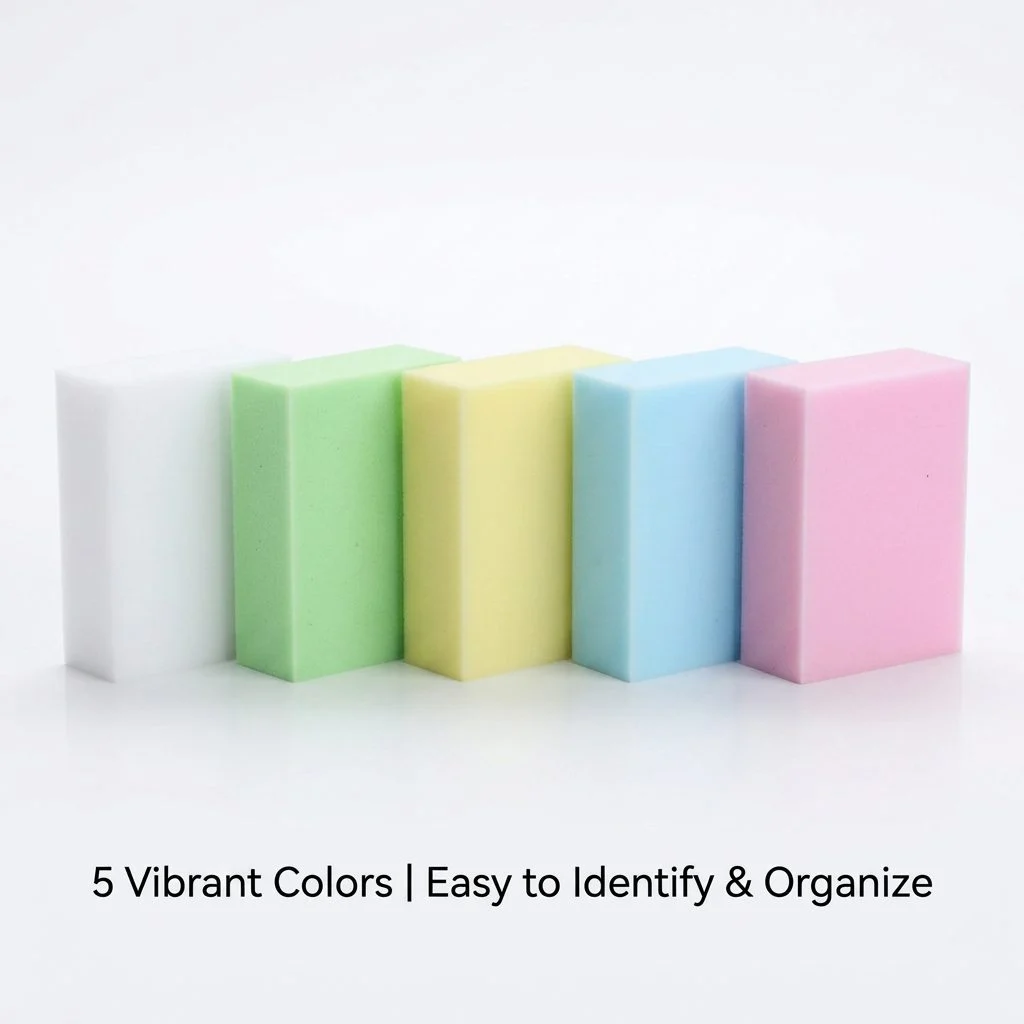
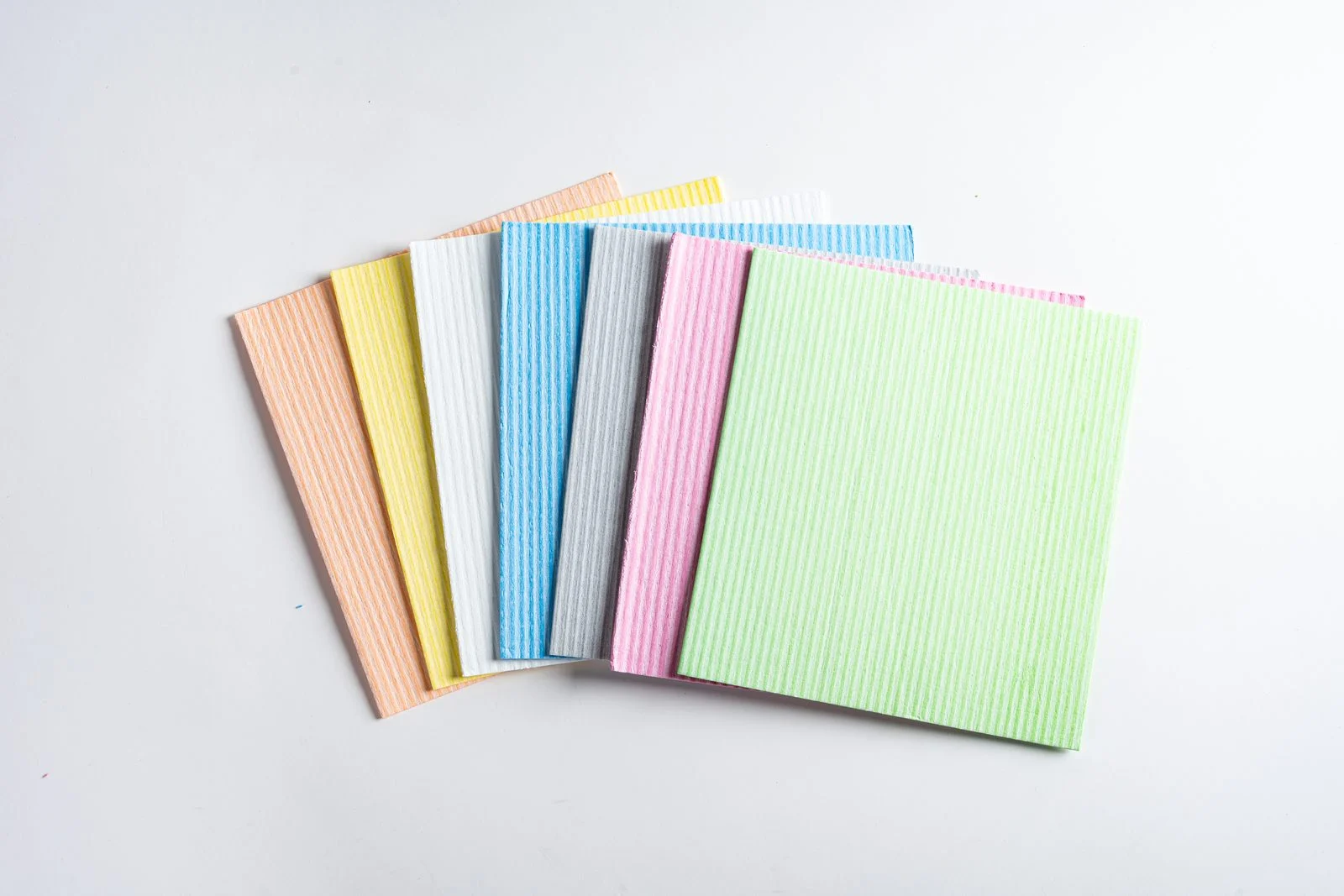
Rotation gives each sponge a full drying day before it is used again. Color coding makes the system effortless in practice: one color for dishes, one for counters, one for the stovetop. This is also why color-coded sponge sets are popular with retail buyers – the packaging can teach the habit on the back of the card.
5. Replace on a Schedule
No sponge lasts forever. For daily dish washing, plan on replacing any sponge every two to four weeks, and immediately if an odor survives a full drying cycle. Odor after drying is the signal that residue has settled where you cannot rinse it out.
What Wholesale Buyers Should Check Before Ordering Odor-Resistant Sponges
If you source sponges for a retail line, hotel group or cleaning brand, “odor-resistant” on the carton means nothing without the specification behind it. Four points are worth putting into every RFQ:
1. Material and density specification. Ask whether the sponge is standard or hot-pressed melamine foam, and request the density grade in writing. Hot-pressed material roughly doubles the density and noticeably extends usable life.
2. Compliance documentation. For products that touch dishes and food surfaces, confirm food-contact and skin-contact compliance: OEKO-TEX® Standard 100 (Class II) for skin contact and US FDA 21 CFR 177.1460 for food contact are the two references most international buyers recognize.
3. Batch-level quality control. A capable factory runs first-article inspection on cutting lines and batch sampling on hot-press thickness, and can supply test reports (SGS or CTI) with each shipment. Ask for the reports before the first container, not after the first complaint.
4. Production scale and packaging options. Steady odor performance depends on steady processing. A manufacturer with two production bases in China, export experience in more than 100 countries since 2014, and in-house laminating and packaging lines can hold quality consistent across repeat orders – and support retail-ready formats such as 6-packs, 18-packs and private label printing.
Frequently Asked Questions About Odor-Resistant Dish Sponges
How often should I replace my dish sponge?
Every two to four weeks for daily use, and sooner if it develops an odor that survives a full drying cycle. Sponges used only occasionally can go longer if they dry completely between sessions.
Can a melamine sponge be machine washed?
No. Melamine foam wears like a soft eraser, so machine washing breaks down the structure. Rinse it under the tap, squeeze it out and let it air dry – that is all the maintenance it needs.
Do odor-resistant sponges still need dish soap?
For most stained surfaces, a damp melamine sponge cleans with water alone. For heavily greasy pots and pans, dish soap still speeds up the job – the sponge reduces the scrubbing effort, not the chemistry.
Are melamine dish sponges safe for non-stick pans?
Melamine foam is non-scratch on ceramic, glass and stainless steel, but delicate non-stick coatings deserve caution. Test on a hidden spot first, use a light touch, or choose a version with a soft scouring layer for coated cookware.
Keep Reading
- How Often Should You Swap Your Magic Eraser Sponge for Peak Performance and Total Hygiene?
- Hot-Pressed Sponge vs. Regular Melamine Sponge: Which One Lasts Longer?
- Why Are High-Density Rectangular Cleaning Sponges Becoming a Better Wholesale Product in 2026?
Looking for a reliable source of odor-resistant melamine dish sponges? Contact our team for samples, density specifications and OEM or private label options, or browse our cleaning sponge catalog to see the full range.