




Quick answer: Five tests decide whether a sponge sample gets approved: density by weight and volume, water absorption ratio, an abrasion cycle count, thickness recovery after compression, and the documentation check. Four of them need a kitchen scale, a ruler or calipers and a few litres of water. The fifth decides whether the sample was ever worth testing.
Test 1: Density, by Weight and Volume
Cut a clean rectangular sample, measure it with calipers to the millimetre, and weigh it. Density in kg/m3 is weight in grams divided by volume in cubic centimetres, multiplied by 1,000. A block declared at 16 kg/m3 that measures closer to 9 is not a denser block – it is a mis-declared one, and it will wear out twice as fast as the specification promised.
Run the measurement on three samples from the same carton. Density variation inside a carton tells you more about the supplier’s process control than the average does.
Test 2: Water Absorption Ratio
Weigh the dry sample, submerge it for 60 seconds, hang it for 30 seconds so the loose water drains, then weigh it again. The absorption ratio is the wet weight minus the dry weight, divided by the dry weight, expressed as a percentage. Our melamine grades absorb 750%-2000% of their own weight; cellulose sponge cloths take up roughly ten times their weight; a polyurethane body takes water fast and gives it back fast, which is what you want in dishwashing and not what you want in a wall eraser.
Test 3: Abrasion Cycle Count
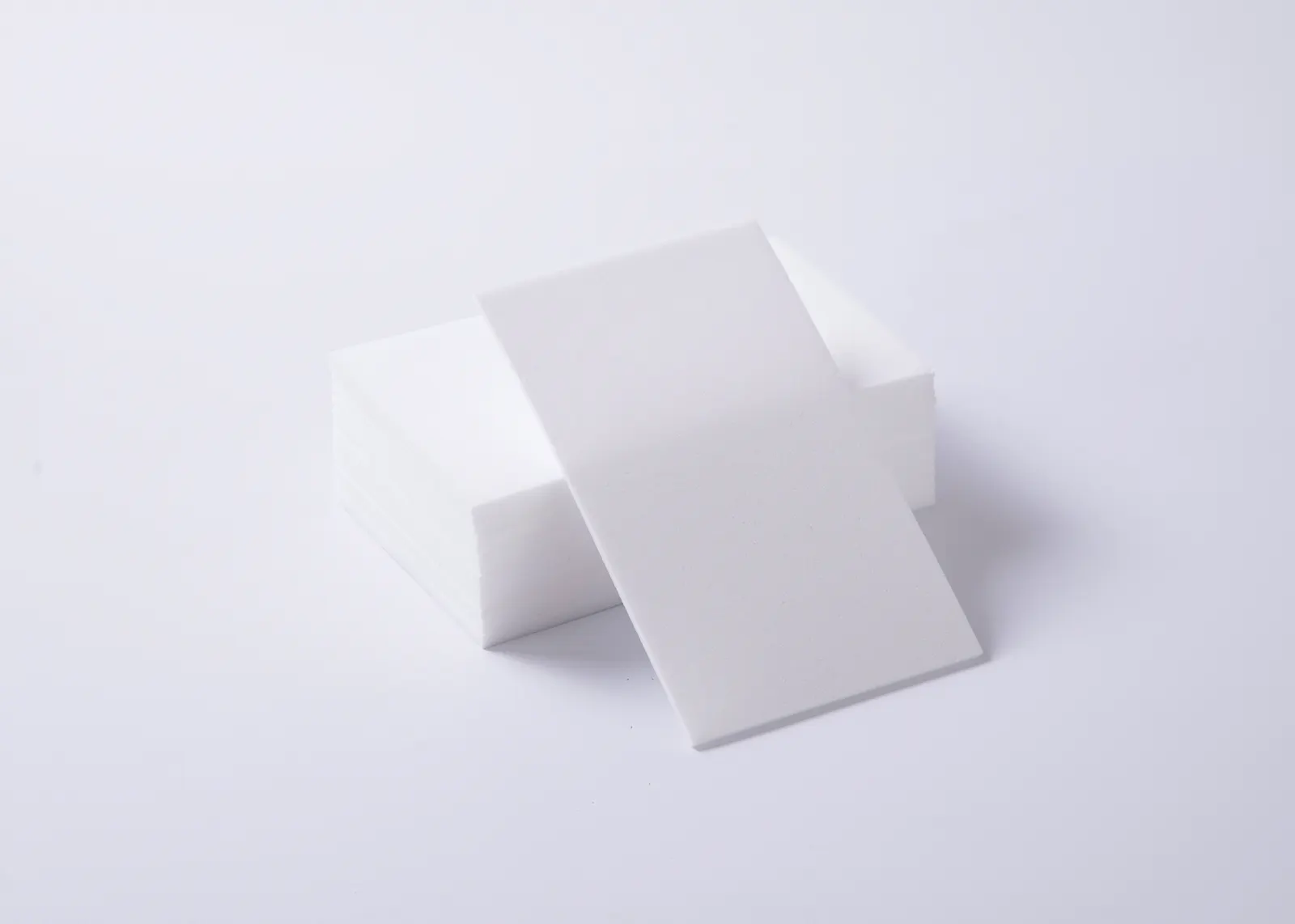
Fix the sample in a jig, apply a consistent light pressure on a glazed tile or a painted panel, and count passes until the foam stops removing the test mark or starts shedding crumbs in visible quantities. Record the cycle count, then weigh the sample to see how much material was consumed. Two suppliers can ship foam of the same density and still differ by 30-40% in cycles, usually because of cell size and curing rather than density alone.
Test 4: Thickness Recovery After Compression
Compress the sample to about half its thickness for 24 hours, release it, then measure after one hour and again after a full day. Elastic PU bodies should recover most of their thickness within an hour. Melamine behaves differently and that is fine: vacuum compression is a freight tool, so the block is allowed to open up over a few days after the bag is cut. What you should not accept is a melamine block that stays flattened and never opens at all.
Test 5: The Documentation Check
Ask for the certificate numbers, not just the PDFs. For our plant the numbers are OEKO-TEX Standard 100 Class II and Class IV under 26.HCN.79020 and 26.HCN.99360, EU REACH SVHC screening across 247 substances with nothing detected, FDA 21 CFR 177 compliance with migration measured below 0.3 mg/inch2, and an ISO 9001 managed production line. Cross-check the numbers against the issuing body. A sample that performs well but cannot be documented will not survive your customer’s compliance review.
The Five Tests in One Table
| Test | Tools | Pass looks like | Failure looks like |
|---|---|---|---|
| Densidad | Calipers, scale | Within 5% of the declared grade, consistent across three samples | Measured grade far below the declared figure |
| Water absorption | Scale, water, timer | Melamine 750%-2000%, cellulose near 10x weight | Water runs off the surface rather than into the cells |
| Abrasion cycles | Jig, test tile, counter | Uniform wear, mark still lifting at the agreed cycle count | Crumbs shed early, mark smears instead of lifting |
| Compression recovery | Clamp, calipers | PU back above 90% thickness within an hour; melamine opens within days | Permanent flattening, or a block that tears when it opens |
| Documentation | Supplier files, issuing body | Certificate numbers verify and match the shipped grade | Generic PDFs with no traceable number |
What a Sample Kit Should Contain
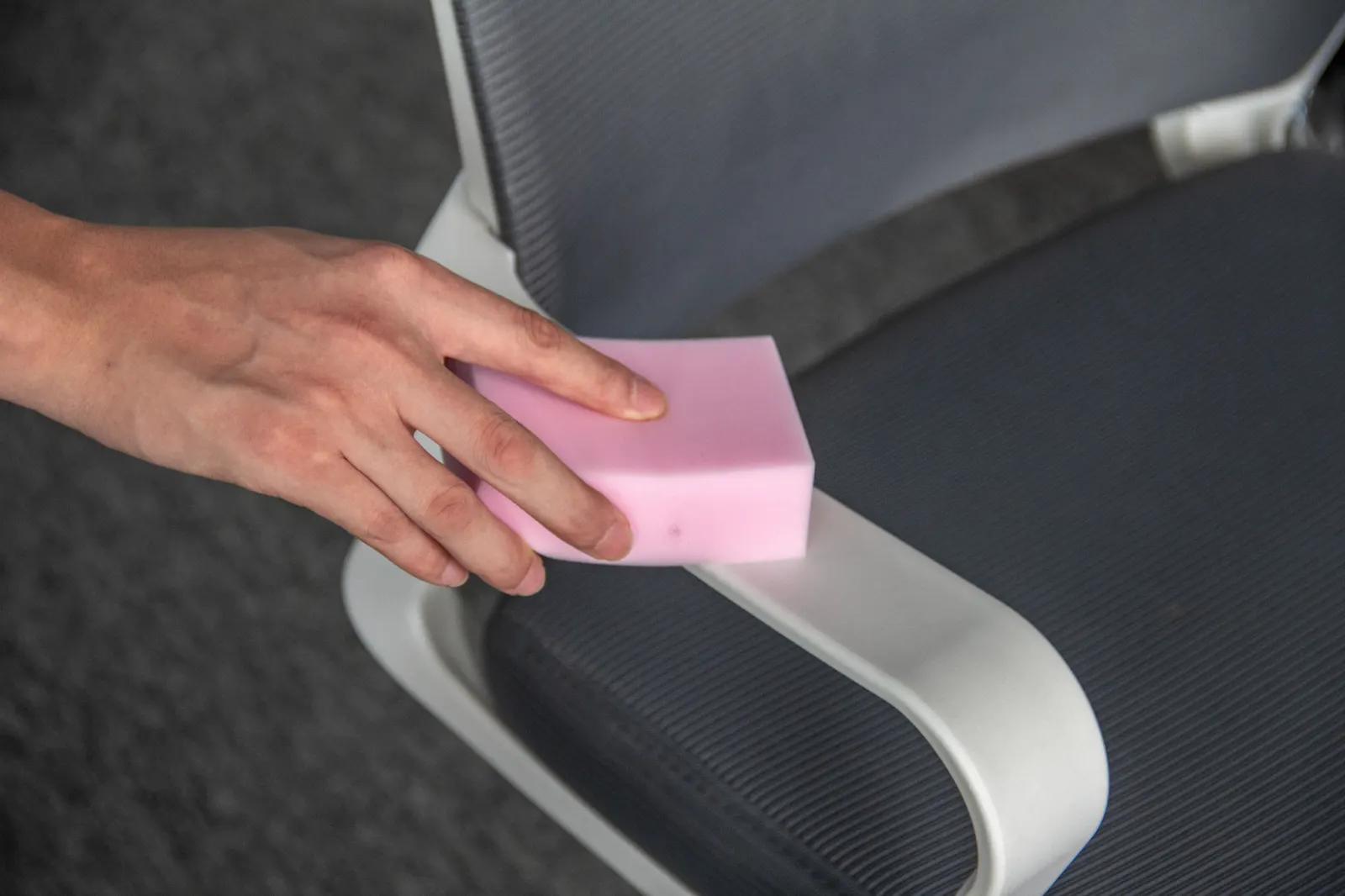
Two densities side by side. Testing one grade tells you whether the sample works; testing two tells you what the specification should be. Our kits ship in 3 days and include the current certificate set so the documentation check can run in parallel with the bench tests.
How to Brief a Sample Request
- Target surface: painted wall, glazed tile, stainless, coated cookware or flooring.
- Size, thickness and shape you need, in millimetres.
- Pack format: bulk carton, single pack, multi-pack, display box.
- Market: which certificates the destination market asks for.
- Volume expectation for the first order, so the sample matches a realistic production grade.
For Distributors
We produce nano sponge erasers at 16 kg/m3, die-cut melamine sponge sheets down to 2-6 mm, and the full wholesale melamine sponge range behind them. For test protocols in more detail, see the density testing guide.
Want Samples With Two Density Grades?
FoamTech ships 3-day sample kits with two foam densities, the current certificate set and a factory-direct quotation. Tell us the surface and the pack format you are targeting.