




Quick answer: Yes, a magic eraser can be used on sealed chrome fixtures, and it strips hard-water spots and soap scum from faucets, shower heads, and towel bars faster than any spray cleaner we have run side by side. The foam is a micro-abrasive, not a chemical, so it will not strip chrome plating when used wet with light pressure. The two exceptions: never scrub brushed or coated “chrome-look” finishes, and always test a hidden spot first on polished chrome.
Why Melamine Foam Is Safe on Chrome
A retail magic eraser is an open-cell melamine resin foam block, manufactured from the same open-cell melamine foam material as the eraser pads we produce in bulk. The cleaning action is purely mechanical: each cell wall is a fiber far finer than household scrub pads, so it reaches the texture where hard-water minerals sit without gouging the metal underneath.
Chrome plating on quality fixtures is hard, typically 800-1000 HV on the Vickers scale, while the melamine foam itself is softer and friable by design. The foam breaks down instead of the surface. That is the opposite of what happens with green scouring pads or powder abrasives, which leave micro-scratches that dull a mirror finish permanently.

Where It Works Best
- Faucets and mixing taps: removes limescale halos around the base and fingerprints on polished bodies.
- Shower heads and sliding bars: clears mineral build-up in and around nozzles without disassembly.
- Towel bars and robe hooks: restores shine dulled by soap residue in humid bathrooms.
- Drain covers and shower drains: lifts soap scum film that vinegar soaks take hours to soften.
Wet the sponge, squeeze out the excess so it is damp rather than dripping, wipe in straight lines with light pressure, then rinse the surface and dry with a microfiber cloth. Drying matters because the rinse film itself leaves fresh spots as it evaporates.
Where You Should Not Use It
Chrome plating is durable, but not every “chrome” surface in a bathroom is actual plating:
- Brushed or satin chrome: the directional grain is a finish layer, and foam scrubbing can flatten it in patches.
- Chrome-look painted or PVD-coated plastic: common on budget fixtures and shower caddies; the coating is microns thin and will wear through.
- Any fixture with existing flaking or pitting: the foam will catch the lifted edges and accelerate peeling.
The 10-second test: wipe an area hidden behind the faucet body or under the basin rim. If the cloth shows color transfer or the spot looks dulled when dry, that finish needs a pH-neutral cleaner instead of an abrasive.
Step-by-Step: Spotless Chrome in Five Minutes
- Rinse the fixture with warm water to flush loose grit that could drag under the sponge.
- Wet the melamine foam and squeeze until it stops dripping.
- Wipe hard-water spots with straight, overlapping strokes and almost no downward pressure.
- Rinse the surface, then buff dry with a clean microfiber cloth.
- Rinse and air-dry the sponge; a compressed 16 kg/m3 block survives dozens of bathroom sessions.
For Distributors: the Same Material, Factory-Direct
In household aisles, chrome-cleaning erasers re-order steadily for one simple reason: every buyer with hard water runs out of the problem before they run out of uses for the sponge. FoamTech manufactures melamine foam from the raw block stage and converts it into high-density melamine eraser pads and magic sponge cleaner blocks in 8-16 kg/m3 densities. For retail programs we supply private label cleaning sponges with custom printed sleeves, and for hotel and janitorial programs we supply wholesale sponges for hotels and contractors by the carton or pallet.
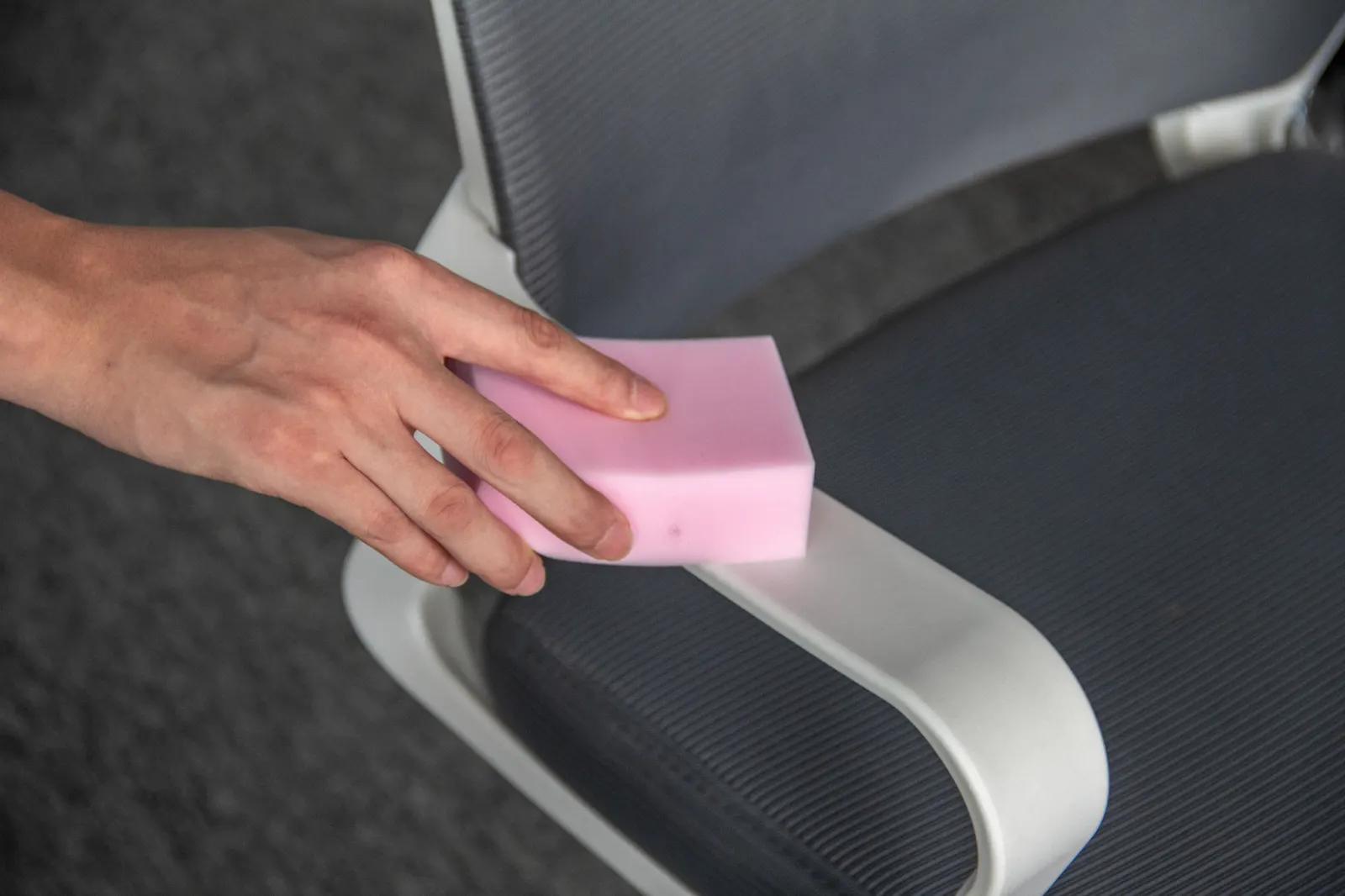
Sample kits ship in 3 days with two densities side by side, and production lead time is 15-20 days for full containers, FOB Ningbo or Shanghai.
Sourcing Melamine Eraser Sponges for Your Market?
FoamTech provides free sample kits, custom die-cut shapes, and private label packaging at factory-direct pricing.