




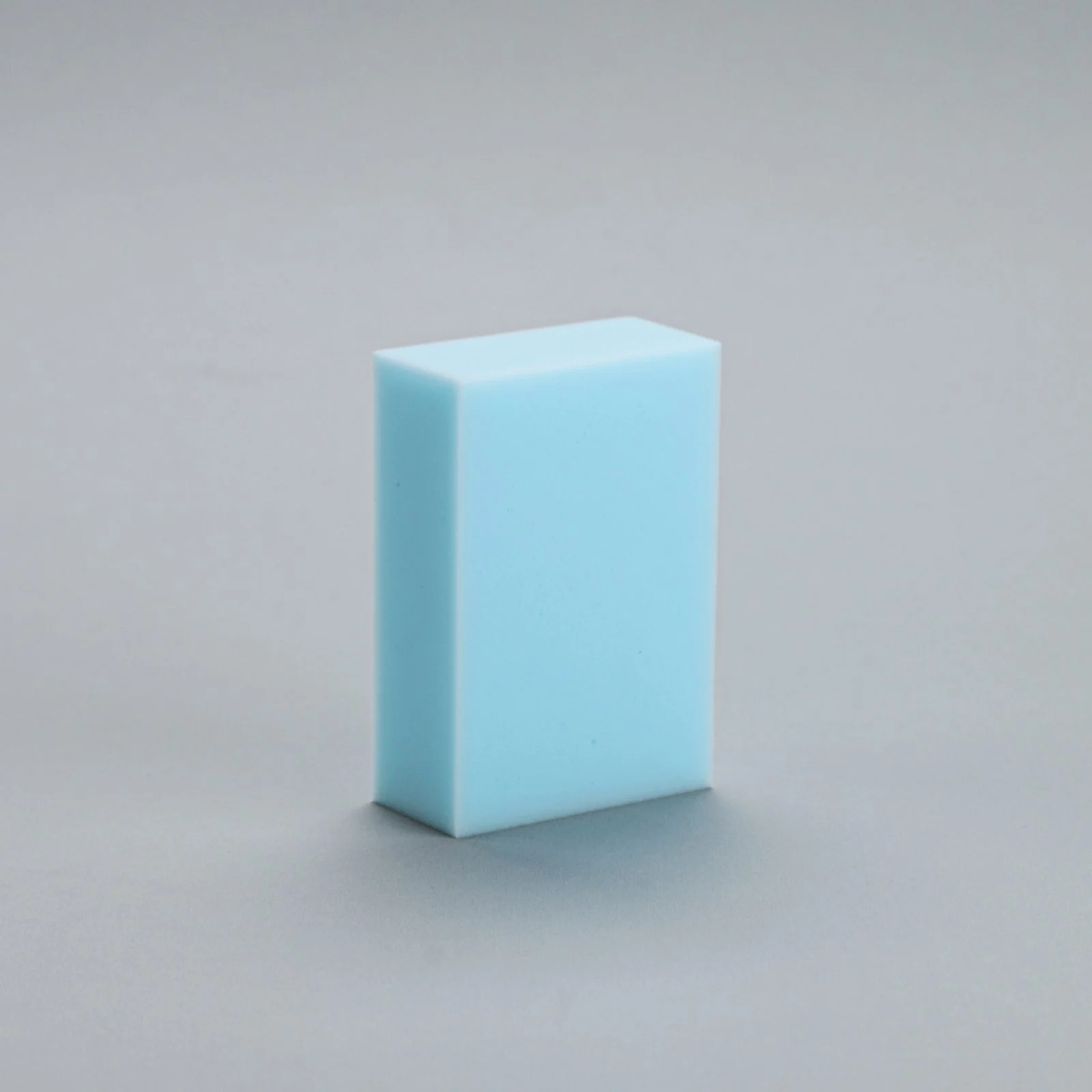
A window can pass the fingertip test and still look dirty in afternoon light. The culprit is usually not dust but a thin film of minerals that every spray bottle and microfiber cloth leaves behind. A glass window cleaning sponge – a dense melamine foam eraser used with nothing but water – shears that film off in a few light passes, which is why it has become the go-to fix for water spots on windows, shower doors and glass tabletops.
This guide explains why glass spots resist ordinary cleaning, where a glass cleaning sponge is safe and where it is not, and the five-step method that leaves the pane clear. It ends with the checks that matter for retail sourcing.
Why Water Spots Stay on Glass After Every Wipe
Rain, sprinklers and cleaning water all carry small amounts of dissolved calcium and magnesium. When a droplet sits on a vertical pane and evaporates, the minerals stay behind as a ring bonded to the surface. Glass feels smooth, but it has microscopic texture, and those mineral scales key into it.
Mineral Deposits Are Not Dirt
Most household sprays are formulated to lift organic grime: grease, fingerprints, dust. Mineral scale is inorganic and insoluble, so detergent mostly slides over it. Wiping harder with a cloth does not dissolve the deposit either; it just polishes the film into the even, milky haze you see from across the room.
Why Spray Cleaner Alone Fails
On an exterior window in full sun, a spray can evaporate before it has any time to work. On a shower door, the deposit is often months of layered soap scum and limescale, far beyond what a one-minute spray can break down. The job calls for a tool that removes the bonded layer mechanically, in passes thinner than the glass itself.
What Is a Glass Window Cleaning Sponge?
A glass window cleaning sponge is a block or sheet of melamine foam – the same open-cell material widely sold as a “magic eraser”. Its open-cell rate reaches about 99.4%, so under magnification it looks like a rigid lattice of extremely fine strands. Dampened and wrung out, that lattice works like an ultra-fine eraser: each stroke shears off a microscopic layer of the deposit while the glass underneath stays untouched.
Ordinary window glass sits around 5.5 on the Mohs scale, far harder than melamine foam, so on plain, uncoated glass the foam wears away instead of the pane. The action is physical rather than chemical, so there is no film left to rinse off.
Cleaning by Structure, Not Solvents
Because the mechanism is mechanical, the sponge needs no ammonia or solvent and leaves no scent in a closed bathroom. Sponges intended for household and food-adjacent use are routinely certified against OEKO-TEX® Standard 100 (Class II) and US FDA 21 CFR 177.1460, with batch test reports available – a detail that matters both for families and for retail compliance reviews.
Where a Glass Cleaning Sponge Is Safe – and Where It Is Not
Plain, uncoated glass tolerates a damp melamine sponge very well. That covers most interior window panes, tempered shower doors, glass tabletops, cool oven-door glass and glass cooktops. Mirrors need one caution: work the face of the mirror only, and keep moisture away from the edges, where water can seep behind the silvering and cause black-edge corrosion.
Never Use It on Coated, Tinted or Treated Glass
The same micro-abrasion that removes deposits will also remove thin surface treatments. Keep the sponge away from these surfaces:
- Low-E and reflective architectural coatings. Abrasion can strip the coating and leave permanent haze or uneven glare.
- Tinted car windows. The film sits on top of the glass, and the sponge will scratch or peel it.
- Anti-reflective lenses and device screens. Oleophobic and AR coatings are far softer than glass and come off immediately.
- Frosted, etched and decorative glass. Test a hidden corner first; the texture of the finish can change.
If you cannot confirm what finish is on the pane, treat it as coated: clean it with a soft cloth and ordinary glass cleaner, and keep the melamine sponge for spots you know are plain glass.
How to Use a Glass Window Cleaning Sponge, Step by Step
The whole job takes about five minutes for a typical shower door or a couple of panes. You need one melamine sponge, clean water and a dry cloth for the final buff.
Step 1: Pre-Wash the Glass
Loose dust and grit act like sandpaper under any sponge, so start with a plain wash. Rinse or wipe the glass with water – a general-purpose sponge or cloth is fine for this stage – and remove as much surface dirt as you can before any spot treatment.

Step 2: Dampen and Wring Until Barely Damp
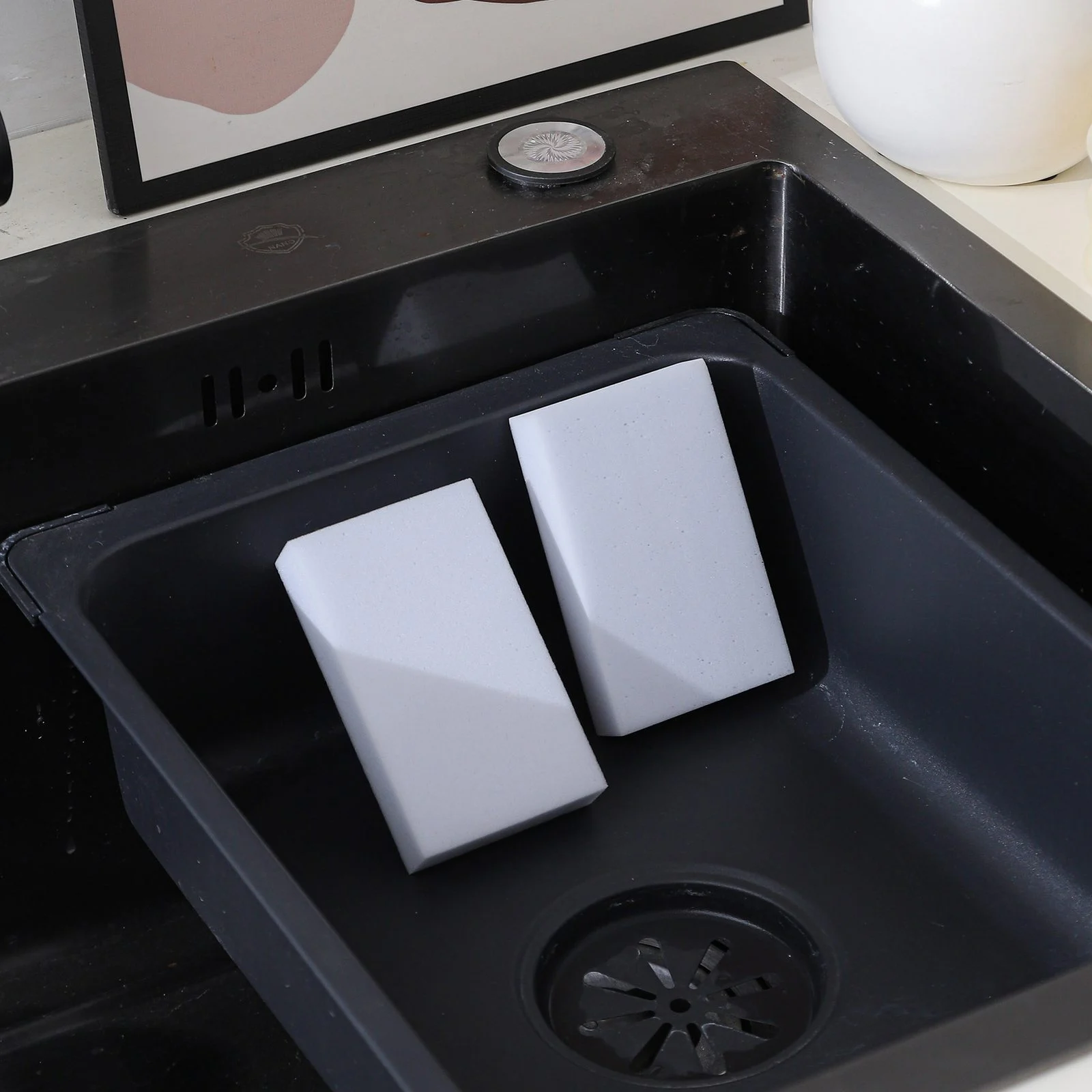
Soak the melamine sponge in clean water, then squeeze it firmly until it stops dripping. Never use it dry: a dry sponge glides badly and concentrates friction in one spot. Water that runs down the pane also streaks the frames and window seals, so damp – not wet – is the target.
Step 3: Work the Spots with Light Circles
Cover the water spots with small, slow circles and let the foam do the work. Two or three light passes remove a fresh mineral ring; pressing harder only wears the sponge down without speeding anything up. Rotate to a fresh corner as soon as the working surface loads up with residue.
Step 4: Rinse and Buff Dry
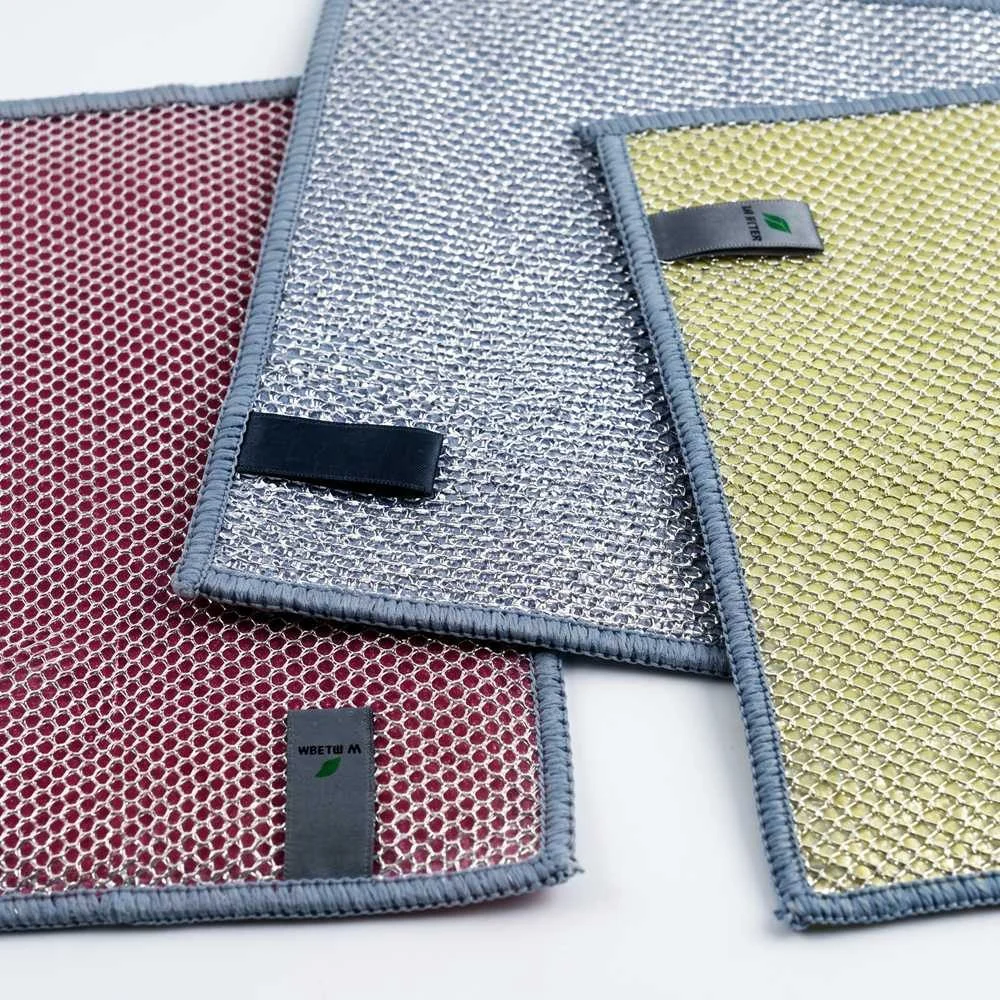
Wipe the pane with a clean, damp microfiber cloth to lift the loosened residue, then dry it with a second cloth – a silver-fiber or plain microfiber cloth works well – using long overlapping strokes. Any patch that still looks milky in reflected light still has deposit on it.
Step 5: Repeat Light Sessions, Don’t Press
Deposits that have baked through several summers come off in layers. Two or three gentle sessions on different days beat one aggressive scrub every time.
Matching the Sponge to the Job
All melamine erasers share the same base material; the format and surface layer decide which job they suit.
Greasy Kitchen Glass and Range Hoods
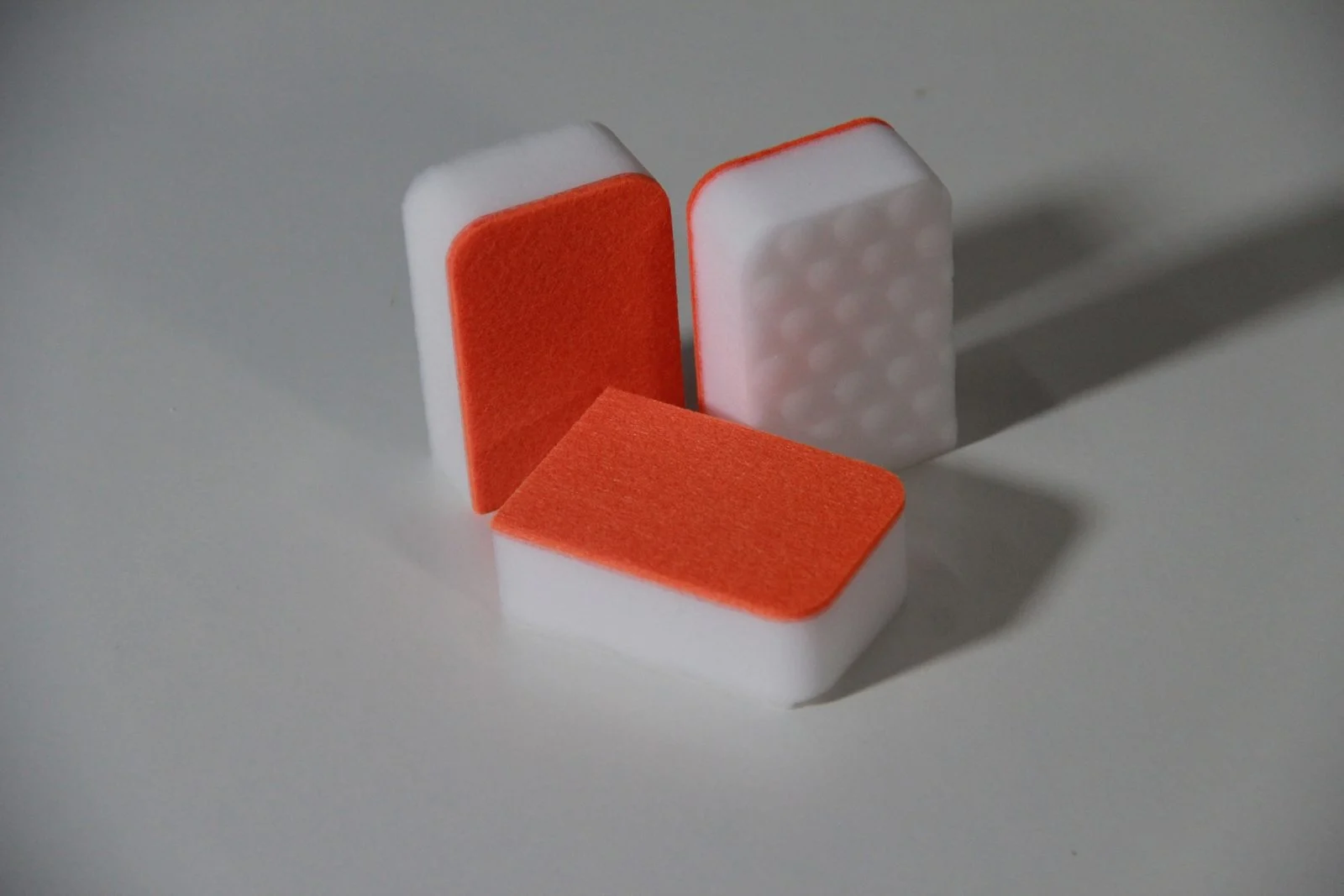
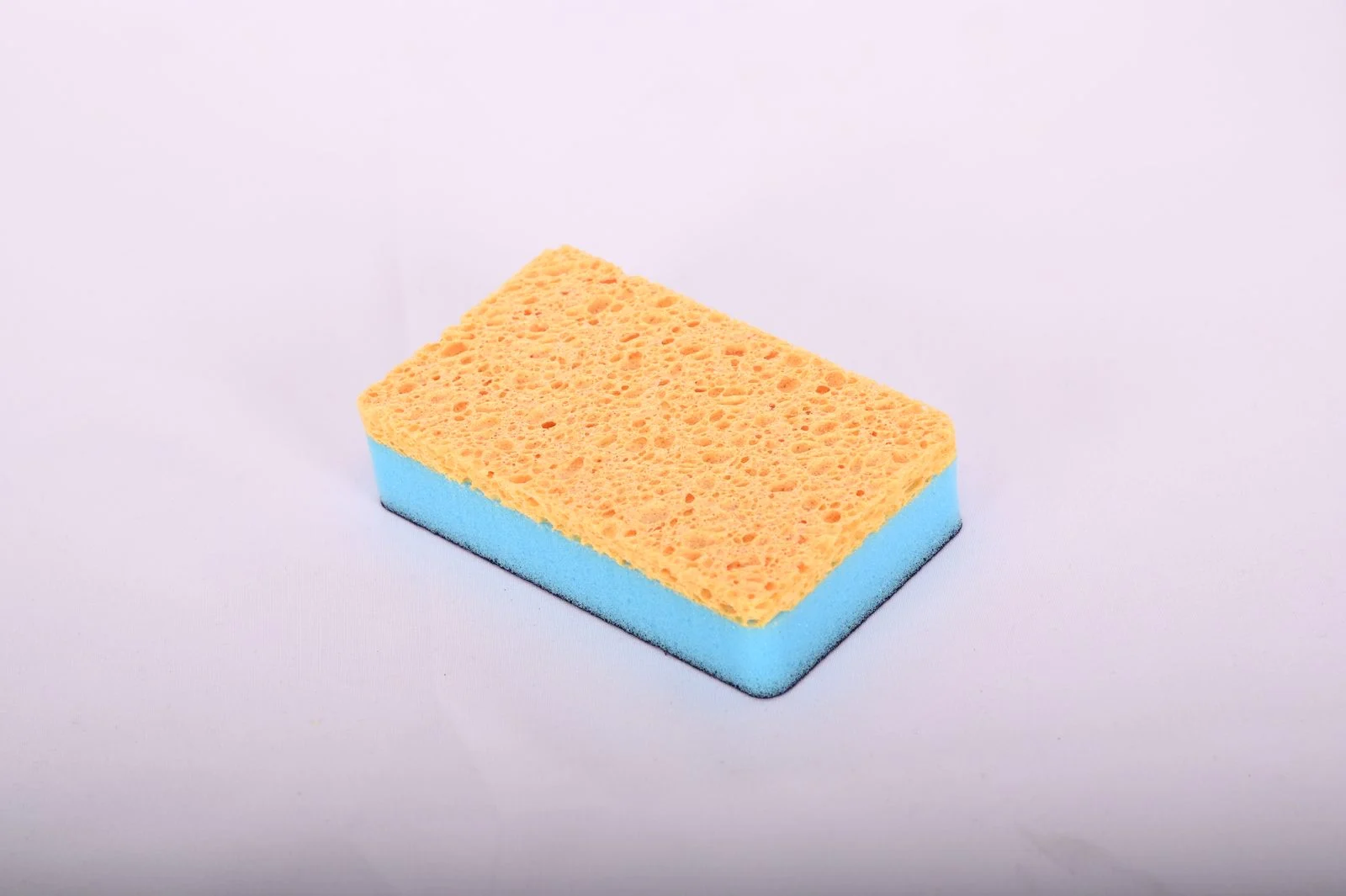
Glass splattered with cooking oil needs a cutting layer rather than plain foam. Composite sponges with a honeycomb-embossed scrubbing face cut through grease film on range hoods, splashed cabinet glass and cooktops, then the melamine side finishes the job with water alone.
Crusty Hard-Water Buildup
For mineral crust that has hardened on shower surrounds, an emery-laminated sponge adds real cutting power. Keep it for the frames, tiled surround and fixtures around the glass, and if you try it on the pane itself, test one small corner with almost no pressure first – it is a workshop-grade tool, not an everyday glass wipe.
Everyday Blocks and Sheets
A standard block of about 100 × 60 × 25 mm (3.9 × 2.4 × 1.0 in) covers dozens of spot jobs around the home. Thin sheets of 2–10 mm (0.08–0.4 in) suit large panes and storefront glass, because they flex against the surface and hold more water. Hot-pressed versions run at roughly twice the density of standard foam, so they keep their edges and their cutting power far longer.
Glass Cleaning Sponge vs. Other Glass Cleaning Methods
How the melamine approach compares with the usual alternatives on problem glass:
| Method | Needs | Risk | Meilleur pour |
| Glass cleaning sponge (melamine foam) | Water only | Low on plain glass; damages coatings | Water spots, soap scum, fingerprints, grease film |
| Vinegar or acid soak | Soak time + rinsing | Low; slow on heavy scale | Mild, recent deposits and regular maintenance |
| Razor scraper | Wet glass + steady hand | High if used dry or angled wrong | Thick, localized crust on flat panes |
| Chemical remover | Ventilation + gloves | Medium; can attack coatings and seals | Heavy buildup where abrasives are not allowed |
For a pane that is 95% clean with a few stubborn rings, the sponge is the fastest and cheapest fix. For glass that is hazy everywhere, a soak with a mild acid followed by a sponge pass usually saves time.
What Retail Buyers Should Check Before Sourcing Glass Cleaning Sponges
Glass erasers look identical across suppliers, so the specification behind the foam separates a repeat-purchase product from a returns problem. Three points belong in every RFQ.
1. Density and pressing process. Ask whether the sponge is standard or hot-pressed melamine foam and request the density grade in writing. Higher density slows wear on gritty mineral deposits – the most common complaint driver in this category.
2. Safety documentation. OEKO-TEX® Standard 100 (Class II) and US FDA 21 CFR 177.1460 references, with batch test reports, clear retail compliance reviews in the US and Europe quickly.
3. Consistency at the cutting stage. Dimensional tolerance decides whether blocks fit retail packaging. A capable factory slices to roughly ±0.6 mm (0.02 in), runs first-article inspection and batch sampling on cutting lines, and holds additional hot-press capacity so peak-season delivery does not slip. In-house laminating and packaging lines complete the picture, backed by material R&D with more than 100 patents and exports to over 100 countries since 2014.
Frequently Asked Questions About Glass Cleaning Sponges
Will a magic eraser scratch glass windows?
On plain, uncoated glass, no – melamine foam is much softer than glass and only works when damp. It can scratch or dull coatings, tint film and anti-reflective layers, so confirm the pane is untreated and keep the sponge wet with light pressure.
Can I use a magic eraser on car windows?
Only on the plain outer glass, with the sponge well wrung out and gentle strokes – and never on tinted film, sensor zones or coated mirrors. Test a small corner first and stop if you see any hazing.
How do you remove hard water spots from shower doors?
Pre-wash the door, then work a damp melamine sponge over the spots in light circles, rinse the glass and buff it dry. Finish with a squeegee after each shower; keeping water off the glass is what stops the spots from coming back.
How often should I replace a glass cleaning sponge?
Replace it when the edges crumble, the block loses firmness or the surface stops cutting. Rinse it after use and let it dry in the air; a sponge that stays damp degrades faster and can hold grit that scratches.
Keep Reading
- Why the Hidden Spot Test Matters Before Using a Magic Eraser Sponge on Delicate Surfaces
- Gomme magique : 7 surfaces que vous ne devriez jamais nettoyer
- How Can You Safely Use a Melamine Sponge on Your Car?
Sourcing glass cleaning sponges for your store or brand? Contact our team for samples, density specifications and OEM or private label options, or browse the full range in our cleaning sponge catalog.