



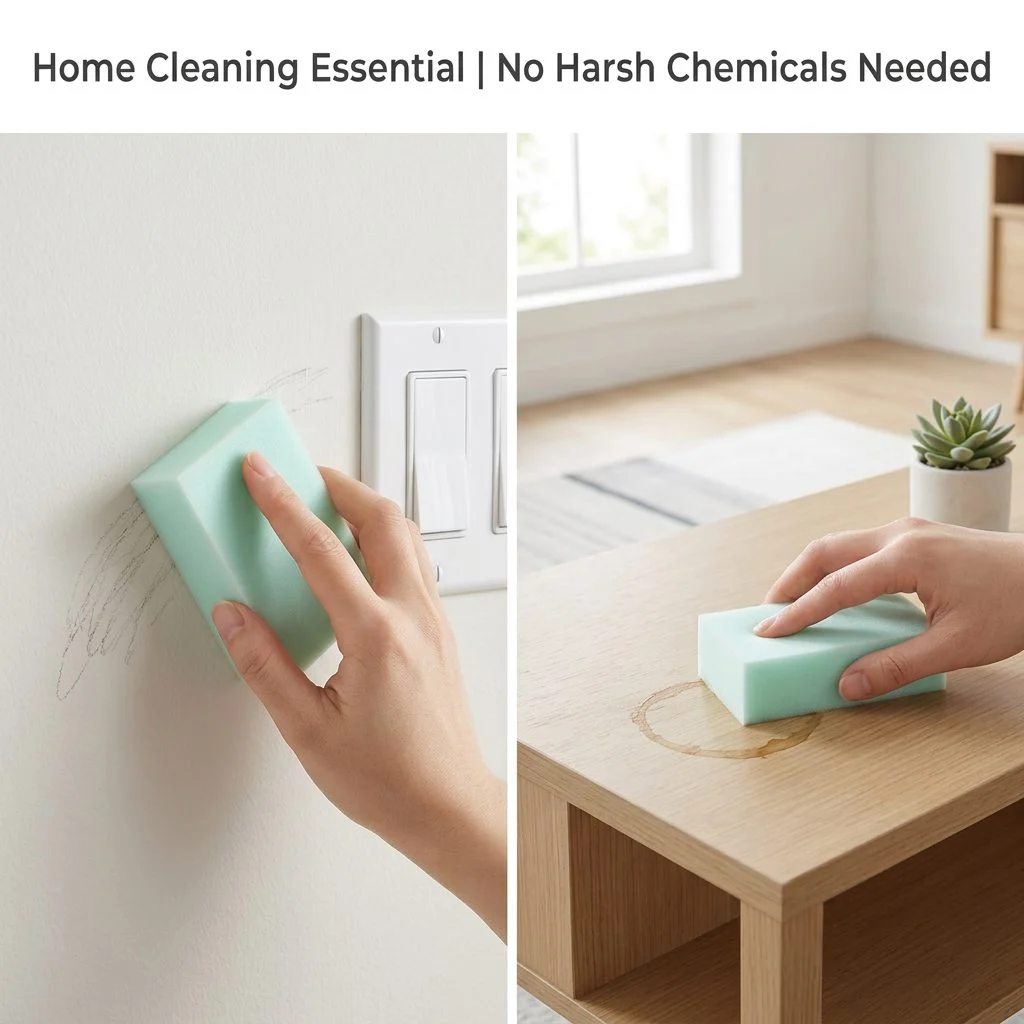
One crayon in a toddler’s hand can redraw a living room in minutes, and suddenly the only fix looks like a paint roller. It is not. A wall stain remover sponge – a dense melamine foam eraser that works with water alone – lifts crayon wax and pigment out of most painted walls in minutes, without solvents and without repainting. This guide explains how it works, how to use it safely on paint, and what buyers should check before sourcing.
It also handles pencil marks, scuffs and light grease splatter – one reason it is a staple for hardware stores and cleaning brands. First, why crayon is such a stubborn offender.
Why Are Crayon Marks So Hard to Remove?
Crayon is not ink. It is a blend of paraffin wax and pigment. When a child draws on a wall, the wax melts slightly under pressure and flows into the microscopic texture of the paint film. That is why a dry cloth just smears it around, and why a wet rag often leaves a colored ghost behind.
Wax Holds Pigment Against the Paint
The wax layer is hydrophobic: water-based cleaners bead up on it instead of soaking in, and most detergents are formulated for grease, not for pulling solid wax out of a textured surface. Scrub harder with a nylon brush and you usually get a shiny wax polish on the wall and, on weaker paint, a polished bare patch where the pigment used to be.
The Wrong Tools Make It Worse
Paper towels push wax deeper, and solvent-based removers can dull or lift the paint around it, leaving a bigger repair job than the original scribble. The task calls for something that removes material mechanically, in layers thinner than the paint film.
What Exactly Is a Wall Stain Remover Sponge?
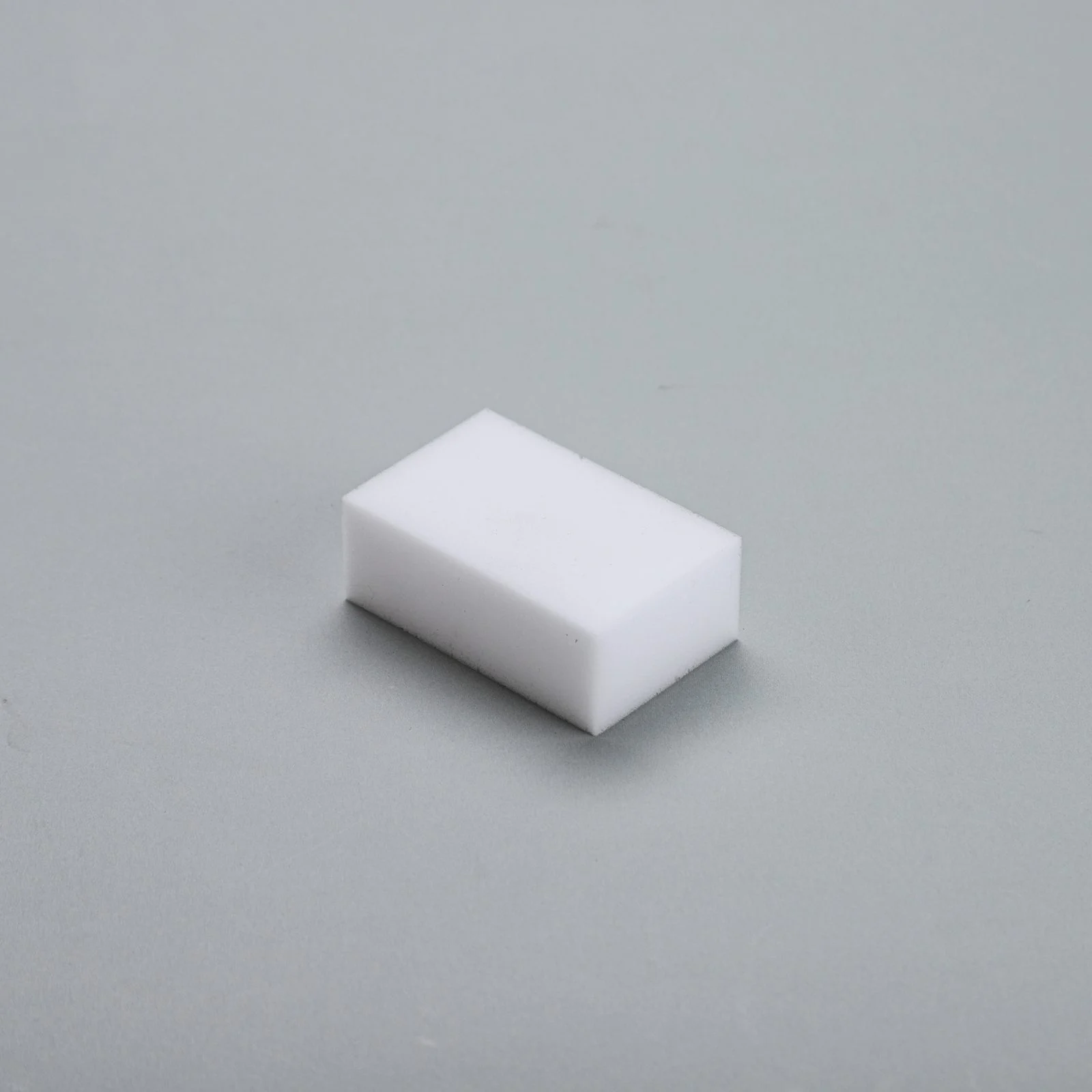
A wall stain remover sponge is a block or sheet of melamine foam – the same material widely sold as a “magic eraser”. Melamine foam is an open-cell foam with an open-cell rate of about 99.4%. Under a microscope it looks like a rigid lattice of extremely fine strands, roughly as hard as plastic but far softer than paint or plaster.
Dampened and wrung out, that micro-lattice works like an ultra-fine eraser. Each stroke shears off a microscopic layer of the stain – wax, pigment, scuff marks – while leaving the much harder paint film underneath untouched, as long as the paint is in good condition and washable. No chemical reaction is involved, so there is nothing left to rinse off except the residue you just removed.
Cleaning Power From Structure, Not Chemicals
Because the mechanism is physical, the sponge needs no solvent and leaves no film on the wall – a real advantage in homes with babies and pets. Wall-safe versions are routinely certified for skin and food-adjacent contact: OEKO-TEX® Standard 100 (Class II) and US FDA 21 CFR 177.1460, with batch test reports on request.
How to Remove Crayon Marks from a Painted Wall, Step by Step
The whole process takes about five minutes for a typical scribble patch. You need one melamine sponge, a bowl of clean water and a dry microfiber cloth.
Step 1: Test in a Hidden Spot First
Flat and matte paints and older latex coats are more delicate than modern washable finishes. Dampen the corner of the sponge and make two or three gentle passes behind a sofa or near the baseboard, let the spot dry and check it in daylight; if the sheen or color is unchanged, the rest of the wall is safe.
Step 2: Wet, Wring, and Trim If Needed
Soak the sponge in clean water, then squeeze it firmly until it stops dripping. The sponge should feel damp, not wet – dripping water runs down the wall and leaves streaks. For marks near outlets or switches, cut a smaller piece instead.
Step 3: Wipe in One Direction with Light Pressure
Work from the outside of the scribble toward the center so you never drag wax into clean areas. Use straight, overlapping strokes and let the foam do the work; pressing hard only wears the sponge down faster and heats the wax.
Step 4: Rinse the Wall and Dry It
Wipe the area with a clean, damp microfiber cloth to remove loosened wax, then dry with a second cloth. A faint ghost usually disappears once the wall is fully dry.
Step 5: If a Ghost Remains, Use a Fresh Corner
Once a section of the sponge is saturated with wax, it stops cutting. Tear or cut off the loaded part, flip to a clean surface and repeat. For very old, heat-set crayon, two or three light sessions beat one aggressive scrub every time.
Melamine Sponge vs. Other Wall Cleaning Methods
How the melamine approach compares with the usual alternatives on a painted wall:
| Method | Needs | Risk to Paint | Best For |
| Melamine wall stain remover sponge | Water only | Low on washable finishes | Crayon, pencil, scuffs, handprints, switch plates |
| Baking soda paste | Paste + scrubbing | Medium – can dull sheen | Small grease spots on tile |
| Solvent stain remover | Chemical + ventilation | Medium to high | Marker on hard, non-painted surfaces |
| Repainting the wall | Primer + paint + hours | None | Large areas or already damaged paint |
For whole-room coverage after a serious art session, a sponge will not beat a paint roller on cost. But for scribbles behind a desk, along a hallway or around a light switch, five minutes with a melamine sponge wins easily on price.
Beyond Crayon: Other Marks It Handles
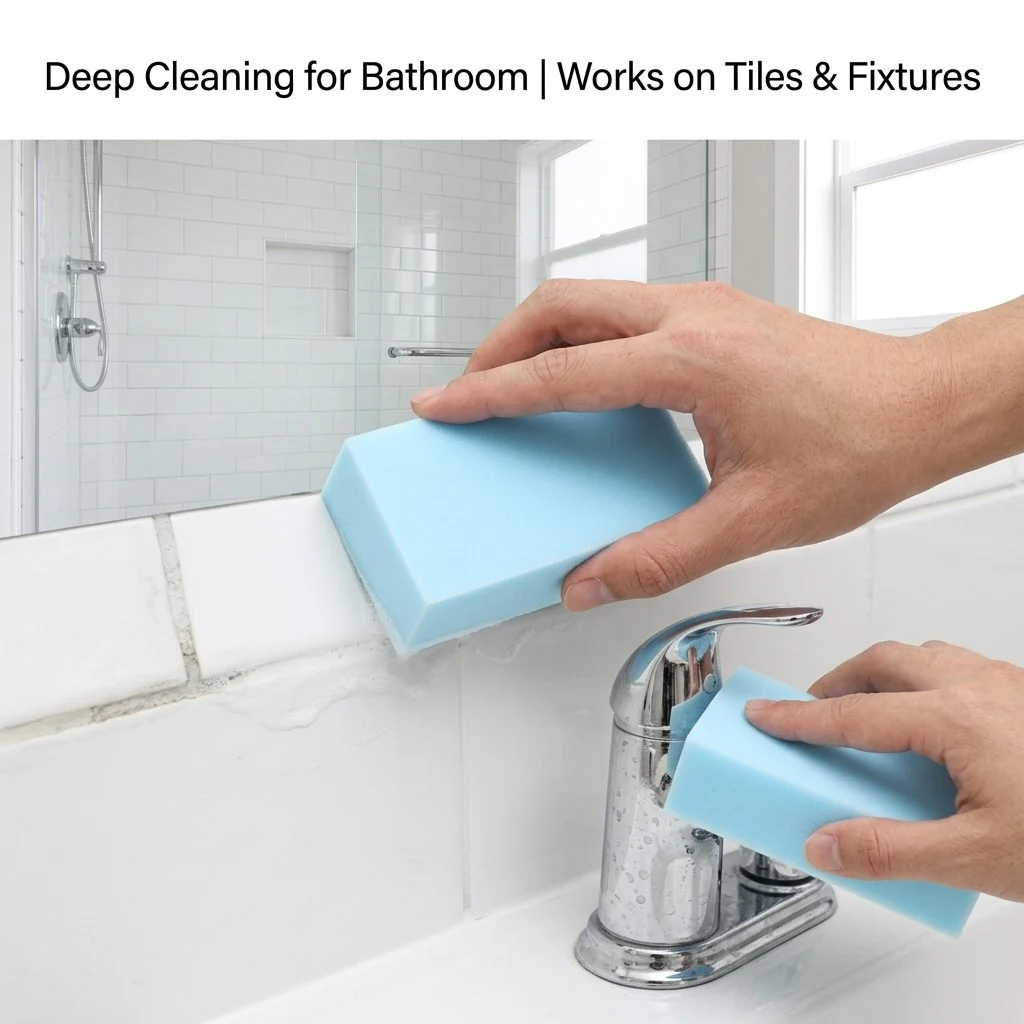
The same micro-abrasive action works on a long list of household stains: pencil on painted walls, black scuff marks along baseboards and stair risers, fingerprints around door frames, smudges on switch plates, and light splatter on bathroom tile, where a damp sponge cuts soap film and limescale haze from glazed tile as long as the glaze is intact.
Two rules apply everywhere. The sponge wears out like an eraser – replace it when it starts crumbling or losing firmness; a standard block of about 100 × 60 × 25 mm (3.9 × 2.4 × 1.0 in) covers dozens of small stain jobs. And never use a sponge that has been dropped on the floor, since trapped grit turns it into sandpaper.
Where You Should Not Use a Melamine Sponge
The eraser action that makes this sponge effective also means it removes material. Avoid it on these surfaces, or test very carefully first:
- Flat and matte paint. These finishes have no protective sheen layer, so any rubbing can leave shiny patches. Spot-test in a hidden area and use minimal pressure.
- Wallpaper and fabric wall coverings. The foam can fuzz the print surface and pull fibers out of non-woven wallpaper.
- High-gloss lacquer and cabinetry. Micro-scratching dulls the finish over time.
- Unfinished wood and drywall. Bare, absorbent surfaces stain and pill rather than clean.
If the wall paint is already peeling, chalky or stained through, no sponge will fix the substrate – clean what you can, prime and repaint the rest.
Choosing the Right Sponge Format for Wall Cleaning
All melamine erasers share the same chemistry; format decides how they behave on walls:
Classic White Blocks
The standard choice. Firm, high-density blocks keep their edges for corners and switch plates, and are the format retail customers already recognize. Hot-pressed versions are compressed to roughly twice the density of standard foam, which slows wear and keeps the working edge sharp longer.
Embossed and Colored Sheets
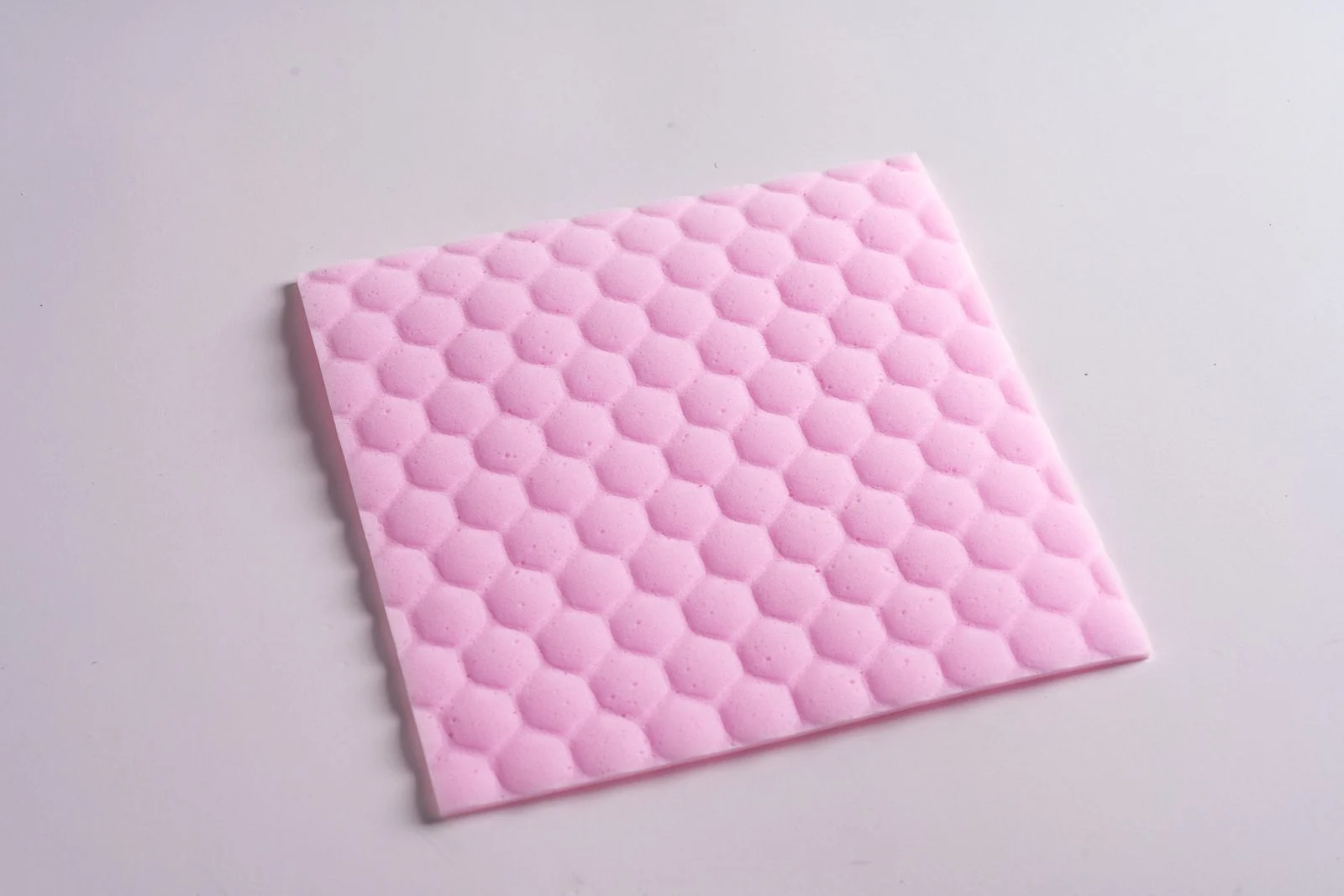
Thin sheets, typically 2–10 mm (0.08–0.4 in) thick, with an embossed pattern hold more water and glide faster across large flat walls. Colored versions also suit color-coded cleaning programs in hotels and schools, where one color is reserved for walls and another for bathrooms.
Emery-Laminated Versions for Tough, Dried Marks
For marks plain foam struggles with – dried food splatter, scuffs on skirting boards, residue on glazed tile – a version laminated with a fine emery layer adds cutting power. It is a workshop-grade option: effective, but only for hard, non-decorative surfaces, never for flat paint.
What Retail Buyers Should Check Before Sourcing Wall Stain Remover Sponges
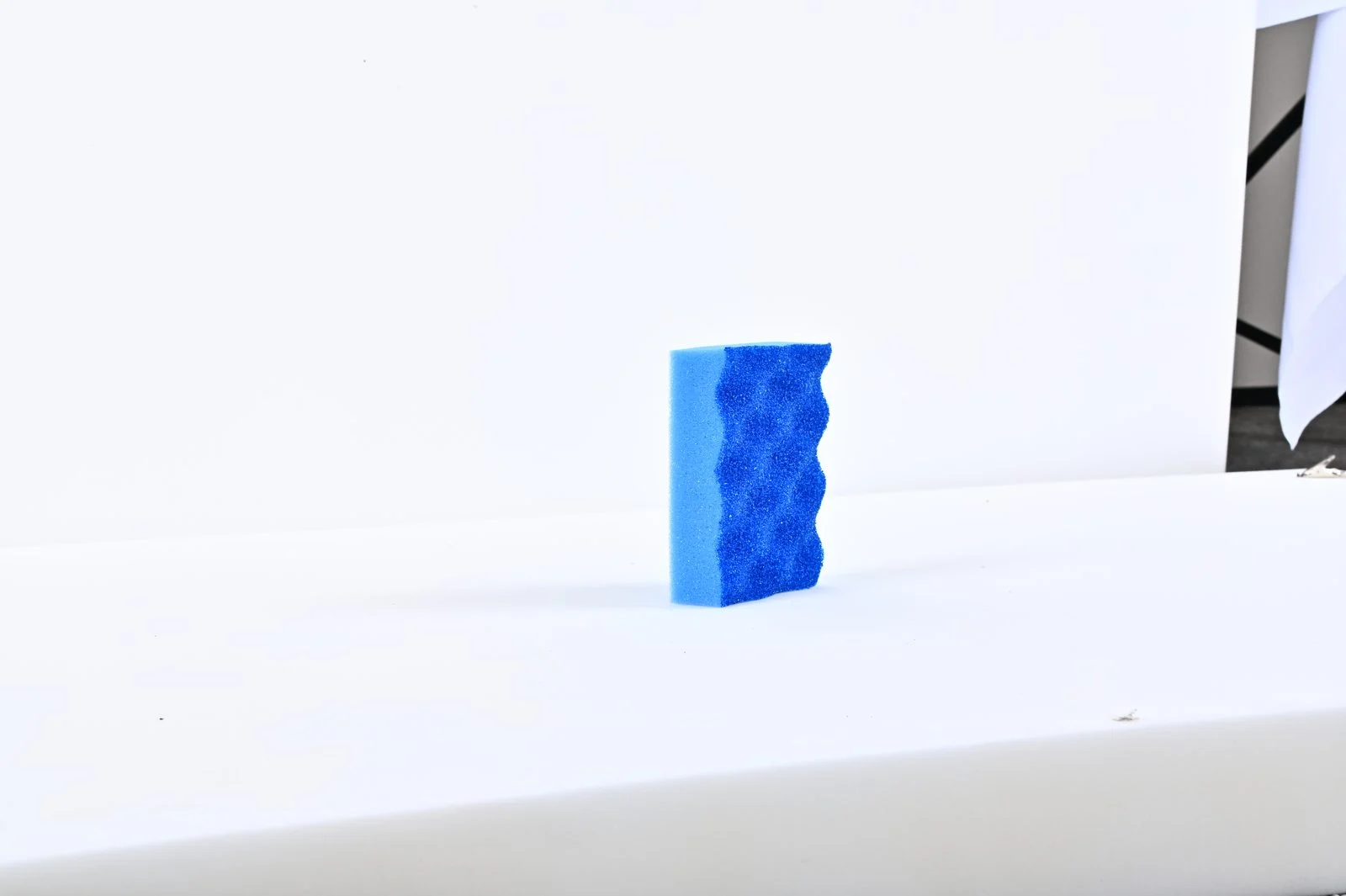
Wall stain erasers look identical across suppliers, so the specification behind the foam separates a repeat-purchase product from a returns problem. Four points belong in every RFQ:
1. Density and pressing process. Ask whether the sponge is standard or hot-pressed melamine foam, and request the density grade in writing. Higher density means slower wear on rough wall textures – the most common complaint driver in this category.
2. Safety documentation. For a product used by families on walls and furniture, OEKO-TEX® Standard 100 (Class II) and US FDA 21 CFR 177.1460 references are the fastest way to clear retail compliance reviews in the US and Europe.
3. Consistency at the cutting stage. Dimensional tolerance decides whether blocks fit retail packaging. A capable factory slices sheets to about ±0.6 mm (0.02 in), runs first-article inspection on cutting lines and holds additional hot-press capacity for peak season.
4. Packaging and private label. Look for a supplier with in-house laminating and packaging lines that can deliver 6-packs, counter displays and printed cards – backed by foam R&D with more than 100 patents and exports to over 100 countries since 2014.
Frequently Asked Questions About Removing Crayon from Walls
Will a magic eraser take paint off the wall?
On glossy, semi-gloss and modern washable paints, no – the paint film is harder than the foam. On flat or matte paint, aggressive rubbing can leave shiny patches, so always test in a hidden spot first and clean with light strokes.
How do you get crayon off a wall without removing paint?
Use a damp, well-wrung melamine sponge with light, one-directional strokes, and switch to a fresh corner as soon as it loads up with wax. Follow with a clean damp cloth and dry the wall.
Does crayon come off walls with just water?
With a melamine sponge, yes, in most cases – the foam works physically, so no detergent is needed. Fresh marks wipe away in seconds; years-old, heat-set wax may need several light passes.
What should I do if a shadow stays after cleaning?
A faint shadow is usually pigment residue in the paint texture. Let the wall dry completely, then repeat with light strokes. If a ghost still remains on flat paint, touch up with matching paint instead of scrubbing harder.
Keep Reading
- How Does the Magic Eraser Sponge Work Its Miracles on Stubborn Restaurant Wall Stains?
- Why the Hidden Spot Test Matters Before Using a Magic Eraser Sponge on Delicate Surfaces
- Magic Eraser: 7 Surfaces You Should Never Clean
Sourcing wall stain remover sponges for your store or brand? Contact our team for samples, density specifications and OEM or private label options, or browse the full range in our cleaning sponge catalog.