How Can Custom Packaging Turn Flower Scrub Cleaning Sponges into a Higher-Margin Retail Product
2026-07-16
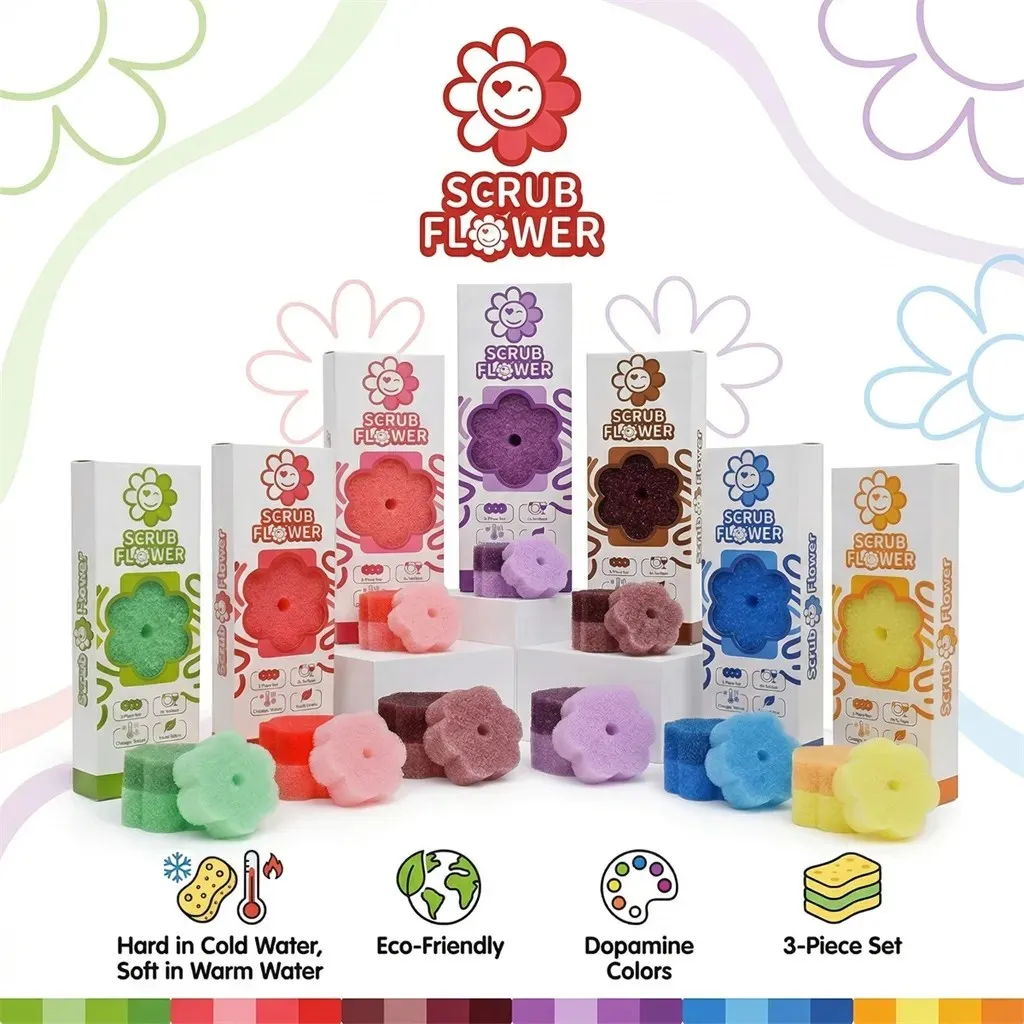
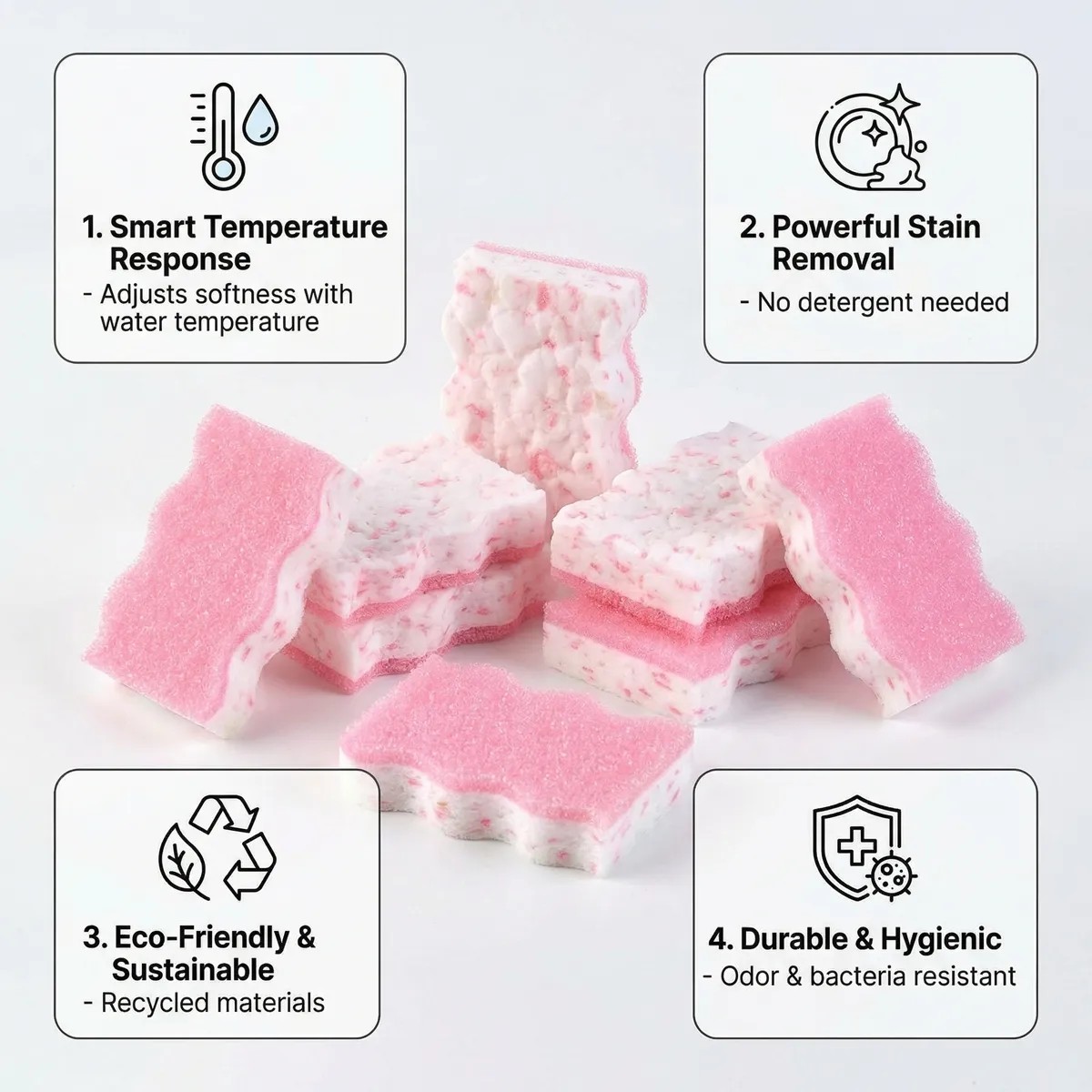
A cleaning sponge is small, but retail buyers do not judge it only by size or unit price. They judge whether it looks easy to sell, easy to explain, and easy to reorder. For importers, distributors, supermarket buyers, and online sellers, custom packaging can turn a simple kitchen cleaning item into a stronger shelf product. The Flower Scrub Cleaning Sponge already has several strong selling points: a flower shape, temperature-responsive PU material, odor resistance, antibacterial performance, high absorption, and custom color options. The real question is how packaging can make these features clear in three seconds.
Why Does Custom Packaging Matter for Sponge Retail Margins
Packaging is not just a wrapper. For low-ticket household cleaning items, it often decides whether the buyer sees the sponge as a basic commodity or a value-added cleaning solution. A plain sponge competes on price. A well-packed sponge can compete on function, safety, use case, and brand identity.
Better Packaging Makes Small Products Easier to Sell
Retail cleaning products have one common problem: many items look too similar. A sponge in bulk loose packing may work well, but the end customer may not know why it costs more than a cheaper option nearby. Custom packaging solves this by showing what the product does before anyone opens the pack.
For a flower scrub sponge, useful front-pack messages can include:
• Cold water for tougher scrubbing
• Warm water for gentle cleaning
• Odor-resistant PU material
• Safe for tableware and kitchen tools
• 7 color options for task separation
• Suitable for pots, pans, tiles, cups, and countertops
This is not fancy copywriting for the sake of it. It reduces buyer hesitation. That matters a lot when a supermarket shelf gives each product only a tiny bit of attention.
Packaging Helps You Move from Bulk Price to Retail Value
A bulk sponge is usually priced by piece, carton, or container load. A retail sponge is priced by perceived use. Once the packaging explains dual texture, safe cleaning, high absorption, and odor control, the product can enter a higher price band.
A 3-pack in a printed paper box, a hanging card, or a compact display box can be easier to place in cleaning aisles, dollar stores, homeware shops, and e-commerce bundles. The packaging does some of the selling work. Not perfectly, of course. Bad claims still hurt trust. But clear, specific claims can raise the product from “another sponge” to “a smart kitchen cleaning tool.”
How Can Flower Scrub Sponge Features Become Packaging Claims
A good retail pack starts with real product features, not empty slogans. FoamTech’s product page lists PU material, a 10x10x4cm standard size, 40mm thickness, 7 color options, custom packaging, free samples with shipping paid by the buyer, and certifications including UL, RoHS, IATF 16949, BSCI, and REACH. These details give you enough material to create a more believable package story.
Temperature Response Is the Main Hero Claim
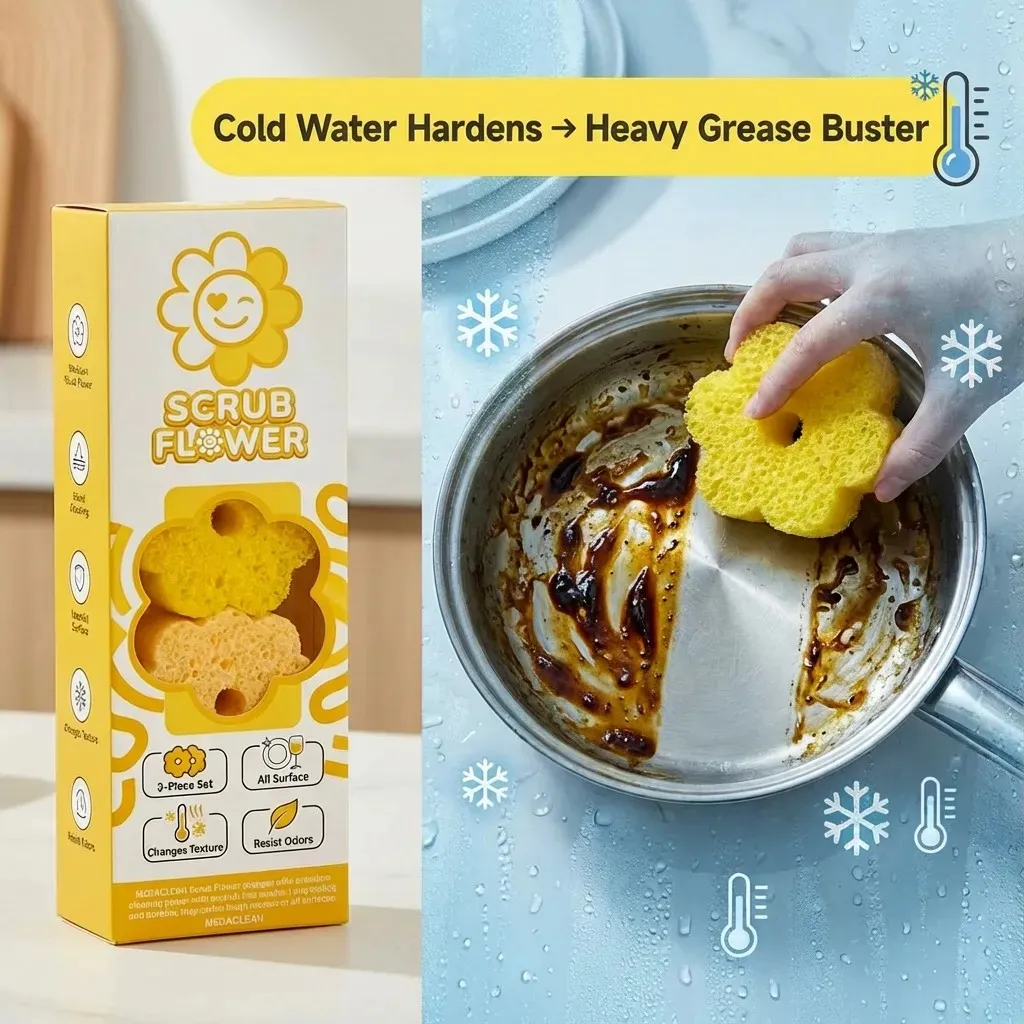
The strongest selling point is the temperature-sensitive texture. In cold water, the sponge becomes harder for grease, burnt food, and heavier grime. In warm water, it softens for porcelain, glassware, ceramics, and non-stick surfaces. This is simple, visual, and easy for consumers to remember.
For packaging, this feature can become:
• Cold Water Scrub
• Warm Water Soft Clean
• Two Cleaning Textures in One Sponge
• Tough on Grease, Gentle on Dishes
This type of wording works better than broad phrases like “premium quality.” Buyers need a reason to pay more. Temperature response gives them one.
Odor Resistance Answers a Real Kitchen Complaint
Many consumers replace sponges not because the sponge is fully worn out, but because it starts to smell. The product’s odor-resistant and antibacterial features are valuable because they speak to a daily pain point. It is better to place this message near the use instructions, not hidden in the back corner.
A simple package line such as “Rinse, Squeeze, Air Dry After Use” also helps. It teaches proper use and reduces complaints. Small detail, big effect. Retailers like fewer complaints.
Color Options Create More SKU Logic
The product offers 7 color options and custom colors. This can support retail sets for different tasks: one color for dishes, one for sinks, one for stovetops, one for bathroom tiles. Color coding sounds basic, but it makes a multi-pack feel more useful.
For B2B buyers, color also helps build seasonal or regional versions. Soft colors can fit homeware stores. Bright colors can suit discount channels. Neutral tones can suit hospitality supply. Same sponge, different retail language.
Which Packaging Formats Fit Different Sales Channels
Packaging should match your channel before it matches your design taste. A beautiful box that wastes space may hurt e-commerce freight cost. A low-cost bag that looks too plain may fail on a supermarket shelf. The right choice depends on order size, display method, and target customer.
Plastic Bag Packing Works for Cost-Sensitive Channels
Plastic bag packaging is useful when you need low unit cost, light weight, and fast packing. It works for wholesale bundles, refill packs, and online multi-piece listings. For buyers testing a new market, a clear bag with a printed insert card can be a practical first step.
The product page also lists customizable packaging, including plastic bags, paper boxes, and display boxes. For a first order, this gives you room to test without jumping straight into complex retail packaging.
Paper Box Packing Builds a Cleaner Retail Look
Paper boxes feel more structured. They protect the sponge shape better and give more space for instructions, barcodes, certification marks, and multilingual text. For kitchen cleaning sponges, paper boxes also make the product feel more giftable or more suitable for organized home-care shelves.
A box can show:
• Product size and quantity
• Cold and warm water usage
• Surface compatibility
• Care and drying instructions
• Importer or distributor information
• Barcode and batch coding area
This is useful for supermarket buyers because their internal process needs more than a nice front panel. They need labels that can pass shelf, warehouse, and compliance checks.
Display Boxes Help Impulse Sales
Display boxes work well for small, colorful products. The knowledge base includes display box examples using 300g white or grey paperboard, along with different pack counts and OEM packing support. That gives importers a practical route for counter displays, cleaning aisles, and promotional end caps.
For a flower sponge, a display box can group 12, 24, or 48 retail packs. It is easy for store staff to open and place. No one wants a display that takes ten minutes to set up. Retail is busy, and yes, small details like that decide whether the product gets a good spot.
How Should B2B Buyers Plan Private Label Sponge Packaging
Private label packaging needs more than a logo. It should match your price point, retail promise, and reorder plan. A crowded design may look cheap. Too little information may make the sponge hard to explain. The safer route is a clean front, a useful back panel, and clear proof points.
Start with the Main Buyer Concern
For kitchen cleaning sponges, your target customer usually cares about these points:
• Will it scratch cookware?
• Does it smell after use?
• Can it clean grease and burnt residue?
• Is it safe around tableware?
• How long can it last?
• Is it easy to store and dry?
The custom private label service should help turn these concerns into pack content, not just print a logo. A strong sponge package should sell the problem solved, not only the material used.
Keep Claims Specific and Safe
Avoid claims that sound too broad. “Best sponge ever” does not help buyers. “Cold water hardens for stronger scrubbing” is clearer. “Warm water softens for delicate cleaning” is easier to trust. “Odor-resistant” is useful when paired with care instructions.
Certifications also need careful placement. If your target market needs REACH or RoHS information, place it where importers and retailers can check it quickly. The product page lists several certifications, and the uploaded knowledge base also shows factory-related certification and inspection information. That gives B2B buyers more confidence when building a private label line.
Match Packaging to MOQ and Market Test Plans
Not every buyer should start with the most expensive box. A regional distributor may begin with a simple 3-pack or 6-pack. A supermarket chain may need display boxes and full-color retail packaging. An online seller may care more about barcode placement, polybag warnings, carton strength, and shipping volume.
FoamTech, founded in 2014, has experience in foam material development and custom cleaning product production. The manufacturer background helps buyers check whether the supplier can support product, packing, and compliance needs in one process.
What Should a High-Margin Sponge Pack Include
A higher-margin pack should not look overloaded. It should guide the customer quickly from problem to product benefit. A simple front panel and a practical back panel usually work better than a design full of claims.
Front Panel Essentials
Put the strongest benefits where buyers see them first:
• Flower Scrub Cleaning Sponge
• Cold Water Hard, Warm Water Soft
• Non-Scratch Cleaning for Daily Kitchen Use
• Odor-Resistant and Antibacterial
• 3-Pack or Custom Pack Count
• Color-Coded Cleaning
The front should not try to explain everything. Let it do the first job: make people pick it up.
Back Panel Essentials
Use the back panel for proof and instructions:
• Material: PU
• Size: 10x10x4cm or custom
• Thickness: 40mm
• Suitable surfaces: stainless steel, ceramic, glass, plastic, stone, wood
• Use cold water for tough stains
• Use warm water for delicate items
• Rinse and dry after use
• Custom logo, color, and packaging available
This is where B2B buyers often see the difference between a factory product and a retail-ready product. Good packaging lowers their later workload.
How Can You Turn Packaging into a Reorder Strategy
Custom packaging should help the first order sell, but it should also support the second order. That means stable pack sizes, clear carton planning, repeatable artwork, and a product story that store staff and online listings can repeat.
Use Packaging to Build a Product Line
One sponge can become several SKUs:
• 3-pack for daily kitchen cleaning
• 6-pack family value set
• Mixed-color task set
• Display box for retail counters
• Hospitality bulk pack
• Private label e-commerce bundle
This helps you sell to more than one channel without changing the core product too much. Less product complexity, more sales angles. That is usually a better route than chasing too many new shapes at once.
Ask the Right Questions Before Ordering
Before you confirm packaging, ask these questions:
• Which market will receive the first shipment?
• Will the product sell online, offline, or both?
• Does the retailer need a hanging hole, display box, or barcode?
• What languages must appear on the pack?
• Should the pack focus on grease removal, odor control, or non-scratch cleaning?
• What carton size fits your warehouse and shipping plan?
For custom samples, bulk order discussion, and packaging details, buyers can use the contact page to confirm artwork, sample timing, and order requirements.
FAQ
Q1: Can Custom Packaging Really Raise the Margin of Flower Scrub Cleaning Sponges?
A: Yes. Custom packaging helps explain the temperature-responsive texture, odor resistance, antibacterial feature, and multi-surface use. When buyers see clear benefits, the sponge is less likely to be judged only by unit price.
Q2: Which Packaging Format Is Best for First-Time Importers?
A: A printed plastic bag or simple paper box is usually safer for a first test order. It keeps cost lower while still giving enough space for logo, usage steps, barcode, and key selling points.
Q3: What Should Be Printed on a Private Label Sponge Pack?
A: The pack should show material, size, use instructions, suitable surfaces, care tips, barcode, pack count, and main claims such as cold-water scrubbing and warm-water gentle cleaning.
Q4: Is the Flower Scrub Cleaning Sponge Suitable for Retail and Foodservice Buyers?
A: Yes. Its PU material, odor-resistant design, antibacterial feature, and compatibility with tableware, cookware, tiles, glass, and stainless steel make it suitable for household retail, catering, hospitality, and professional kitchen supply.
Q5: How Can Buyers Reduce Risk Before Placing a Bulk Custom Packaging Order?
A: Start with samples, confirm the sponge feel in cold and warm water, check artwork layout, test barcode placement, review carton packing, and choose a pack format that fits your channel before scaling the order.
A cleaning sponge is small, but retail buyers do not judge it only by size or unit price. They judge whether it looks easy to sell, easy to explain, and easy to reorder. For importers, distributors, supermarket buyers, and online sellers, custom packaging can turn a simple kitchen cleaning item into a stronger shelf product. The Flower Scrub Cleaning Sponge already has several strong selling points: a flower shape, temperature-responsive PU material, odor resistance, antibacterial performance, high absorption, and custom color options. The real question is how packaging can make these features clear in three seconds.
Why Does Custom Packaging Matter for Sponge Retail Margins
Packaging is not just a wrapper. For low-ticket household cleaning items, it often decides whether the buyer sees the sponge as a basic commodity or a value-added cleaning solution. A plain sponge competes on price. A well-packed sponge can compete on function, safety, use case, and brand identity.
Better Packaging Makes Small Products Easier to Sell
Retail cleaning products have one common problem: many items look too similar. A sponge in bulk loose packing may work well, but the end customer may not know why it costs more than a cheaper option nearby. Custom packaging solves this by showing what the product does before anyone opens the pack.
For a flower scrub sponge, useful front-pack messages can include:
• Cold water for tougher scrubbing
• Warm water for gentle cleaning
• Odor-resistant PU material
• Safe for tableware and kitchen tools
• 7 color options for task separation
• Suitable for pots, pans, tiles, cups, and countertops
This is not fancy copywriting for the sake of it. It reduces buyer hesitation. That matters a lot when a supermarket shelf gives each product only a tiny bit of attention.
Packaging Helps You Move from Bulk Price to Retail Value
A bulk sponge is usually priced by piece, carton, or container load. A retail sponge is priced by perceived use. Once the packaging explains dual texture, safe cleaning, high absorption, and odor control, the product can enter a higher price band.
A 3-pack in a printed paper box, a hanging card, or a compact display box can be easier to place in cleaning aisles, dollar stores, homeware shops, and e-commerce bundles. The packaging does some of the selling work. Not perfectly, of course. Bad claims still hurt trust. But clear, specific claims can raise the product from “another sponge” to “a smart kitchen cleaning tool.”
How Can Flower Scrub Sponge Features Become Packaging Claims
A good retail pack starts with real product features, not empty slogans. FoamTech’s product page lists PU material, a 10x10x4cm standard size, 40mm thickness, 7 color options, custom packaging, free samples with shipping paid by the buyer, and certifications including UL, RoHS, IATF 16949, BSCI, and REACH. These details give you enough material to create a more believable package story.
Temperature Response Is the Main Hero Claim
The strongest selling point is the temperature-sensitive texture. In cold water, the sponge becomes harder for grease, burnt food, and heavier grime. In warm water, it softens for porcelain, glassware, ceramics, and non-stick surfaces. This is simple, visual, and easy for consumers to remember.
For packaging, this feature can become:
• Cold Water Scrub
• Warm Water Soft Clean
• Two Cleaning Textures in One Sponge
• Tough on Grease, Gentle on Dishes
This type of wording works better than broad phrases like “premium quality.” Buyers need a reason to pay more. Temperature response gives them one.
Odor Resistance Answers a Real Kitchen Complaint
Many consumers replace sponges not because the sponge is fully worn out, but because it starts to smell. The product’s odor-resistant and antibacterial features are valuable because they speak to a daily pain point. It is better to place this message near the use instructions, not hidden in the back corner.
A simple package line such as “Rinse, Squeeze, Air Dry After Use” also helps. It teaches proper use and reduces complaints. Small detail, big effect. Retailers like fewer complaints.
Color Options Create More SKU Logic
The product offers 7 color options and custom colors. This can support retail sets for different tasks: one color for dishes, one for sinks, one for stovetops, one for bathroom tiles. Color coding sounds basic, but it makes a multi-pack feel more useful.
For B2B buyers, color also helps build seasonal or regional versions. Soft colors can fit homeware stores. Bright colors can suit discount channels. Neutral tones can suit hospitality supply. Same sponge, different retail language.
Which Packaging Formats Fit Different Sales Channels
Packaging should match your channel before it matches your design taste. A beautiful box that wastes space may hurt e-commerce freight cost. A low-cost bag that looks too plain may fail on a supermarket shelf. The right choice depends on order size, display method, and target customer.
Plastic Bag Packing Works for Cost-Sensitive Channels
Plastic bag packaging is useful when you need low unit cost, light weight, and fast packing. It works for wholesale bundles, refill packs, and online multi-piece listings. For buyers testing a new market, a clear bag with a printed insert card can be a practical first step.
The product page also lists customizable packaging, including plastic bags, paper boxes, and display boxes. For a first order, this gives you room to test without jumping straight into complex retail packaging.
Paper Box Packing Builds a Cleaner Retail Look
Paper boxes feel more structured. They protect the sponge shape better and give more space for instructions, barcodes, certification marks, and multilingual text. For kitchen cleaning sponges, paper boxes also make the product feel more giftable or more suitable for organized home-care shelves.
A box can show:
• Product size and quantity
• Cold and warm water usage
• Surface compatibility
• Care and drying instructions
• Importer or distributor information
• Barcode and batch coding area
This is useful for supermarket buyers because their internal process needs more than a nice front panel. They need labels that can pass shelf, warehouse, and compliance checks.
Display Boxes Help Impulse Sales
Display boxes work well for small, colorful products. The knowledge base includes display box examples using 300g white or grey paperboard, along with different pack counts and OEM packing support. That gives importers a practical route for counter displays, cleaning aisles, and promotional end caps.
For a flower sponge, a display box can group 12, 24, or 48 retail packs. It is easy for store staff to open and place. No one wants a display that takes ten minutes to set up. Retail is busy, and yes, small details like that decide whether the product gets a good spot.
How Should B2B Buyers Plan Private Label Sponge Packaging
Private label packaging needs more than a logo. It should match your price point, retail promise, and reorder plan. A crowded design may look cheap. Too little information may make the sponge hard to explain. The safer route is a clean front, a useful back panel, and clear proof points.
Start with the Main Buyer Concern
For kitchen cleaning sponges, your target customer usually cares about these points:
• Will it scratch cookware?
• Does it smell after use?
• Can it clean grease and burnt residue?
• Is it safe around tableware?
• How long can it last?
• Is it easy to store and dry?
The custom private label service should help turn these concerns into pack content, not just print a logo. A strong sponge package should sell the problem solved, not only the material used.
Keep Claims Specific and Safe
Avoid claims that sound too broad. “Best sponge ever” does not help buyers. “Cold water hardens for stronger scrubbing” is clearer. “Warm water softens for delicate cleaning” is easier to trust. “Odor-resistant” is useful when paired with care instructions.
Certifications also need careful placement. If your target market needs REACH or RoHS information, place it where importers and retailers can check it quickly. The product page lists several certifications, and the uploaded knowledge base also shows factory-related certification and inspection information. That gives B2B buyers more confidence when building a private label line.
Match Packaging to MOQ and Market Test Plans
Not every buyer should start with the most expensive box. A regional distributor may begin with a simple 3-pack or 6-pack. A supermarket chain may need display boxes and full-color retail packaging. An online seller may care more about barcode placement, polybag warnings, carton strength, and shipping volume.
FoamTech, founded in 2014, has experience in foam material development and custom cleaning product production. The manufacturer background helps buyers check whether the supplier can support product, packing, and compliance needs in one process.
What Should a High-Margin Sponge Pack Include
A higher-margin pack should not look overloaded. It should guide the customer quickly from problem to product benefit. A simple front panel and a practical back panel usually work better than a design full of claims.
Front Panel Essentials
Put the strongest benefits where buyers see them first:
• Flower Scrub Cleaning Sponge
• Cold Water Hard, Warm Water Soft
• Non-Scratch Cleaning for Daily Kitchen Use
• Odor-Resistant and Antibacterial
• 3-Pack or Custom Pack Count
• Color-Coded Cleaning
The front should not try to explain everything. Let it do the first job: make people pick it up.
Back Panel Essentials
Use the back panel for proof and instructions:
• Material: PU
• Size: 10x10x4cm or custom
• Thickness: 40mm
• Suitable surfaces: stainless steel, ceramic, glass, plastic, stone, wood
• Use cold water for tough stains
• Use warm water for delicate items
• Rinse and dry after use
• Custom logo, color, and packaging available
This is where B2B buyers often see the difference between a factory product and a retail-ready product. Good packaging lowers their later workload.
How Can You Turn Packaging into a Reorder Strategy
Custom packaging should help the first order sell, but it should also support the second order. That means stable pack sizes, clear carton planning, repeatable artwork, and a product story that store staff and online listings can repeat.
Use Packaging to Build a Product Line
One sponge can become several SKUs:
• 3-pack for daily kitchen cleaning
• 6-pack family value set
• Mixed-color task set
• Display box for retail counters
• Hospitality bulk pack
• Private label e-commerce bundle
This helps you sell to more than one channel without changing the core product too much. Less product complexity, more sales angles. That is usually a better route than chasing too many new shapes at once.
Ask the Right Questions Before Ordering
Before you confirm packaging, ask these questions:
• Which market will receive the first shipment?
• Will the product sell online, offline, or both?
• Does the retailer need a hanging hole, display box, or barcode?
• What languages must appear on the pack?
• Should the pack focus on grease removal, odor control, or non-scratch cleaning?
• What carton size fits your warehouse and shipping plan?
For custom samples, bulk order discussion, and packaging details, buyers can use the contact page to confirm artwork, sample timing, and order requirements.
FAQ
Q1: Can Custom Packaging Really Raise the Margin of Flower Scrub Cleaning Sponges?
A: Yes. Custom packaging helps explain the temperature-responsive texture, odor resistance, antibacterial feature, and multi-surface use. When buyers see clear benefits, the sponge is less likely to be judged only by unit price.
Q2: Which Packaging Format Is Best for First-Time Importers?
A: A printed plastic bag or simple paper box is usually safer for a first test order. It keeps cost lower while still giving enough space for logo, usage steps, barcode, and key selling points.
Q3: What Should Be Printed on a Private Label Sponge Pack?
A: The pack should show material, size, use instructions, suitable surfaces, care tips, barcode, pack count, and main claims such as cold-water scrubbing and warm-water gentle cleaning.
Q4: Is the Flower Scrub Cleaning Sponge Suitable for Retail and Foodservice Buyers?
A: Yes. Its PU material, odor-resistant design, antibacterial feature, and compatibility with tableware, cookware, tiles, glass, and stainless steel make it suitable for household retail, catering, hospitality, and professional kitchen supply.
Q5: How Can Buyers Reduce Risk Before Placing a Bulk Custom Packaging Order?
A: Start with samples, confirm the sponge feel in cold and warm water, check artwork layout, test barcode placement, review carton packing, and choose a pack format that fits your channel before scaling the order.
Related Recommendations

Family owned company, globalleader in development andmanufacturing of home careproducts for private label andcontract manufacturing
Copyright © 2026 FoamTech (Zhejiang) New Materials Co., Ltd.