Top 7 Reasons to Source Antibacterial Melamine Cleaning Sponges for Private Label Brands
2026-07-02
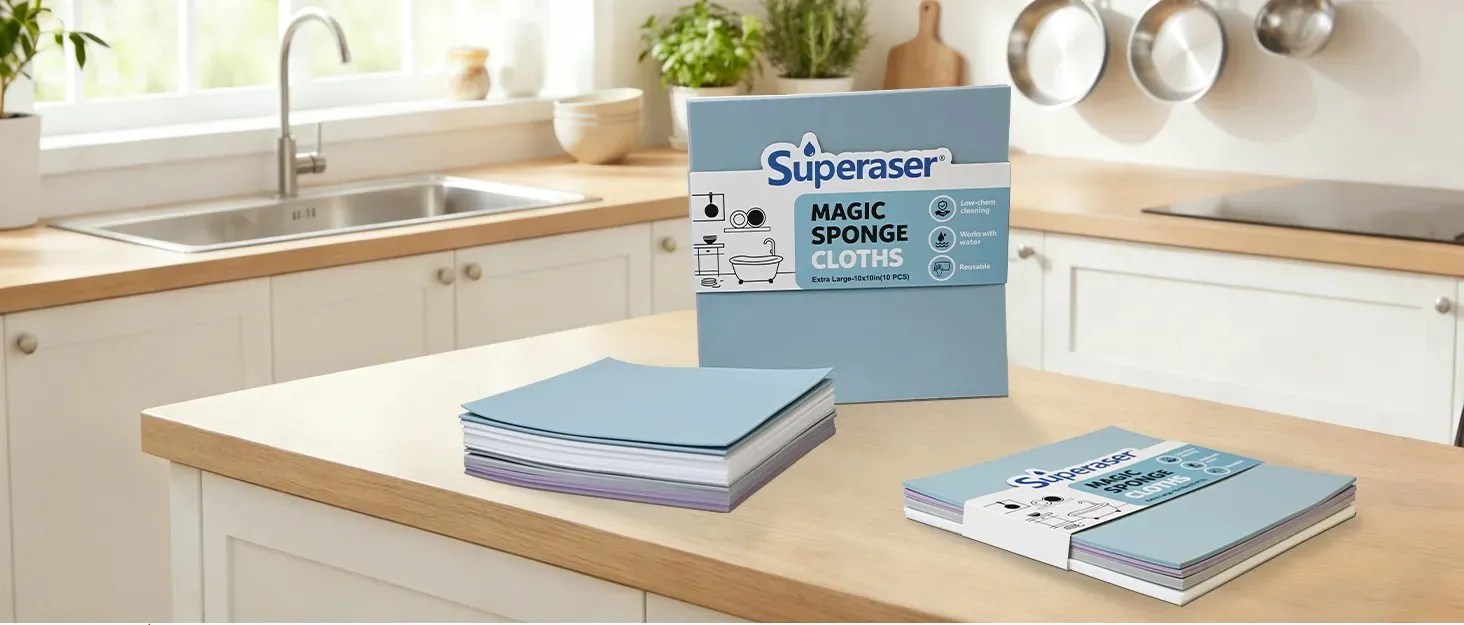
Successful private label cleaning products are simple to explain, easy to use and can be used in more than one place in the home. Our antibacterial melamine cleaning sponges fulfill these requirements. They clean many hard surfaces with water, come in small retail-friendly sizes, and can be packed in different ways for supermarkets, online stores, discount chains, home care brands, and promotional kits.
For buyers, the real question is not only “Does it clean?” It is also about repeat orders, claim support, packaging space, quality stability, and whether the sponge can make a private label range look more professional without a complicated launch.
1. Why Do Antibacterial Melamine Sponges Fit Daily Cleaning Demand
Daily cleaning products need to solve small but annoying jobs. Melamine Sponges remove Tea Stains, Sink Marks, Soap Scum, Marks and Spots from Plastic Chairs, Shoe Edge Marks, Office Desk Scratches and other Marks and Spots, and Bathroom Tile Black Mildew Stains and White Residue Marks. The fine open-cell structure of a Melamine Sponge physically wipes dirt and grime from surfaces without using large amounts of cleaning agent.
Water-Activated Cleaning Is Easy to Sell
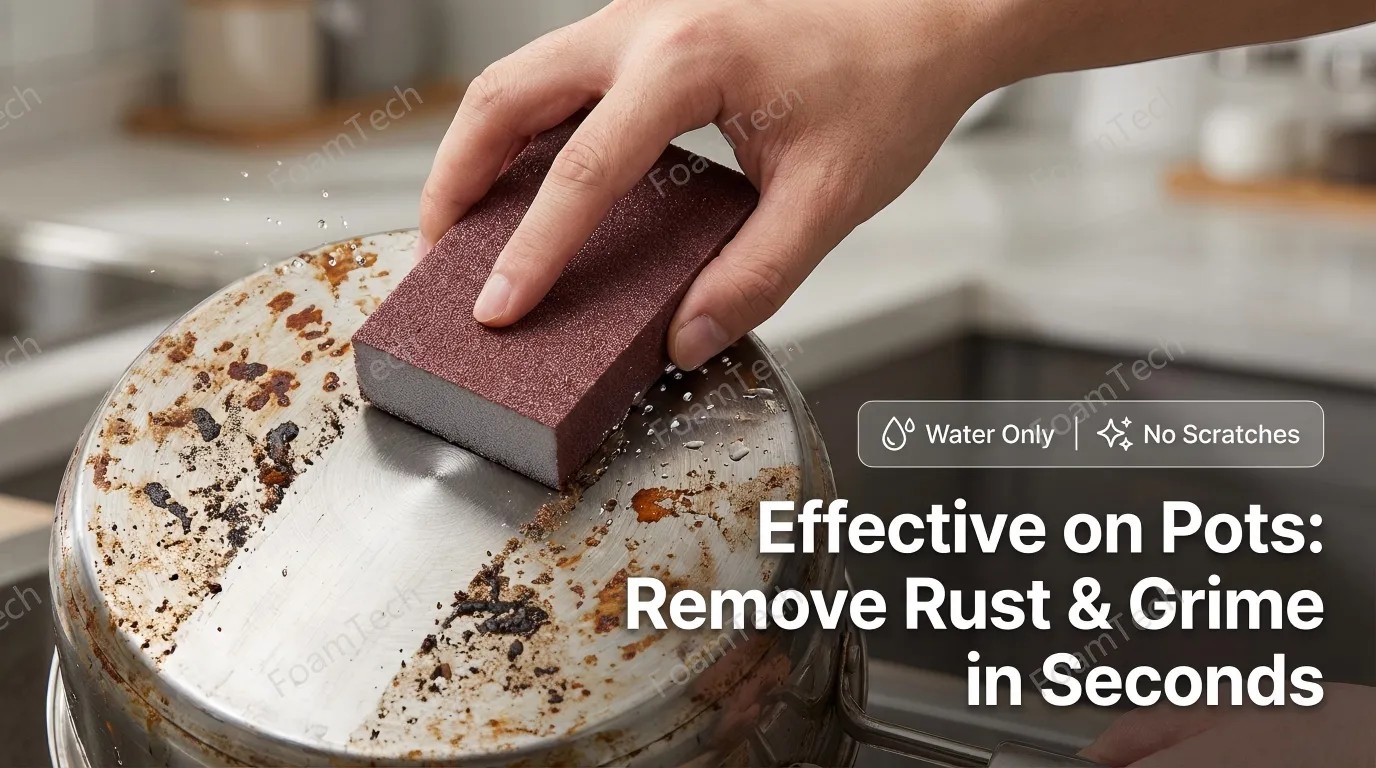
The selling point is direct: soak, squeeze, wipe, rinse. No long instruction panel. No messy liquid pairing. The sponge can be used with water alone, which is useful for buyers building a cleaner, simpler home care line.
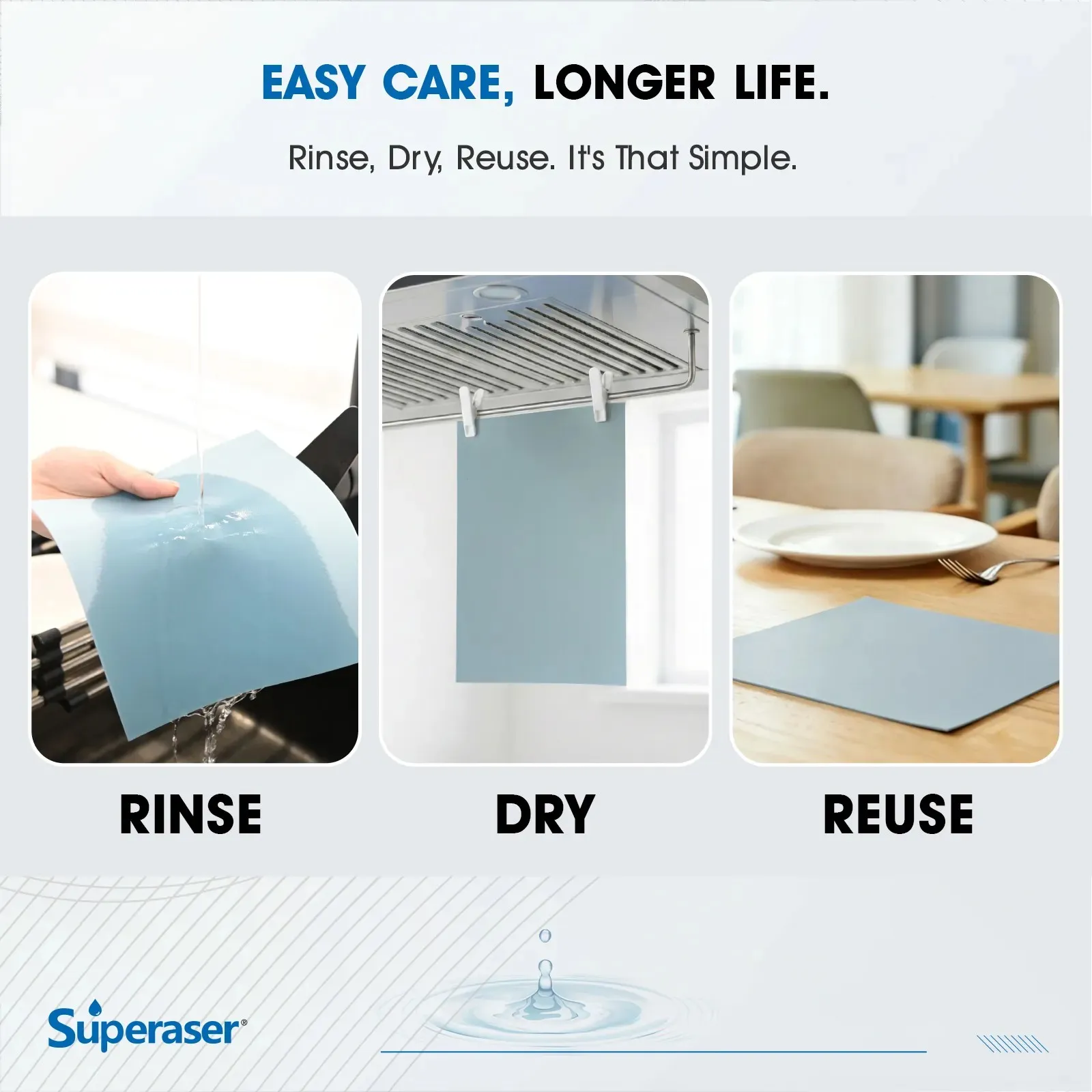
For stainless steel sinks, the rule is simple: 1. Wet your sponge 2. Squeeze out excess water 3. Wipe in the direction of the steel’s grain 4. Rinse your sink after you have cleaned it. We DO NOT RECOMMEND applying excessive pressure to mirror-polished finishes, coated finishes or sensitive surfaces. This small warning sounds basic, but it saves after-sales trouble. Retail buyers care about that more than many suppliers admit.
The Superaser Multi-Purpose Melamine Cleaning Sponge is a good product reference for this type of water-activated daily cleaning item.
2. Why Does Antibacterial Performance Add Shelf Value
A normal sponge removes visible dirt. An antibacterial melamine cleaning sponge can add one more message: hygiene care. That makes the product easier to place in kitchen, bathroom, pet-area, and general household cleaning sections.
Tested Claims Help Private Label Buyers Feel Safer
For private label brands, antibacterial wording should not be used loosely. The knowledge base test data for the knowledge tested for antibacterial properties shows activity against Escherichia coli, Staphylococcus aureus and Candida albicans. The listed kill rate of 99.9% or better at 2 minutes for the tested sample exceeds the lowest acceptable value of 90% for this test method. The listed kill rate at 20 minutes of 99.99% was also met.
That does not mean every future SKU can copy the claim without checking. A serious buyer should ask for the matching report for the exact material, formula, and destination market. Still, tested data gives a much stronger base than a plain “antibacterial” word printed on the bag. Retail compliance teams like clear files. They ask for them sooner or later.
3. Why Is Multi-Surface Use Better for Private Label Sales
A sponge that only works for one surface is harder to sell in bulk. A melamine sponge can cover more cleaning occasions, so the same SKU can serve different buyers and channels.
One Product Can Cover Kitchen, Bathroom, Office, and More
The knowledge base shows a wide array of use cases for ceramic, dishware, tea sets, bathtubs, tiles, plastic chairs, office furniture, computer peripherals like keyboards and printers, kitchen appliances like refrigerators and washing machines as well as other items like glass, leather, barbecue grills, faucets and aluminum windows. Note that this is a very long list and therefore we keep the buyer facing message clean.
A better retail claim could be:
Suitable for sinks, tiles, glass, plastic items, appliances, faucets, office desks, and more hard surfaces.
That reads better than stuffing every surface on the front label. For B2B pages, though, detailed application lists are useful because importers often sell to more than one channel. Kitchen buyers may care about dishware stains. Office supply buyers may care about desks and keyboards. Auto accessory sellers may ask about car interiors. One sponge can support several product stories.
4. Why Do Size and Density Options Matter in Bulk Orders
Many sponge projects fail at the sampling stage because the buyer only checks the cleaning result and ignores sponge life, hand feel, and pack count. Density and size matter a lot here.
Different SKUs Can Match Different Price Points
The knowledge base includes common sizes such as 1073cm, 963cm, 1062cm, 1262.5cm, and 1282cm. Normal density products around 8kg/m³±1 are often used for standard cleaning sponges. Compressed sponge options around 12kg/m³±1 can be positioned as more durable and longer-lasting. Higher-density or compounded versions can support special use cases, such as thin eraser sheets, floor pads, or sponges with scouring pads.
This gives private label brands room to build a simple range:
Entry pack for daily home use
Compressed sponge for longer use
Small cube pack for shoes and corners
Display box for retail checkout zones
Bulk box for online or wholesale channels
The FoamTech website presents melamine cleaning sponge options that can support this kind of range planning.
5. Why Is OEM Packaging a Real Buying Point
For private label, packaging is not a small detail. It controls shelf look, barcode placement, claim layout, shipping volume, and online review photos. A good sponge with weak packaging often looks cheap. A mid-range sponge with clean packaging can sell better. Annoying, but true.
Pack Formats Can Match Retail and E-Commerce Channels
The knowledge base lists several packaging choices, including individual packing, 3pcs per pack, 10pcs per pack, 21pcs per pack, 27pcs per pack, 30pcs per pack, 48pcs per box, 120pcs per box, color printing cardboard sleeves, heat shrink film, transparent plastic packing with cardboard, display boxes, and corrugated boxes. It also mentions support for OEM packing.
That is helpful because different markets buy differently. A supermarket may prefer 2pcs or 3pcs retail packs. An online seller may prefer 30pcs or 120pcs boxes. A discount store may want a compact display box with bold cleaning claims. A private label buyer can start with one practical SKU, then add pack sizes after sales data comes in.
For buyers building their own line, the custom service page is the natural place to check OEM packing, size, and private label options.
6. Why Does Factory Background Affect Reorder Stability
A private label order is not only one shipment. The harder part is keeping the same material, same size, same packaging, and same delivery rhythm across repeat orders. Cleaning sponges look simple from the outside, but unstable cutting, weak foam strength, or color printing mistakes can cause complaints quickly.
Production Experience Reduces Small but Costly Problems
FoamTech was established in 2014 and focuses on melamine foam production and R&D. The knowledge base mentions a 40,000 square meter site, patented technology, research talent, industrial-scale production, and honors such as national high-tech enterprise, green factory, quality system certification, environmental and occupational health system certification, and BSCI factory inspection.
For private label buyers, these details are not just decoration. They help answer practical questions:
Can the supplier repeat the same density?
Can packaging be kept consistent?
Can the factory support larger seasonal orders?
Can documents be provided when the retailer asks?
Can small changes be discussed before mass production?
These points are less exciting than cleaning demos, but they decide whether the second order happens.
7. Why Is Superaser a Useful Product Starting Point
A private label brand does not always need to start with a complicated custom sponge. Often, the safer route is to begin with a proven multi-purpose format, test market feedback, then adjust density, pack count, or packaging.
A Practical Base for Home Cleaning Lines
The Superaser Multi-Purpose Melamine Cleaning Sponge fits the common private label direction: daily stain removal, water-activated cleaning, compact size, and multi-surface use. It can sit in a home cleaning range beside kitchen cloths, scrubbers, cellulose sponges, and bathroom cleaning tools.
For stainless steel sink care, it can be positioned as a spot-cleaning sponge for water marks, tea stains, and surface dirt. For bathroom use, it can target tiles, taps, and ceramic areas. For office cleaning, it can remove marks from desks and plastic surfaces. The point is not to claim it can clean everything. The better message is: small sponge, many hard-surface jobs, simple use.
Buyers who want to discuss pack count, logo, display box, or sample testing can use the contact page to send target market details before quoting.
FAQ
Q1: Can Antibacterial Melamine Cleaning Sponges Be Sold under a Private Label Brand?
A: Yes. They are suitable for private label projects because size, logo, packaging, pack count, and retail presentation can be adjusted. Buyers should confirm the exact material, antibacterial report, label language, and destination-market rules before mass production.
Q2: Does a Melamine Cleaning Sponge Need Detergent?
A: Usually no. A melamine sponge is designed for physical dirt removal with water. Wet it fully, squeeze out extra water, wipe the stain, then rinse the sponge after use. For oily or heavy kitchen grease, a mild cleaner may still be needed.
Q3: What Surfaces Can This Type of Sponge Clean?
A: Common uses include ceramic, tile, glass, plastic items, office desks, appliances, faucets, barbecue grills, and some leather surfaces. Test first on coated, glossy, painted, non-stick, or delicate surfaces. Hard pressure is not needed.
Successful private label cleaning products are simple to explain, easy to use and can be used in more than one place in the home. Our antibacterial melamine cleaning sponges fulfill these requirements. They clean many hard surfaces with water, come in small retail-friendly sizes, and can be packed in different ways for supermarkets, online stores, discount chains, home care brands, and promotional kits.
For buyers, the real question is not only “Does it clean?” It is also about repeat orders, claim support, packaging space, quality stability, and whether the sponge can make a private label range look more professional without a complicated launch.
1. Why Do Antibacterial Melamine Sponges Fit Daily Cleaning Demand
Daily cleaning products need to solve small but annoying jobs. Melamine Sponges remove Tea Stains, Sink Marks, Soap Scum, Marks and Spots from Plastic Chairs, Shoe Edge Marks, Office Desk Scratches and other Marks and Spots, and Bathroom Tile Black Mildew Stains and White Residue Marks. The fine open-cell structure of a Melamine Sponge physically wipes dirt and grime from surfaces without using large amounts of cleaning agent.
Water-Activated Cleaning Is Easy to Sell
The selling point is direct: soak, squeeze, wipe, rinse. No long instruction panel. No messy liquid pairing. The sponge can be used with water alone, which is useful for buyers building a cleaner, simpler home care line.
For stainless steel sinks, the rule is simple: 1. Wet your sponge 2. Squeeze out excess water 3. Wipe in the direction of the steel’s grain 4. Rinse your sink after you have cleaned it. We DO NOT RECOMMEND applying excessive pressure to mirror-polished finishes, coated finishes or sensitive surfaces. This small warning sounds basic, but it saves after-sales trouble. Retail buyers care about that more than many suppliers admit.
The Superaser Multi-Purpose Melamine Cleaning Sponge is a good product reference for this type of water-activated daily cleaning item.
2. Why Does Antibacterial Performance Add Shelf Value
A normal sponge removes visible dirt. An antibacterial melamine cleaning sponge can add one more message: hygiene care. That makes the product easier to place in kitchen, bathroom, pet-area, and general household cleaning sections.
Tested Claims Help Private Label Buyers Feel Safer
For private label brands, antibacterial wording should not be used loosely. The knowledge base test data for the knowledge tested for antibacterial properties shows activity against Escherichia coli, Staphylococcus aureus and Candida albicans. The listed kill rate of 99.9% or better at 2 minutes for the tested sample exceeds the lowest acceptable value of 90% for this test method. The listed kill rate at 20 minutes of 99.99% was also met.
That does not mean every future SKU can copy the claim without checking. A serious buyer should ask for the matching report for the exact material, formula, and destination market. Still, tested data gives a much stronger base than a plain “antibacterial” word printed on the bag. Retail compliance teams like clear files. They ask for them sooner or later.
3. Why Is Multi-Surface Use Better for Private Label Sales
A sponge that only works for one surface is harder to sell in bulk. A melamine sponge can cover more cleaning occasions, so the same SKU can serve different buyers and channels.
One Product Can Cover Kitchen, Bathroom, Office, and More
The knowledge base shows a wide array of use cases for ceramic, dishware, tea sets, bathtubs, tiles, plastic chairs, office furniture, computer peripherals like keyboards and printers, kitchen appliances like refrigerators and washing machines as well as other items like glass, leather, barbecue grills, faucets and aluminum windows. Note that this is a very long list and therefore we keep the buyer facing message clean.
A better retail claim could be:
Suitable for sinks, tiles, glass, plastic items, appliances, faucets, office desks, and more hard surfaces.
That reads better than stuffing every surface on the front label. For B2B pages, though, detailed application lists are useful because importers often sell to more than one channel. Kitchen buyers may care about dishware stains. Office supply buyers may care about desks and keyboards. Auto accessory sellers may ask about car interiors. One sponge can support several product stories.
4. Why Do Size and Density Options Matter in Bulk Orders
Many sponge projects fail at the sampling stage because the buyer only checks the cleaning result and ignores sponge life, hand feel, and pack count. Density and size matter a lot here.
Different SKUs Can Match Different Price Points
The knowledge base includes common sizes such as 1073cm, 963cm, 1062cm, 1262.5cm, and 1282cm. Normal density products around 8kg/m³±1 are often used for standard cleaning sponges. Compressed sponge options around 12kg/m³±1 can be positioned as more durable and longer-lasting. Higher-density or compounded versions can support special use cases, such as thin eraser sheets, floor pads, or sponges with scouring pads.
This gives private label brands room to build a simple range:
Entry pack for daily home use
Compressed sponge for longer use
Small cube pack for shoes and corners
Display box for retail checkout zones
Bulk box for online or wholesale channels
The FoamTech website presents melamine cleaning sponge options that can support this kind of range planning.
5. Why Is OEM Packaging a Real Buying Point
For private label, packaging is not a small detail. It controls shelf look, barcode placement, claim layout, shipping volume, and online review photos. A good sponge with weak packaging often looks cheap. A mid-range sponge with clean packaging can sell better. Annoying, but true.
Pack Formats Can Match Retail and E-Commerce Channels
The knowledge base lists several packaging choices, including individual packing, 3pcs per pack, 10pcs per pack, 21pcs per pack, 27pcs per pack, 30pcs per pack, 48pcs per box, 120pcs per box, color printing cardboard sleeves, heat shrink film, transparent plastic packing with cardboard, display boxes, and corrugated boxes. It also mentions support for OEM packing.
That is helpful because different markets buy differently. A supermarket may prefer 2pcs or 3pcs retail packs. An online seller may prefer 30pcs or 120pcs boxes. A discount store may want a compact display box with bold cleaning claims. A private label buyer can start with one practical SKU, then add pack sizes after sales data comes in.
For buyers building their own line, the custom service page is the natural place to check OEM packing, size, and private label options.
6. Why Does Factory Background Affect Reorder Stability
A private label order is not only one shipment. The harder part is keeping the same material, same size, same packaging, and same delivery rhythm across repeat orders. Cleaning sponges look simple from the outside, but unstable cutting, weak foam strength, or color printing mistakes can cause complaints quickly.
Production Experience Reduces Small but Costly Problems
FoamTech was established in 2014 and focuses on melamine foam production and R&D. The knowledge base mentions a 40,000 square meter site, patented technology, research talent, industrial-scale production, and honors such as national high-tech enterprise, green factory, quality system certification, environmental and occupational health system certification, and BSCI factory inspection.
For private label buyers, these details are not just decoration. They help answer practical questions:
Can the supplier repeat the same density?
Can packaging be kept consistent?
Can the factory support larger seasonal orders?
Can documents be provided when the retailer asks?
Can small changes be discussed before mass production?
These points are less exciting than cleaning demos, but they decide whether the second order happens.
7. Why Is Superaser a Useful Product Starting Point
A private label brand does not always need to start with a complicated custom sponge. Often, the safer route is to begin with a proven multi-purpose format, test market feedback, then adjust density, pack count, or packaging.
A Practical Base for Home Cleaning Lines
The Superaser Multi-Purpose Melamine Cleaning Sponge fits the common private label direction: daily stain removal, water-activated cleaning, compact size, and multi-surface use. It can sit in a home cleaning range beside kitchen cloths, scrubbers, cellulose sponges, and bathroom cleaning tools.
For stainless steel sink care, it can be positioned as a spot-cleaning sponge for water marks, tea stains, and surface dirt. For bathroom use, it can target tiles, taps, and ceramic areas. For office cleaning, it can remove marks from desks and plastic surfaces. The point is not to claim it can clean everything. The better message is: small sponge, many hard-surface jobs, simple use.
Buyers who want to discuss pack count, logo, display box, or sample testing can use the contact page to send target market details before quoting.
FAQ
Q1: Can Antibacterial Melamine Cleaning Sponges Be Sold under a Private Label Brand?
A: Yes. They are suitable for private label projects because size, logo, packaging, pack count, and retail presentation can be adjusted. Buyers should confirm the exact material, antibacterial report, label language, and destination-market rules before mass production.
Q2: Does a Melamine Cleaning Sponge Need Detergent?
A: Usually no. A melamine sponge is designed for physical dirt removal with water. Wet it fully, squeeze out extra water, wipe the stain, then rinse the sponge after use. For oily or heavy kitchen grease, a mild cleaner may still be needed.
Q3: What Surfaces Can This Type of Sponge Clean?
A: Common uses include ceramic, tile, glass, plastic items, office desks, appliances, faucets, barbecue grills, and some leather surfaces. Test first on coated, glossy, painted, non-stick, or delicate surfaces. Hard pressure is not needed.
Related Recommendations

Family owned company, globalleader in development andmanufacturing of home careproducts for private label andcontract manufacturing
Copyright © 2026 FoamTech (Zhejiang) New Materials Co., Ltd.