Can Compressed Wood Pulp Kitchen Sponge Pads Reduce Microplastic Shedding During Dishwashing
2026-08-13
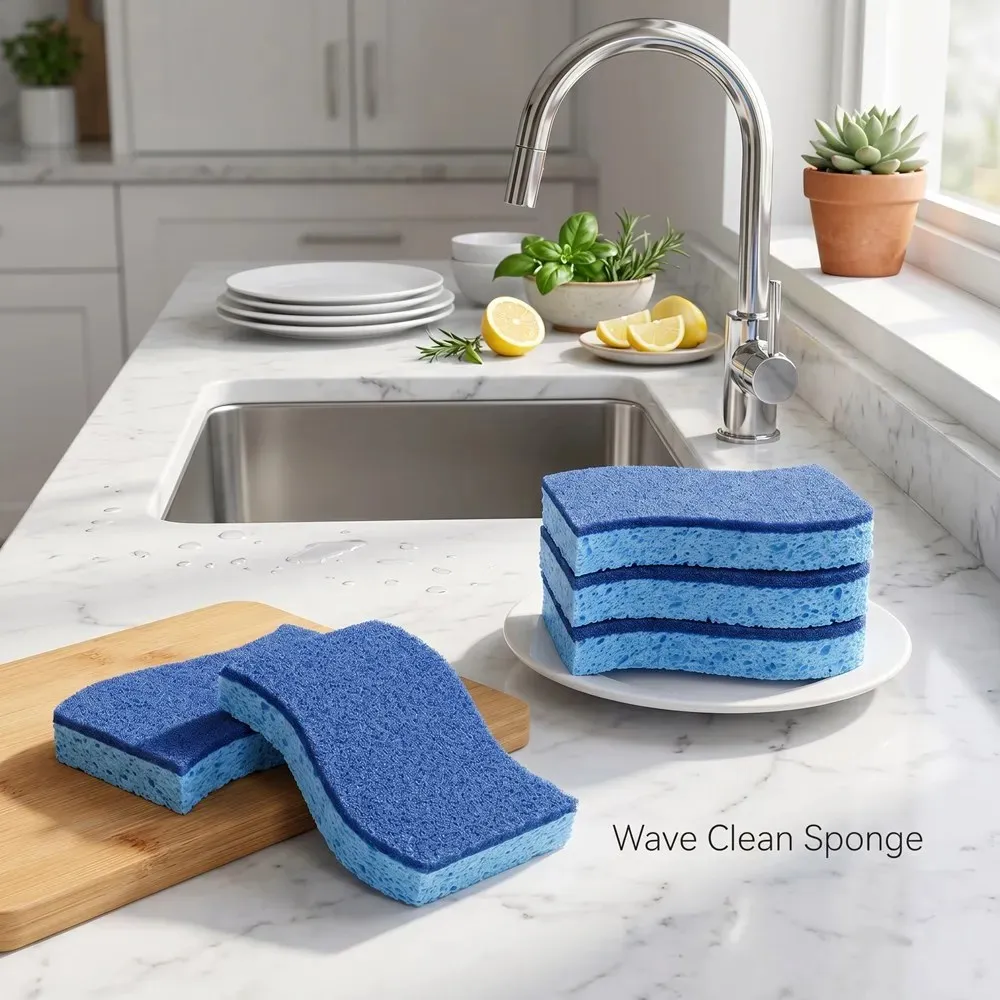
Kitchen sponges lose material as they rub against dishes and sinks. If a pad contains polyurethane foam or synthetic scouring fibers, some wear may enter wastewater as small plastic particles. Replacing part of a fully synthetic structure with wood pulp cellulose can lower this risk.
Still, “wood pulp” does not mean plastic-free. An pad is commonly a composite, making it absorbent and grippy and able to remove grease. Buyers will want to know the percentage of plastic that ends up in the finished pad, which layer wears out first, and how long it is expected to last.
What Causes Microplastic Shedding from Kitchen Sponges?
Microplastic shedding comes from repeated rubbing, bending, and squeezing. Dishwashing combines all three. The release rate changes with material type, sponge density, surface roughness, scrub pressure, and service life.
Why Do Synthetic Layers Wear Down?
Polyurethane foam holds water and detergent through a flexible cellular network. Its cell walls weaken over time. Rough cookware, sharp residue, and forceful edge scrubbing speed up damage, while synthetic scouring fibers may fray.
Research published in 2026 found annual microplastic releases of about 0.68 to 4.21 grams per person across the tested sponge types. Sponges with lower plastic content released significantly less. The same study found that water use caused most of the assessed environmental impact from manual dishwashing.
Why Is “Lower Plastic Content” a Better Claim?
“Eco-friendly” says little about composition. It does not identify the cellulose percentage, foam, scrub fiber, binder, pigment, or ink.
Ask for a material declaration by weight or area. Also request abrasion data after repeated wet scrubbing. That small document matters more than a green leaf printed on the pack.
Can a Wood Pulp Kitchen Sponge Reduce Plastic Loss?
Yes, but only to the extent that the cellulose replaces a meaningful proportion of the synthetic sponge and the remaining layers are wear resistant. If there is polyurethane foam or synthetic fibers in the product then it is not possible to guarantee zero microplastics.
What Does the Wood Pulp Layer Do?
Wood pulp cellulose is plant-derived and absorbent. When wet, it becomes flexible for routine wiping, light grease, glassware, ceramics, and coated cookware, reducing the need for a fully plastic face.
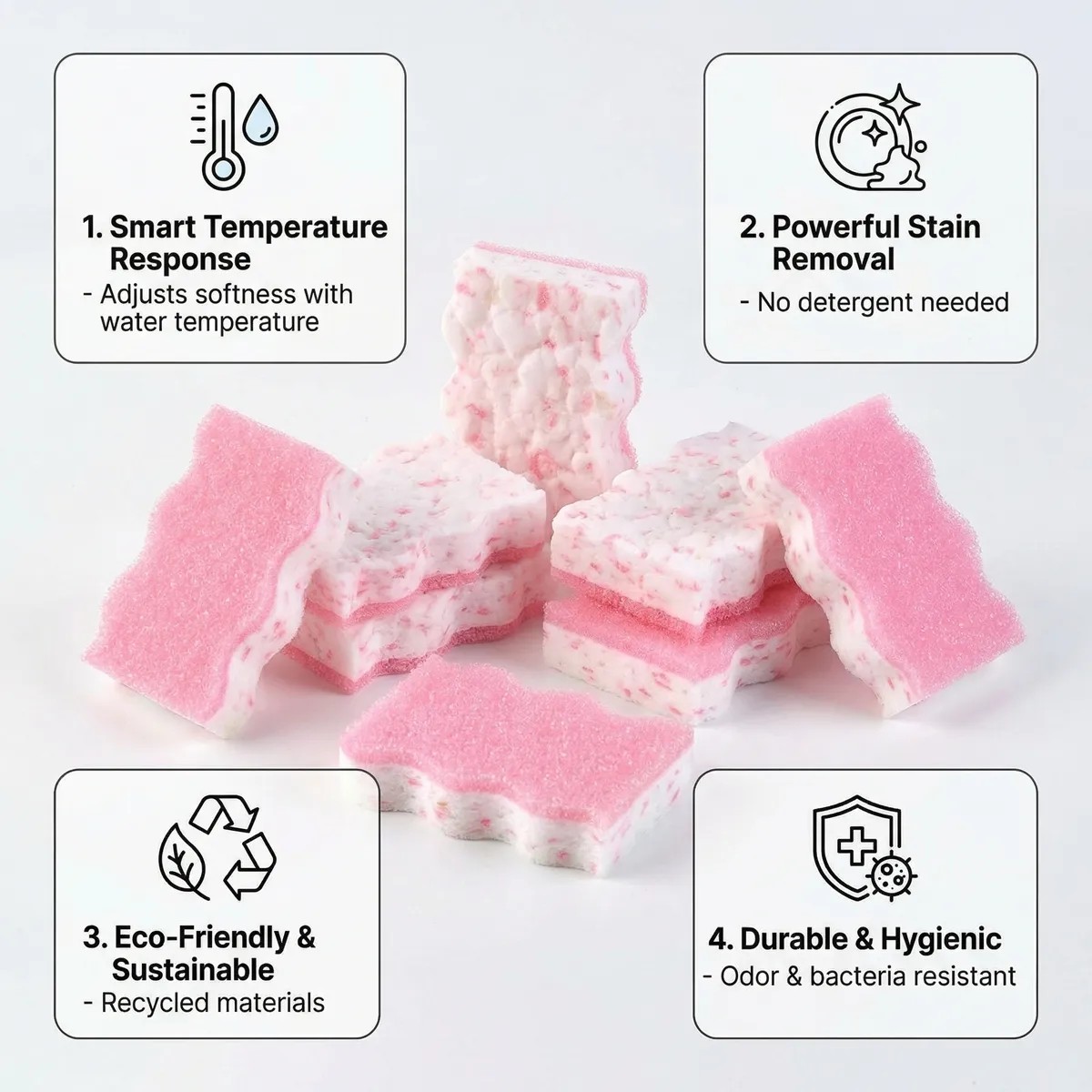
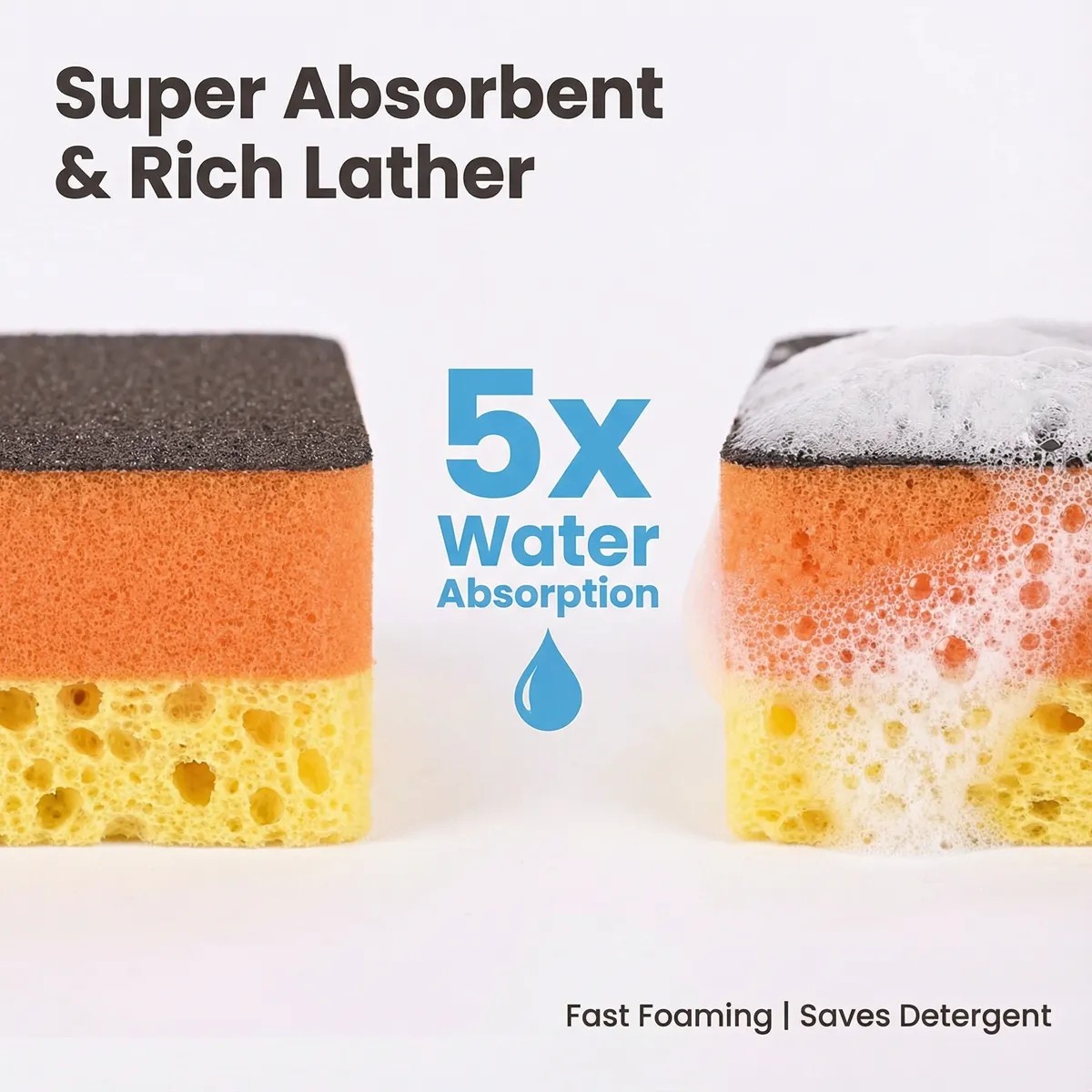
The product data describes three functional materials: a natural pulp layer, a high-elastic sponge layer, and a scouring layer. The pulp face handles lighter work, while the tougher face targets stuck residue. Available reference sizes include 10 × 8 × 3 cm and 11 × 7 × 2 cm, with custom sizes, colors, logos, and packaging.
Why Does the Full Composite Still Matter?
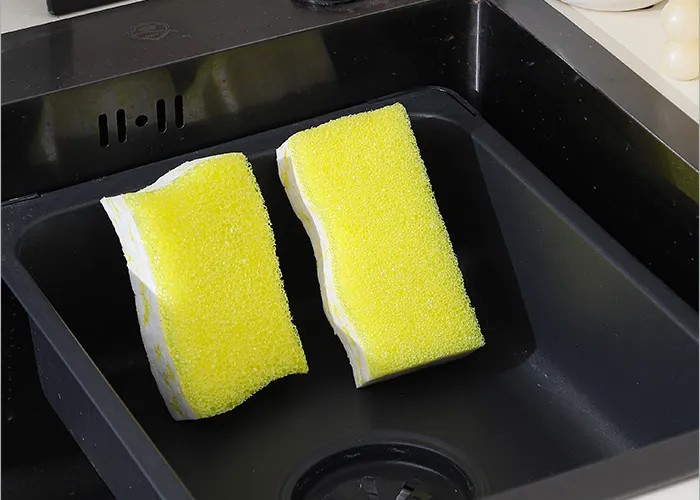
The Custom Logo Compressed Wood Pulp Kitchen Sponge Pad for Pot Scrubbing and Cleaning uses an S-shaped grip, a tougher abrasive face, and a softer cleaning face. Its micro-porous polyurethane section is designed to hold water and dish liquid, while the composite fibers support scrubbing and rinsing.
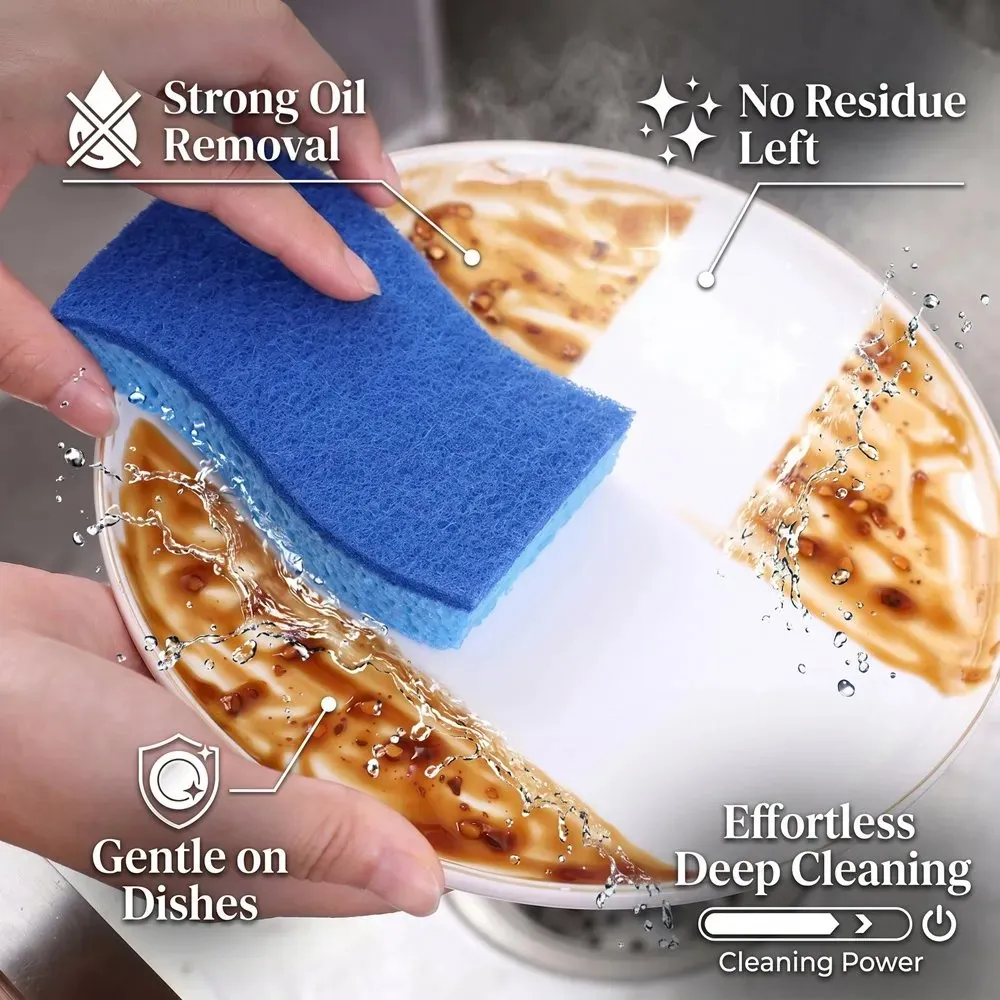
This structure may contain less plastic than a fully synthetic pad, but it is not plastic-free by default. Safer wording is “made with a wood pulp cleaning layer” or “lower-plastic composite design,” once composition is confirmed.
How Do Design and Use Affect Sponge Wear?
Material choice is only part of the result. A pad that slips, separates, or uses the wrong abrasive grade needs more pressure, which usually means faster wear.
Match Each Side to the Cleaning Job
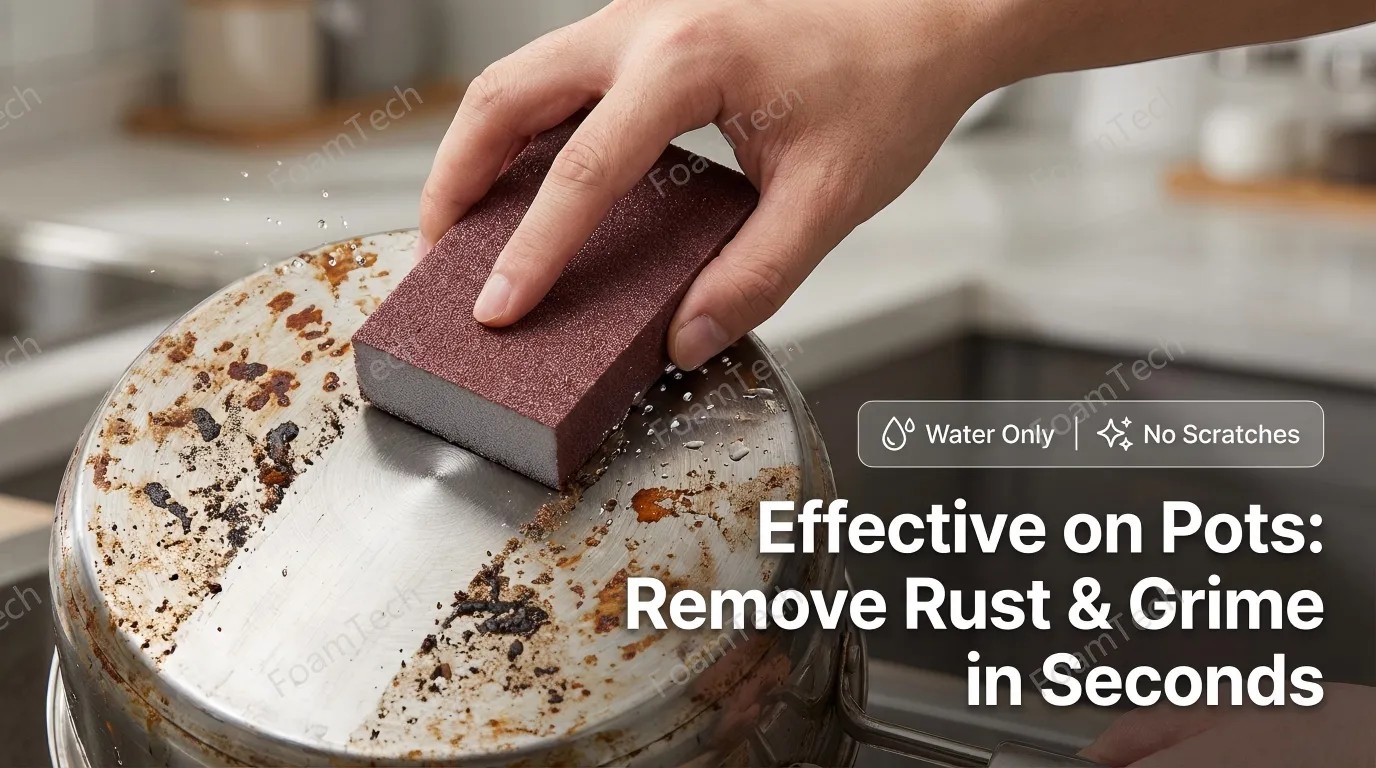
Use the pulp side for cups, glassware, fresh oil, soap film, and everyday wiping. Reserve the abrasive side for dried food and heavier deposits. Buyers should match the scrub grade to the cookware sold in their market.
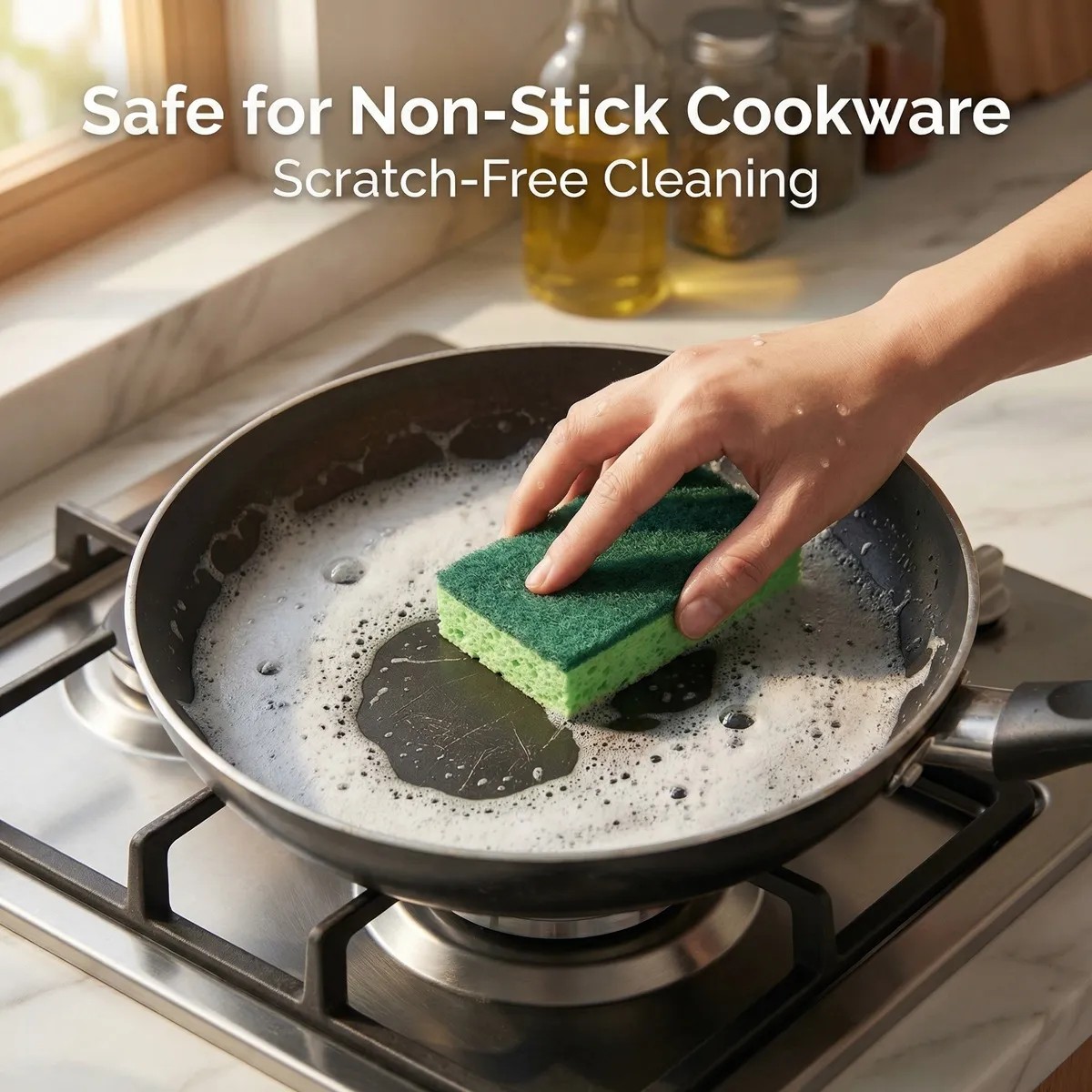
A pad suited to uncoated steel may mark a delicate nonstick finish. “Scratch-free” claims should be backed by tests on every surface named on the package.
Check Grip and Layer Bonding
An S-shaped waist gives wet fingers a firmer hold and may reduce folding, pinching, and rough edge scrubbing.
Bonding quality matters just as much. Test wet-cycle resistance, edge quality, hot-water exposure, and delamination. The product page describes thermal bonding for composite options, but the process should be confirmed for the exact SKU ordered.
Give Users Better Care Instructions
Retail directions should tell users to:
• Wet the pad before scrubbing
• Soak burnt residue instead of forcing it off
• Use the correct cleaning face
• Rinse out food particles
• Squeeze gently without twisting
• Air-dry the pad away from the wet sink
The 2026 research attributed about 85% to 97% of the assessed environmental impact to water use. A filled basin or controlled rinse may matter more than the sponge change alone.
What Should B2B Buyers Verify Before Bulk Ordering?
A good sourcing brief turns environmental language into measurable requirements covering composition, wear, surface safety, packaging, and production consistency.
Request a Complete Specification Sheet
Specify pulp content, foam, scrub fiber, bonding, colorants, logo method, size tolerance, and packaging. “Natural sponge” is not a complete answer when part of the pad is synthetic.
FoamTech describes private-label production, pre-production samples, two factory sites, three foaming lines, and custom support. Its company background also lists cleaning-material patents and large-scale capacity.
Compare Wear Instead of Unit Price Alone
Test samples at fixed scrub counts, such as 100, 300, and 1,000 cycles. Record:
• Weight loss
• Visible fragments
• Edge damage
• Layer separation
• Drying time
• Odor after repeated use
• Cleaning performance on standard soil
A pad that costs more but lasts twice as long may lower complaints, replacements, and plastic loss. Cheap delamination is a return request waiting to happen.
Confirm Customization After the Sample
FoamTech states that pre-production samples are available before bulk orders. Its private-label service covers packaging choice, product design, label work, and sample confirmation. Reference information lists customized colors, sizes, logos, packs, and OEM or ODM support.
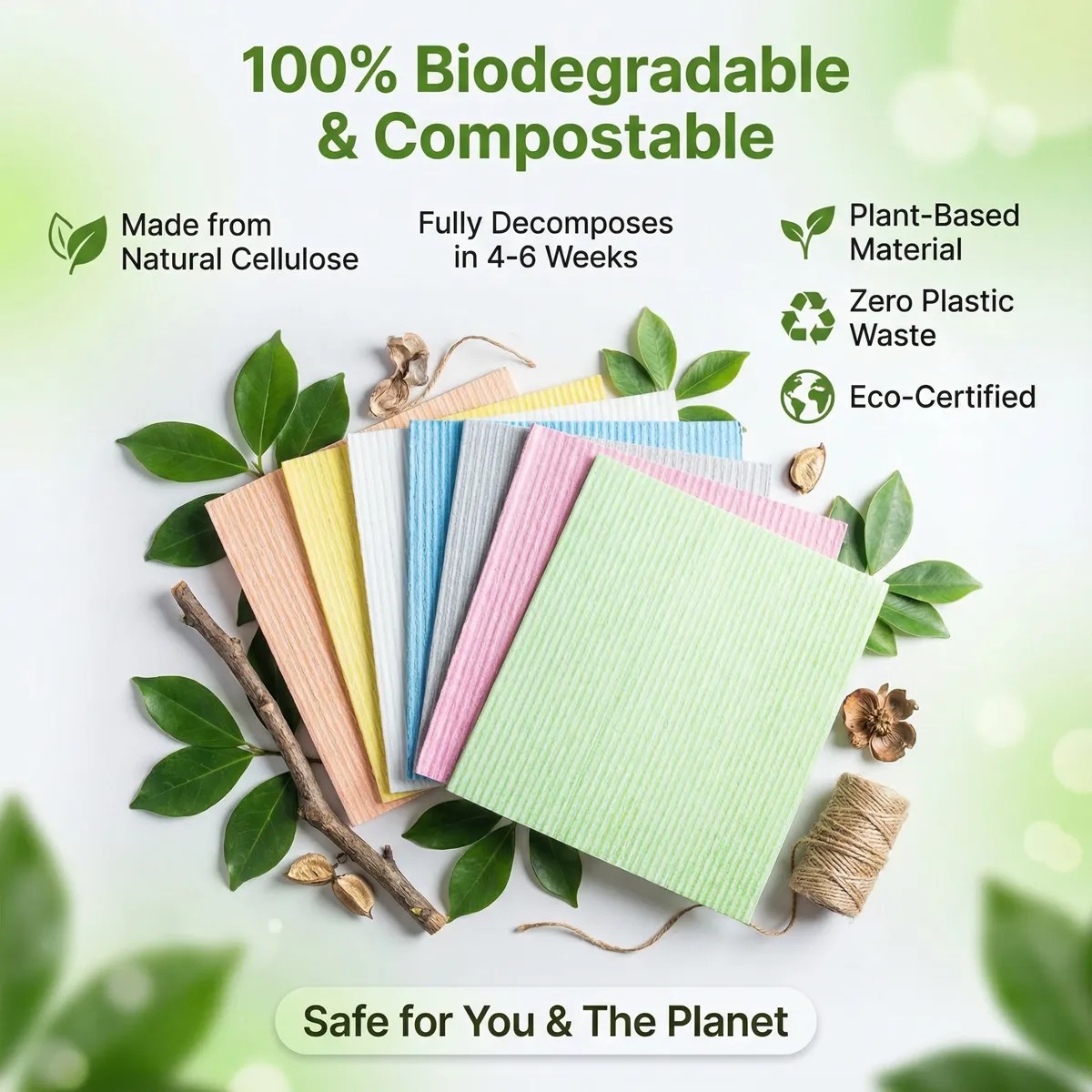
MOQ, tooling, and lead time can change with shape, bonding, logo method, or retail pack. Confirm them after approving the sample. Avoid “biodegradable,” “compostable,” and “zero microplastic” unless the finished pad has passed a suitable test.
What Is the Practical Verdict?
Compressed wood pulp kitchen sponge pads can reduce microplastic shedding when they contain less plastic than conventional alternatives and remain intact during use. The benefit depends on cellulose content, foam type, scrub fibers, bonding strength, and washing habits.
For importers and private-label buyers, verify the full structure, compare abrasion loss, test target cookware, and use accurate claims. FoamTech presents customizable cleaning products through its official website. Project details, pack requirements, and sample requests can be submitted through the contact page.
FAQ
Q1: Are Compressed Wood Pulp Kitchen Sponge Pads Plastic-Free?
A: Not always. Many combine a wood pulp face with polyurethane foam or synthetic scouring fibers. Check the full material declaration before making that claim.
Q2: Can a Wood Pulp Sponge Reduce Microplastic Shedding?
A: It may reduce shedding when cellulose replaces part of a synthetic sponge. Results still depend on plastic content, abrasion resistance, bonding, and user pressure.
Q3: Is the Abrasive Side Safe for Nonstick Cookware?
A: Safety depends on the scrub material and coating. FoamTech can provide samples, but buyers should test the exact pad before printing a scratch-free claim.
Q4: What Can Be Customized for Private-Label Orders?
A: FoamTech supports custom colors, sizes, shapes, logos, packaging, and OEM or ODM projects. MOQ and tooling depend on the final design.
Q5: How Should Users Limit Sponge Wear?
A: Wet the pad first, soak hard residue, use the correct side, avoid heavy pressure, rinse after use, and let it air-dry. Replace it once layers split or fibers fray.
Kitchen sponges lose material as they rub against dishes and sinks. If a pad contains polyurethane foam or synthetic scouring fibers, some wear may enter wastewater as small plastic particles. Replacing part of a fully synthetic structure with wood pulp cellulose can lower this risk.
Still, “wood pulp” does not mean plastic-free. An pad is commonly a composite, making it absorbent and grippy and able to remove grease. Buyers will want to know the percentage of plastic that ends up in the finished pad, which layer wears out first, and how long it is expected to last.
What Causes Microplastic Shedding from Kitchen Sponges?
Microplastic shedding comes from repeated rubbing, bending, and squeezing. Dishwashing combines all three. The release rate changes with material type, sponge density, surface roughness, scrub pressure, and service life.
Why Do Synthetic Layers Wear Down?
Polyurethane foam holds water and detergent through a flexible cellular network. Its cell walls weaken over time. Rough cookware, sharp residue, and forceful edge scrubbing speed up damage, while synthetic scouring fibers may fray.
Research published in 2026 found annual microplastic releases of about 0.68 to 4.21 grams per person across the tested sponge types. Sponges with lower plastic content released significantly less. The same study found that water use caused most of the assessed environmental impact from manual dishwashing.
Why Is “Lower Plastic Content” a Better Claim?
“Eco-friendly” says little about composition. It does not identify the cellulose percentage, foam, scrub fiber, binder, pigment, or ink.
Ask for a material declaration by weight or area. Also request abrasion data after repeated wet scrubbing. That small document matters more than a green leaf printed on the pack.
Can a Wood Pulp Kitchen Sponge Reduce Plastic Loss?
Yes, but only to the extent that the cellulose replaces a meaningful proportion of the synthetic sponge and the remaining layers are wear resistant. If there is polyurethane foam or synthetic fibers in the product then it is not possible to guarantee zero microplastics.
What Does the Wood Pulp Layer Do?
Wood pulp cellulose is plant-derived and absorbent. When wet, it becomes flexible for routine wiping, light grease, glassware, ceramics, and coated cookware, reducing the need for a fully plastic face.
The product data describes three functional materials: a natural pulp layer, a high-elastic sponge layer, and a scouring layer. The pulp face handles lighter work, while the tougher face targets stuck residue. Available reference sizes include 10 × 8 × 3 cm and 11 × 7 × 2 cm, with custom sizes, colors, logos, and packaging.
Why Does the Full Composite Still Matter?
The Custom Logo Compressed Wood Pulp Kitchen Sponge Pad for Pot Scrubbing and Cleaning uses an S-shaped grip, a tougher abrasive face, and a softer cleaning face. Its micro-porous polyurethane section is designed to hold water and dish liquid, while the composite fibers support scrubbing and rinsing.
This structure may contain less plastic than a fully synthetic pad, but it is not plastic-free by default. Safer wording is “made with a wood pulp cleaning layer” or “lower-plastic composite design,” once composition is confirmed.
How Do Design and Use Affect Sponge Wear?
Material choice is only part of the result. A pad that slips, separates, or uses the wrong abrasive grade needs more pressure, which usually means faster wear.
Match Each Side to the Cleaning Job
Use the pulp side for cups, glassware, fresh oil, soap film, and everyday wiping. Reserve the abrasive side for dried food and heavier deposits. Buyers should match the scrub grade to the cookware sold in their market.
A pad suited to uncoated steel may mark a delicate nonstick finish. “Scratch-free” claims should be backed by tests on every surface named on the package.
Check Grip and Layer Bonding
An S-shaped waist gives wet fingers a firmer hold and may reduce folding, pinching, and rough edge scrubbing.
Bonding quality matters just as much. Test wet-cycle resistance, edge quality, hot-water exposure, and delamination. The product page describes thermal bonding for composite options, but the process should be confirmed for the exact SKU ordered.
Give Users Better Care Instructions
Retail directions should tell users to:
• Wet the pad before scrubbing
• Soak burnt residue instead of forcing it off
• Use the correct cleaning face
• Rinse out food particles
• Squeeze gently without twisting
• Air-dry the pad away from the wet sink
The 2026 research attributed about 85% to 97% of the assessed environmental impact to water use. A filled basin or controlled rinse may matter more than the sponge change alone.
What Should B2B Buyers Verify Before Bulk Ordering?
A good sourcing brief turns environmental language into measurable requirements covering composition, wear, surface safety, packaging, and production consistency.
Request a Complete Specification Sheet
Specify pulp content, foam, scrub fiber, bonding, colorants, logo method, size tolerance, and packaging. “Natural sponge” is not a complete answer when part of the pad is synthetic.
FoamTech describes private-label production, pre-production samples, two factory sites, three foaming lines, and custom support. Its company background also lists cleaning-material patents and large-scale capacity.
Compare Wear Instead of Unit Price Alone
Test samples at fixed scrub counts, such as 100, 300, and 1,000 cycles. Record:
• Weight loss
• Visible fragments
• Edge damage
• Layer separation
• Drying time
• Odor after repeated use
• Cleaning performance on standard soil
A pad that costs more but lasts twice as long may lower complaints, replacements, and plastic loss. Cheap delamination is a return request waiting to happen.
Confirm Customization After the Sample
FoamTech states that pre-production samples are available before bulk orders. Its private-label service covers packaging choice, product design, label work, and sample confirmation. Reference information lists customized colors, sizes, logos, packs, and OEM or ODM support.
MOQ, tooling, and lead time can change with shape, bonding, logo method, or retail pack. Confirm them after approving the sample. Avoid “biodegradable,” “compostable,” and “zero microplastic” unless the finished pad has passed a suitable test.
What Is the Practical Verdict?
Compressed wood pulp kitchen sponge pads can reduce microplastic shedding when they contain less plastic than conventional alternatives and remain intact during use. The benefit depends on cellulose content, foam type, scrub fibers, bonding strength, and washing habits.
For importers and private-label buyers, verify the full structure, compare abrasion loss, test target cookware, and use accurate claims. FoamTech presents customizable cleaning products through its official website. Project details, pack requirements, and sample requests can be submitted through the contact page.
FAQ
Q1: Are Compressed Wood Pulp Kitchen Sponge Pads Plastic-Free?
A: Not always. Many combine a wood pulp face with polyurethane foam or synthetic scouring fibers. Check the full material declaration before making that claim.
Q2: Can a Wood Pulp Sponge Reduce Microplastic Shedding?
A: It may reduce shedding when cellulose replaces part of a synthetic sponge. Results still depend on plastic content, abrasion resistance, bonding, and user pressure.
Q3: Is the Abrasive Side Safe for Nonstick Cookware?
A: Safety depends on the scrub material and coating. FoamTech can provide samples, but buyers should test the exact pad before printing a scratch-free claim.
Q4: What Can Be Customized for Private-Label Orders?
A: FoamTech supports custom colors, sizes, shapes, logos, packaging, and OEM or ODM projects. MOQ and tooling depend on the final design.
Q5: How Should Users Limit Sponge Wear?
A: Wet the pad first, soak hard residue, use the correct side, avoid heavy pressure, rinse after use, and let it air-dry. Replace it once layers split or fibers fray.
Prev: No data
Related Recommendations

Family owned company, globalleader in development andmanufacturing of home careproducts for private label andcontract manufacturing
Copyright © 2026 FoamTech (Zhejiang) New Materials Co., Ltd.