How Does a Temperature-Sensitive Scrub Sponge Switch from Heavy-Duty Scrubbing to Non-Scratch Cleaning
2026-08-03
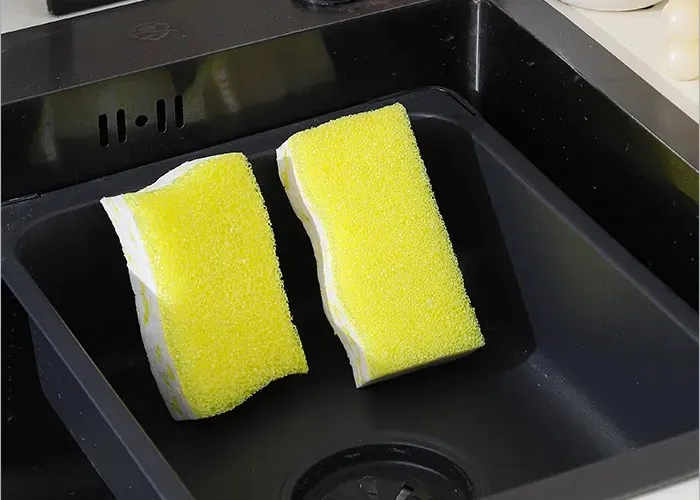
Typically the purpose of the kitchen sponge is to clean and scrub away older foods, but at the same time also have to clean glass and non-stick surfaces. A stronger scrubber is typically better for removing old burnt in foods, but can scratch some surfaces. A lighter, softer sponge is typically better for washing and cleaning glassware and non-stick cookware surfaces but has not enough scrubbing power to remove older greasier foods. Having a variety of cleaning tools near the sink can solve some of these problems but adds clutter, additional cost of replacement sponges, and confusion as to which surface each will clean well.
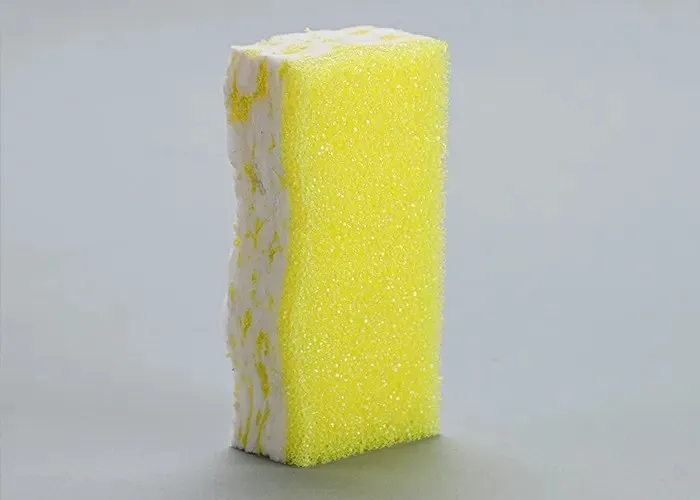
A temperature-sensitive scrub sponge takes a different approach. This sponge’s texture is sensitive to the temperature of the water. You get a firm scrubber for tough cleaning jobs and a soft scrubber for delicate cleaning. The Temperature-Sensitive Scrub Sponge is made of high-polymer thermo-sensitive foam. The size of the standard cleaning tool is 100mm x 100mm x 40mm. It is also possible to make changes to the size, the color and the packaging in order to be able to offer this cleaning tool in Retail as well as in Commercial environments.
How Does Water Temperature Change the Sponge’s Texture?
The main feature of the scrubber is not an abrasive layer or a reversible cleaning surface. Instead, the foam changes its characteristics as the water temperature changes. This feature provides more control than having to swap to a different tool in the middle of a cleaning job.
Cold Water Creates a Firmer Scrubbing Texture
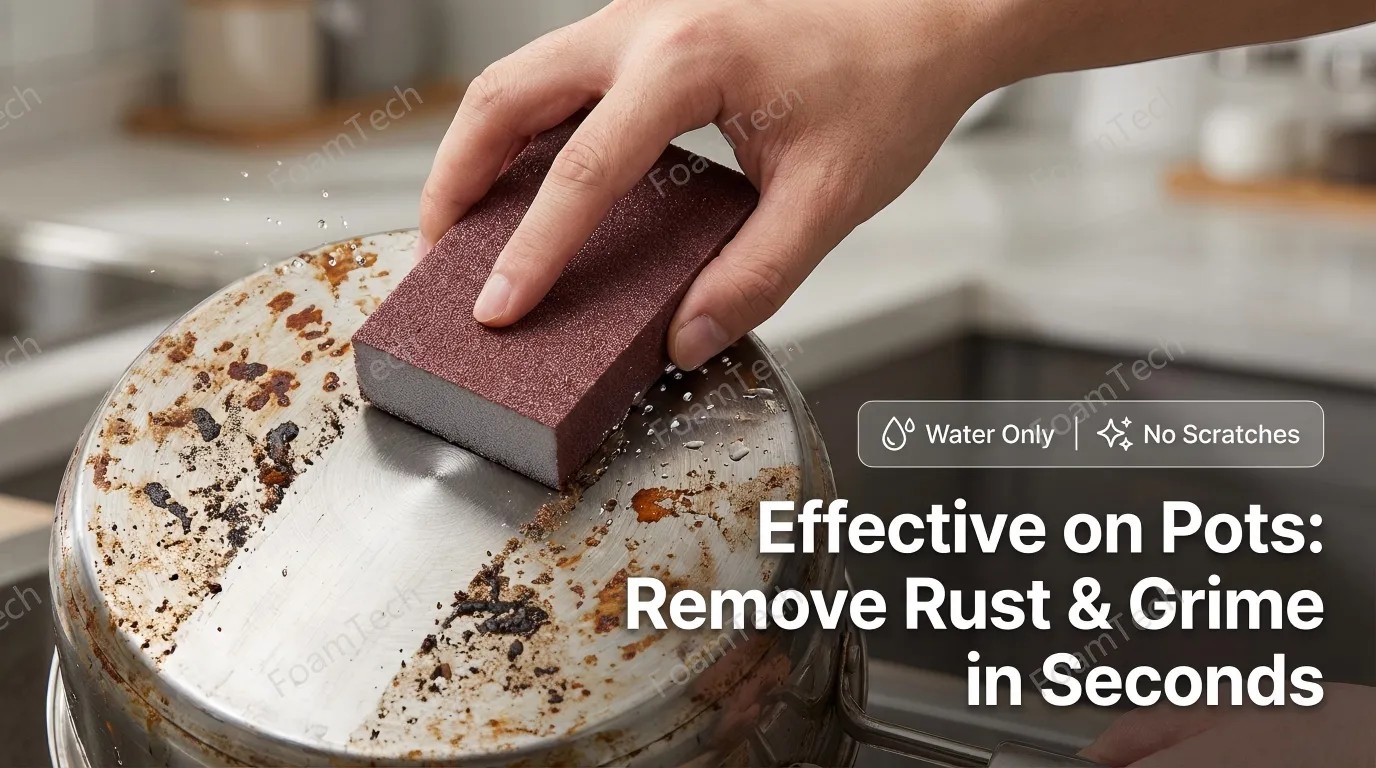
Cold water makes the thermo-sensitive foam harder. The harder surface of the cleaner gives it more bite to the dried sauce, cooked starch, grease deposits and food residue around the edge of the pan.
This setting suits jobs such as:
• Removing burnt residue from metal pots
• Scrubbing grease around stovetops
• Cleaning dried food from trays
• Working on tile joints and textured counters
• Lifting grime from outdoor furniture
A firmer sponge still needs sensible pressure. Scrubbing harder does not always mean cleaning faster. On many stains, short passes followed by a rinse work better than one long, forceful scrub.
Warm Water Creates a Softer Cleaning Texture
Using warm water softens up the foam in the sponge. It allows for a soft and flexible feel. The sponge is able to follow around the edges of the curves of cups and bowls, the corners of sinks and the edges of cookware. It is able to go around these shapes with a consistent amount of pressure rather than concentrated pressure in a small area.
The softer state is better suited to:
• Glassware and ceramic dishes
• Cups, plates, and serving bowls
• Non-stick cookware
• Smooth countertops
• Bathroom fittings
• Office desks and other finished surfaces
Our product supports gentle non-scratch cleaning. However no cleaning sponge is suitable for all coatings. The quality of the surface, existing damage, trapped grit, as well as the amount of pressure when scrubbing all have to be taken into account.
The Texture Change Is Reversible
The switch is physical rather than a one-use reaction. Move the sponge between colder and warmer water, and its working texture changes again.
That detail matters in real kitchens. A user may start with cold water to loosen a cooked-on ring inside a pot, rinse the sponge, then use warm water for the nearby glass lid. One tool covers both steps. Nothing complicated, which is usually what people want beside a busy sink.
Which Cleaning Jobs Suit Each Texture Best?
Water temperature should match both the type of dirt and the surface below it. Grease resistance, coating sensitivity, and surface finish are more useful decision points than simply calling a job “light” or “heavy.”
Use the Firm State for Stubborn Deposits
The cold-water state works best when the residue needs mechanical action. Typical examples include protein deposits on roasting trays, starch stuck to rice-cooker parts, and grease around burner surrounds.
Before scrubbing, remove loose particles and let hardened residue soak briefly. This lowers the force needed and keeps sharp crumbs from becoming accidental abrasives.
Use the Soft State for Finished Surfaces
For polished, glazed, painted or coated surfaces start with warm water and the softer foam which will spread your hand pressure over a wider area of contact than the stiffer edge of a scrub brush.
When cleaning glassware and ceramics, a gentle circular or straight motion is required with your sponge. Clean coated pans only when they are cool – sudden temperature changes can cause cookware to crack even when you’re using a suitable sponge for cleaning.
Take Extra Care with Stainless Steel
If scratches or unsightly marks on stainless steel surfaces are to be removed, some time and care is required. First remove loose material from the scratched area, then gently rub the affected area with a soft sponge and a mild dish soap solution. Work at moderate pressure to clean the area.It’s also very important to note that when cleaning brushed stainless steel you must clean in the direction of the visible raised lines or brushed strokes of the steel. Never clean across the lines of a brushed steel surface.
Rinse away cleaner and loosened grime. Drying the surface afterward helps prevent water spots. It is a small extra step, but it makes a sink or appliance look properly finished rather than merely washed.
How Can You Lower the Risk of Surface Damage?
“Non-scratch” performance depends on the full cleaning process, not only the sponge material. A soft sponge carrying sand, metal fragments, or burnt crumbs can still mark a surface.
A simple use protocol gives consumers better results and gives importers fewer avoidable complaints.
Test a Small Area First
Test the softened sponge on a hidden section before cleaning a large visible area. This is especially important for acrylic, high-gloss paint, aged non-stick coatings, polished stone, appliance panels, and decorative finishes.
Allow the test area to dry before judging it. Fine marks sometimes become easier to see after the water has evaporated.
Use the Least Pressure That Works
Start with light pressure and increase it only when needed. The foam and water should do part of the work. Crushing the sponge against the surface can shorten its useful life and raise the chance of marking a finish.
For a commercial dishwashing station, basic staff guidance helps:
Cold water for firm scrubbing
Warm water for gentle wiping
Rinse between different jobs
Do not use one sponge across raw-food and ready-to-eat areas
Color coding makes the last point much easier to manage.
Keep Harsh Chemicals Separate
Do not assume that stronger chemicals automatically improve sponge performance. Some surfaces react badly to chlorine, concentrated alkalis, oven cleaner, or rough cleaning powders.
A temperature-responsive sponge is mainly a mechanical cleaning tool. Water and a normal compatible detergent are often enough for daily washing. When a specialist chemical is required, check both the surface-care instructions and the chemical supplier’s directions.
What Should B2B Buyers Check Before Ordering?
For a distributor or private-label buyer, the temperature change makes a good product demonstration. Still, shelf appeal alone is not enough. Buyers need stable texture, a practical grip, clear instructions, reliable packaging, and repeatable batch quality.
The specification should describe what the consumer receives, not just use broad wording such as “smart sponge” or “powerful scrubber.”
Confirm the Foam and Temperature Response
Ask the supplier to identify the material as high-polymer thermo-sensitive foam and explain how the firmness changes in cold and warm water. Samples from more than one production batch are useful because buyers need to check consistency, not a single perfect piece.
The uploaded product information also lists softening with heat, daily-cleaning use, a 10 × 10 × 4 cm format, custom colors, custom logos, custom packaging, and RoHS and MSDS documentation.
During sample testing, record:
• Water temperatures used
• Time needed for the texture to change
• Grip when wet
• Recovery after cooling
• Odor after repeated use
• Edge wear and tearing
• Cleaning results on several surfaces
A quick hand test is useful. A written test sheet is better.
Check Size, Shape, and Grip
The standard 100 × 100 × 40 mm size offers enough thickness for gripping and squeezing. It may not suit every sales channel, though. Smaller packs can work better for discount retail, while thicker or shaped versions may appeal to professional kitchens and premium home-care ranges.
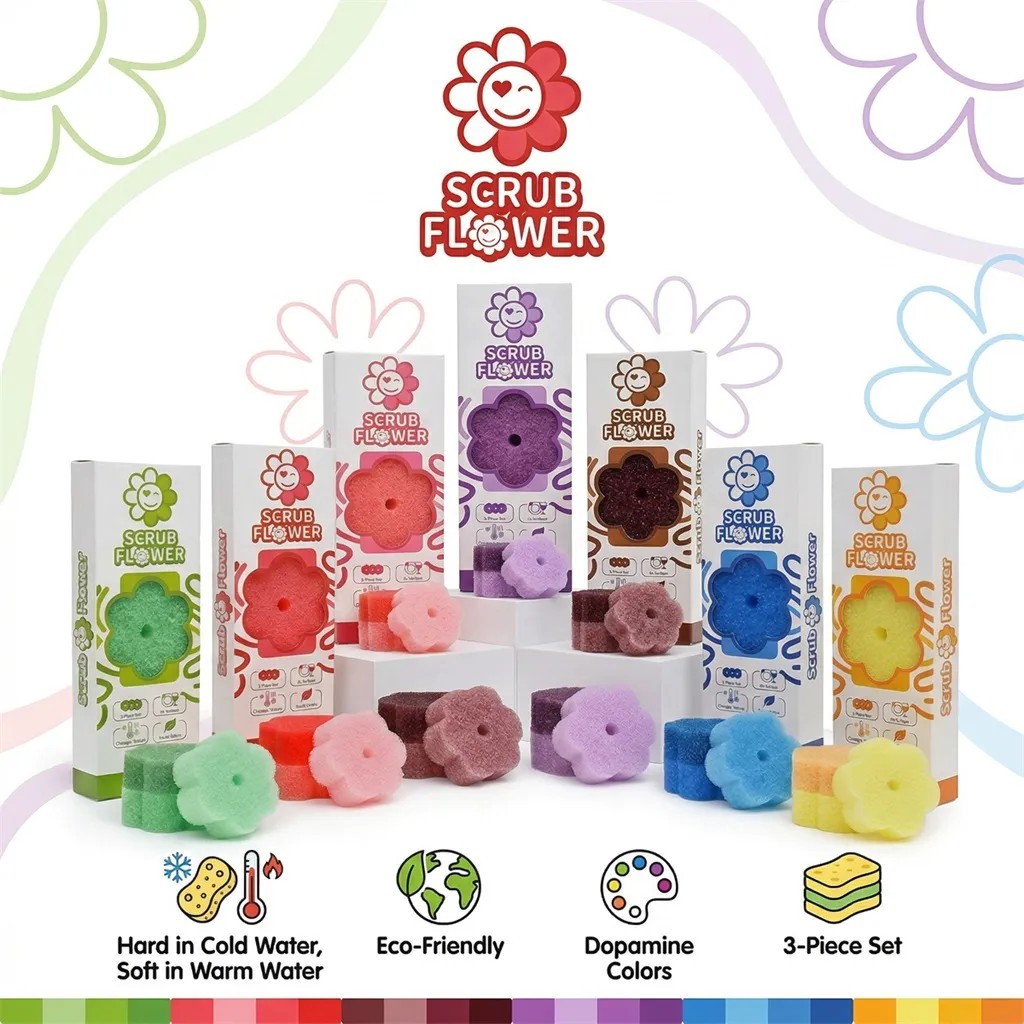
The product specification supports customer-specific sizes, colors, and packaging. Color options such as pink, yellow, blue, and red also make task separation easier.
A flower or contoured shape is more than decoration. Cutouts and curved edges can improve finger control, reach cup rims, and create a clearer visual identity on crowded shelves.
Review Hygiene and Drying Behavior
A sponge spends much of its life damp, so odor control matters almost as much as scrubbing power. The product is described as hygienic and odor-resistant, with a material designed to resist unpleasant smells during longer use.
Still, packaging should not promise that a sponge never carries bacteria. Consumer care remains important. Instructions should tell users to rinse it, squeeze out excess water, and leave it in a ventilated place to dry.
The knowledge-base cleaning guidance follows a similar four-step routine: soak thoroughly, remove excess water, wipe, then rinse after use.
Validate Custom Packaging Before Mass Production
FoamTech has produced cleaning and disinfection foam products since 2014. Its company information states that products can be made to customer requirements and that pre-production samples are available before bulk orders. The supplier also reports stock support for faster delivery.
For private-label work, confirm the artwork, barcode position, user instructions, pack count, carton strength, and color tolerance before production. The company’s custom service program covers label design, QR codes, specification sheets, safety data sheets, batch traceability, and tailored marketing materials.
Do not leave the cold-water and warm-water instructions buried on the back panel. They are the reason the product is different.
How Should You Use and Care for the Sponge?
The product is easy to operate, but a clear routine improves cleaning results and service life. It also helps prevent cross-contamination in restaurants, cafés, hotels, and shared office kitchens.
Follow a Four-Step Cleaning Routine
1. Choose the water temperature. Use cold water for a firmer texture or warm water for a softer texture.
2. Squeeze gently. Remove excess water without twisting the foam too hard.
3. Clean with controlled pressure. Let the texture match the task rather than forcing the sponge.
4. Rinse and air-dry. Remove trapped food, soap, and grease before storage.
During a long cleaning session, rinse often. A sponge loaded with loosened dirt becomes less effective and may spread residue back over the surface.
Replace It When the Structure Changes
Replace the sponge when it develops deep tears, keeps a persistent odor after washing, loses its shape, or no longer changes texture as expected.
Commercial users may set replacement periods, but visual checks still matter. A sponge used on oily cookware will age differently from one used on office desks. Fixed dates are handy; actual condition tells the better story.
Can One Temperature-Sensitive Sponge Replace Two Cleaning Tools?
For many routine tasks, yes. Its main value is the ability to cover firm scrubbing and softer wiping without bonding two very different layers together.
|
Buyer Concern |
Cold-Water State |
Warm-Water State |
|
Main purpose |
Heavy-duty scrubbing |
Gentle daily cleaning |
|
Typical residue |
Grease and dried food |
Light soil and fingerprints |
|
Typical surfaces |
Pots, trays, tiles |
Glass, ceramics, coated cookware |
|
Hand feel |
Firmer and more resistant |
Softer and more flexible |
|
Key precaution |
Avoid excessive force |
Check delicate finishes first |
For retailers, this creates an easy demonstration and a clear consumer benefit. For foodservice buyers, it can reduce the number of tools kept at each station. For private-label brands, the temperature response gives the pack a real product story, not just another color change.
Bulk buyers can review the wider cleaning product range or use the contact page to discuss samples, custom sizes, packaging, and application requirements.
FAQ
Q1: Does a Temperature-Sensitive Scrub Sponge Become Hard in Cold Water?
A: It becomes firmer in cold water, giving you more scrubbing action for grease, dried food, and stubborn residue. It should still be used with controlled pressure.
Q2: Can You Use It on Non-Stick Cookware?
A: Use the softer warm-water state, apply light pressure, and test a small area first. Do not use it on a damaged or peeling coating.
Q3: Why Should the Sponge Be Rinsed Between Cleaning Jobs?
A: Rinsing removes trapped grease, crumbs, and grit. This keeps the sponge effective and lowers the chance that loose particles will mark another surface.
Q4: Can Importers Customize the Size and Packaging?
A: Yes. FoamTech offers customer-specific dimensions, colors, logos, and packaging. Buyers should approve a pre-production sample before confirming the bulk order.
Q5: Is the Sponge Suitable for Commercial Kitchens?
A: Yes, it can handle cookware, counters, dishes, and other routine cleaning tasks. Commercial users should apply color coding, separate food-zone tools, rinse after use, and replace worn sponges promptly.
Typically the purpose of the kitchen sponge is to clean and scrub away older foods, but at the same time also have to clean glass and non-stick surfaces. A stronger scrubber is typically better for removing old burnt in foods, but can scratch some surfaces. A lighter, softer sponge is typically better for washing and cleaning glassware and non-stick cookware surfaces but has not enough scrubbing power to remove older greasier foods. Having a variety of cleaning tools near the sink can solve some of these problems but adds clutter, additional cost of replacement sponges, and confusion as to which surface each will clean well.
A temperature-sensitive scrub sponge takes a different approach. This sponge’s texture is sensitive to the temperature of the water. You get a firm scrubber for tough cleaning jobs and a soft scrubber for delicate cleaning. The Temperature-Sensitive Scrub Sponge is made of high-polymer thermo-sensitive foam. The size of the standard cleaning tool is 100mm x 100mm x 40mm. It is also possible to make changes to the size, the color and the packaging in order to be able to offer this cleaning tool in Retail as well as in Commercial environments.
How Does Water Temperature Change the Sponge’s Texture?
The main feature of the scrubber is not an abrasive layer or a reversible cleaning surface. Instead, the foam changes its characteristics as the water temperature changes. This feature provides more control than having to swap to a different tool in the middle of a cleaning job.
Cold Water Creates a Firmer Scrubbing Texture
Cold water makes the thermo-sensitive foam harder. The harder surface of the cleaner gives it more bite to the dried sauce, cooked starch, grease deposits and food residue around the edge of the pan.
This setting suits jobs such as:
• Removing burnt residue from metal pots
• Scrubbing grease around stovetops
• Cleaning dried food from trays
• Working on tile joints and textured counters
• Lifting grime from outdoor furniture
A firmer sponge still needs sensible pressure. Scrubbing harder does not always mean cleaning faster. On many stains, short passes followed by a rinse work better than one long, forceful scrub.
Warm Water Creates a Softer Cleaning Texture
Using warm water softens up the foam in the sponge. It allows for a soft and flexible feel. The sponge is able to follow around the edges of the curves of cups and bowls, the corners of sinks and the edges of cookware. It is able to go around these shapes with a consistent amount of pressure rather than concentrated pressure in a small area.
The softer state is better suited to:
• Glassware and ceramic dishes
• Cups, plates, and serving bowls
• Non-stick cookware
• Smooth countertops
• Bathroom fittings
• Office desks and other finished surfaces
Our product supports gentle non-scratch cleaning. However no cleaning sponge is suitable for all coatings. The quality of the surface, existing damage, trapped grit, as well as the amount of pressure when scrubbing all have to be taken into account.
The Texture Change Is Reversible
The switch is physical rather than a one-use reaction. Move the sponge between colder and warmer water, and its working texture changes again.
That detail matters in real kitchens. A user may start with cold water to loosen a cooked-on ring inside a pot, rinse the sponge, then use warm water for the nearby glass lid. One tool covers both steps. Nothing complicated, which is usually what people want beside a busy sink.
Which Cleaning Jobs Suit Each Texture Best?
Water temperature should match both the type of dirt and the surface below it. Grease resistance, coating sensitivity, and surface finish are more useful decision points than simply calling a job “light” or “heavy.”
Use the Firm State for Stubborn Deposits
The cold-water state works best when the residue needs mechanical action. Typical examples include protein deposits on roasting trays, starch stuck to rice-cooker parts, and grease around burner surrounds.
Before scrubbing, remove loose particles and let hardened residue soak briefly. This lowers the force needed and keeps sharp crumbs from becoming accidental abrasives.
Use the Soft State for Finished Surfaces
For polished, glazed, painted or coated surfaces start with warm water and the softer foam which will spread your hand pressure over a wider area of contact than the stiffer edge of a scrub brush.
When cleaning glassware and ceramics, a gentle circular or straight motion is required with your sponge. Clean coated pans only when they are cool – sudden temperature changes can cause cookware to crack even when you’re using a suitable sponge for cleaning.
Take Extra Care with Stainless Steel
If scratches or unsightly marks on stainless steel surfaces are to be removed, some time and care is required. First remove loose material from the scratched area, then gently rub the affected area with a soft sponge and a mild dish soap solution. Work at moderate pressure to clean the area.It’s also very important to note that when cleaning brushed stainless steel you must clean in the direction of the visible raised lines or brushed strokes of the steel. Never clean across the lines of a brushed steel surface.
Rinse away cleaner and loosened grime. Drying the surface afterward helps prevent water spots. It is a small extra step, but it makes a sink or appliance look properly finished rather than merely washed.
How Can You Lower the Risk of Surface Damage?
“Non-scratch” performance depends on the full cleaning process, not only the sponge material. A soft sponge carrying sand, metal fragments, or burnt crumbs can still mark a surface.
A simple use protocol gives consumers better results and gives importers fewer avoidable complaints.
Test a Small Area First
Test the softened sponge on a hidden section before cleaning a large visible area. This is especially important for acrylic, high-gloss paint, aged non-stick coatings, polished stone, appliance panels, and decorative finishes.
Allow the test area to dry before judging it. Fine marks sometimes become easier to see after the water has evaporated.
Use the Least Pressure That Works
Start with light pressure and increase it only when needed. The foam and water should do part of the work. Crushing the sponge against the surface can shorten its useful life and raise the chance of marking a finish.
For a commercial dishwashing station, basic staff guidance helps:
Cold water for firm scrubbing
Warm water for gentle wiping
Rinse between different jobs
Do not use one sponge across raw-food and ready-to-eat areas
Color coding makes the last point much easier to manage.
Keep Harsh Chemicals Separate
Do not assume that stronger chemicals automatically improve sponge performance. Some surfaces react badly to chlorine, concentrated alkalis, oven cleaner, or rough cleaning powders.
A temperature-responsive sponge is mainly a mechanical cleaning tool. Water and a normal compatible detergent are often enough for daily washing. When a specialist chemical is required, check both the surface-care instructions and the chemical supplier’s directions.
What Should B2B Buyers Check Before Ordering?
For a distributor or private-label buyer, the temperature change makes a good product demonstration. Still, shelf appeal alone is not enough. Buyers need stable texture, a practical grip, clear instructions, reliable packaging, and repeatable batch quality.
The specification should describe what the consumer receives, not just use broad wording such as “smart sponge” or “powerful scrubber.”
Confirm the Foam and Temperature Response
Ask the supplier to identify the material as high-polymer thermo-sensitive foam and explain how the firmness changes in cold and warm water. Samples from more than one production batch are useful because buyers need to check consistency, not a single perfect piece.
The uploaded product information also lists softening with heat, daily-cleaning use, a 10 × 10 × 4 cm format, custom colors, custom logos, custom packaging, and RoHS and MSDS documentation.
During sample testing, record:
• Water temperatures used
• Time needed for the texture to change
• Grip when wet
• Recovery after cooling
• Odor after repeated use
• Edge wear and tearing
• Cleaning results on several surfaces
A quick hand test is useful. A written test sheet is better.
Check Size, Shape, and Grip
The standard 100 × 100 × 40 mm size offers enough thickness for gripping and squeezing. It may not suit every sales channel, though. Smaller packs can work better for discount retail, while thicker or shaped versions may appeal to professional kitchens and premium home-care ranges.
The product specification supports customer-specific sizes, colors, and packaging. Color options such as pink, yellow, blue, and red also make task separation easier.
A flower or contoured shape is more than decoration. Cutouts and curved edges can improve finger control, reach cup rims, and create a clearer visual identity on crowded shelves.
Review Hygiene and Drying Behavior
A sponge spends much of its life damp, so odor control matters almost as much as scrubbing power. The product is described as hygienic and odor-resistant, with a material designed to resist unpleasant smells during longer use.
Still, packaging should not promise that a sponge never carries bacteria. Consumer care remains important. Instructions should tell users to rinse it, squeeze out excess water, and leave it in a ventilated place to dry.
The knowledge-base cleaning guidance follows a similar four-step routine: soak thoroughly, remove excess water, wipe, then rinse after use.
Validate Custom Packaging Before Mass Production
FoamTech has produced cleaning and disinfection foam products since 2014. Its company information states that products can be made to customer requirements and that pre-production samples are available before bulk orders. The supplier also reports stock support for faster delivery.
For private-label work, confirm the artwork, barcode position, user instructions, pack count, carton strength, and color tolerance before production. The company’s custom service program covers label design, QR codes, specification sheets, safety data sheets, batch traceability, and tailored marketing materials.
Do not leave the cold-water and warm-water instructions buried on the back panel. They are the reason the product is different.
How Should You Use and Care for the Sponge?
The product is easy to operate, but a clear routine improves cleaning results and service life. It also helps prevent cross-contamination in restaurants, cafés, hotels, and shared office kitchens.
Follow a Four-Step Cleaning Routine
1. Choose the water temperature. Use cold water for a firmer texture or warm water for a softer texture.
2. Squeeze gently. Remove excess water without twisting the foam too hard.
3. Clean with controlled pressure. Let the texture match the task rather than forcing the sponge.
4. Rinse and air-dry. Remove trapped food, soap, and grease before storage.
During a long cleaning session, rinse often. A sponge loaded with loosened dirt becomes less effective and may spread residue back over the surface.
Replace It When the Structure Changes
Replace the sponge when it develops deep tears, keeps a persistent odor after washing, loses its shape, or no longer changes texture as expected.
Commercial users may set replacement periods, but visual checks still matter. A sponge used on oily cookware will age differently from one used on office desks. Fixed dates are handy; actual condition tells the better story.
Can One Temperature-Sensitive Sponge Replace Two Cleaning Tools?
For many routine tasks, yes. Its main value is the ability to cover firm scrubbing and softer wiping without bonding two very different layers together.
|
Buyer Concern |
Cold-Water State |
Warm-Water State |
|
Main purpose |
Heavy-duty scrubbing |
Gentle daily cleaning |
|
Typical residue |
Grease and dried food |
Light soil and fingerprints |
|
Typical surfaces |
Pots, trays, tiles |
Glass, ceramics, coated cookware |
|
Hand feel |
Firmer and more resistant |
Softer and more flexible |
|
Key precaution |
Avoid excessive force |
Check delicate finishes first |
For retailers, this creates an easy demonstration and a clear consumer benefit. For foodservice buyers, it can reduce the number of tools kept at each station. For private-label brands, the temperature response gives the pack a real product story, not just another color change.
Bulk buyers can review the wider cleaning product range or use the contact page to discuss samples, custom sizes, packaging, and application requirements.
FAQ
Q1: Does a Temperature-Sensitive Scrub Sponge Become Hard in Cold Water?
A: It becomes firmer in cold water, giving you more scrubbing action for grease, dried food, and stubborn residue. It should still be used with controlled pressure.
Q2: Can You Use It on Non-Stick Cookware?
A: Use the softer warm-water state, apply light pressure, and test a small area first. Do not use it on a damaged or peeling coating.
Q3: Why Should the Sponge Be Rinsed Between Cleaning Jobs?
A: Rinsing removes trapped grease, crumbs, and grit. This keeps the sponge effective and lowers the chance that loose particles will mark another surface.
Q4: Can Importers Customize the Size and Packaging?
A: Yes. FoamTech offers customer-specific dimensions, colors, logos, and packaging. Buyers should approve a pre-production sample before confirming the bulk order.
Q5: Is the Sponge Suitable for Commercial Kitchens?
A: Yes, it can handle cookware, counters, dishes, and other routine cleaning tasks. Commercial users should apply color coding, separate food-zone tools, rinse after use, and replace worn sponges promptly.
Prev: No data
Related Recommendations

Family owned company, globalleader in development andmanufacturing of home careproducts for private label andcontract manufacturing
Copyright © 2026 FoamTech (Zhejiang) New Materials Co., Ltd.