How Do 3 Advanced Micro-Nano Cleaning Principles Make the Melamine Floor Scrubber Pad So Powerful
2026-07-27
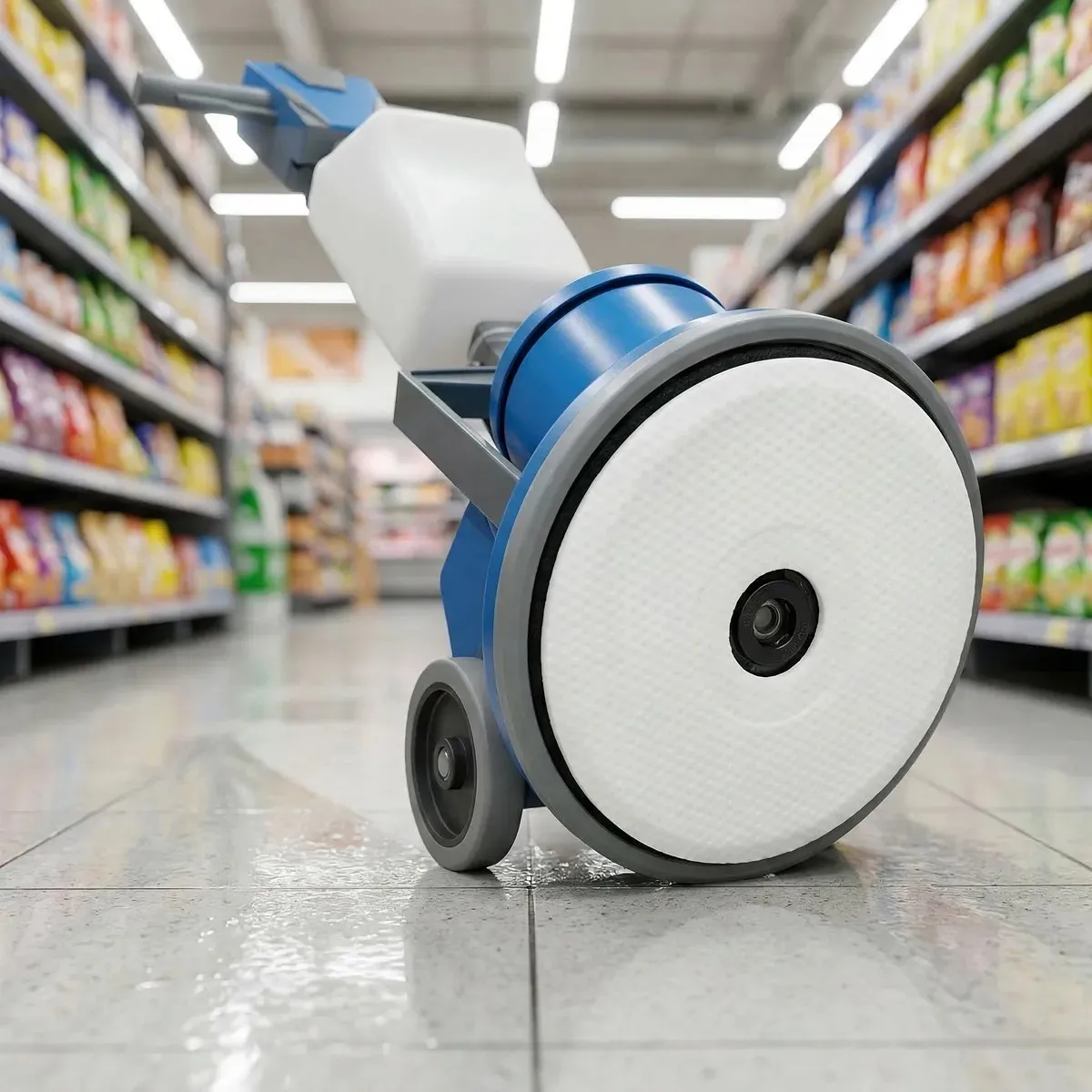
Traditional commercial floor maintenance often relies heavily on strong chemical detergents and aggressive scrubbing action. This combination can easily degrade gloss and shorten the lifespan of premium flooring materials. However, a significant technological shift has occurred in the B2B cleaning industry with the introduction of advanced melamine foam technology. By utilizing a physical open-cell structure instead of chemical dissolution, modern facilities can achieve a deep, restoration-level clean using nothing more than pure water.
This post delves directly into the core material science and the three micro-nano engineering principles that explain why the modern Melamine Floor Scrubber Pad delivers unmatched cleaning efficiency without damaging delicate commercial surfaces.
The Core Science of Open-Cell Melamine Foam
For better understanding of the exceptional removal performance of this specialized floor pad on stubborn scuffs and heavy traffic stains, we would like to highlight and elaborate on the skeletal density and the porosity of the melamine raw material used for this High-Performance Floor Pad. Unlike standard, common household polyurethane-based foam sponges, this High-Performance Melamine Foam is light in weight, yet rigid in its skeletal structure. According to official true density and porosity test reports, top-tier compressed melamine foam exhibits an open-cell volume porosity as high as 99.40%.
This means that only a tiny fraction—specifically, about 0.60% of the material's apparent volume—consists of the actual solid resin skeleton and cell walls. The remaining 99.40% is an interconnected network of microscopic geometric voids. This creates an immense interior surface area capable of trapping minute soil particles that standard nylon floor discs completely glide over.
Furthermore, the mechanical properties of the foam are meticulously adjusted during the manufacturing process to ensure industrial durability. For instance, specialized formulations like the high-density compressed foam varieties show a recorded tensile strength of up to 264kPa and an elongation at break of 22% under strict laboratory ambient testing conditions. This prevents the scrubber pad from disintegrating prematurely when subjected to the high rotational speeds and continuous down-pressure of heavy walk-behind or ride-on automatic floor scrubbing machines.
3 Advanced Micro-Nano Cleaning Principles
The extraordinary cleaning power of a Melamine Floor Scrubber Pad is not the result of a chemical reaction, but rather a sequence of pure physical mechanisms operating simultaneously at the microscopic level.
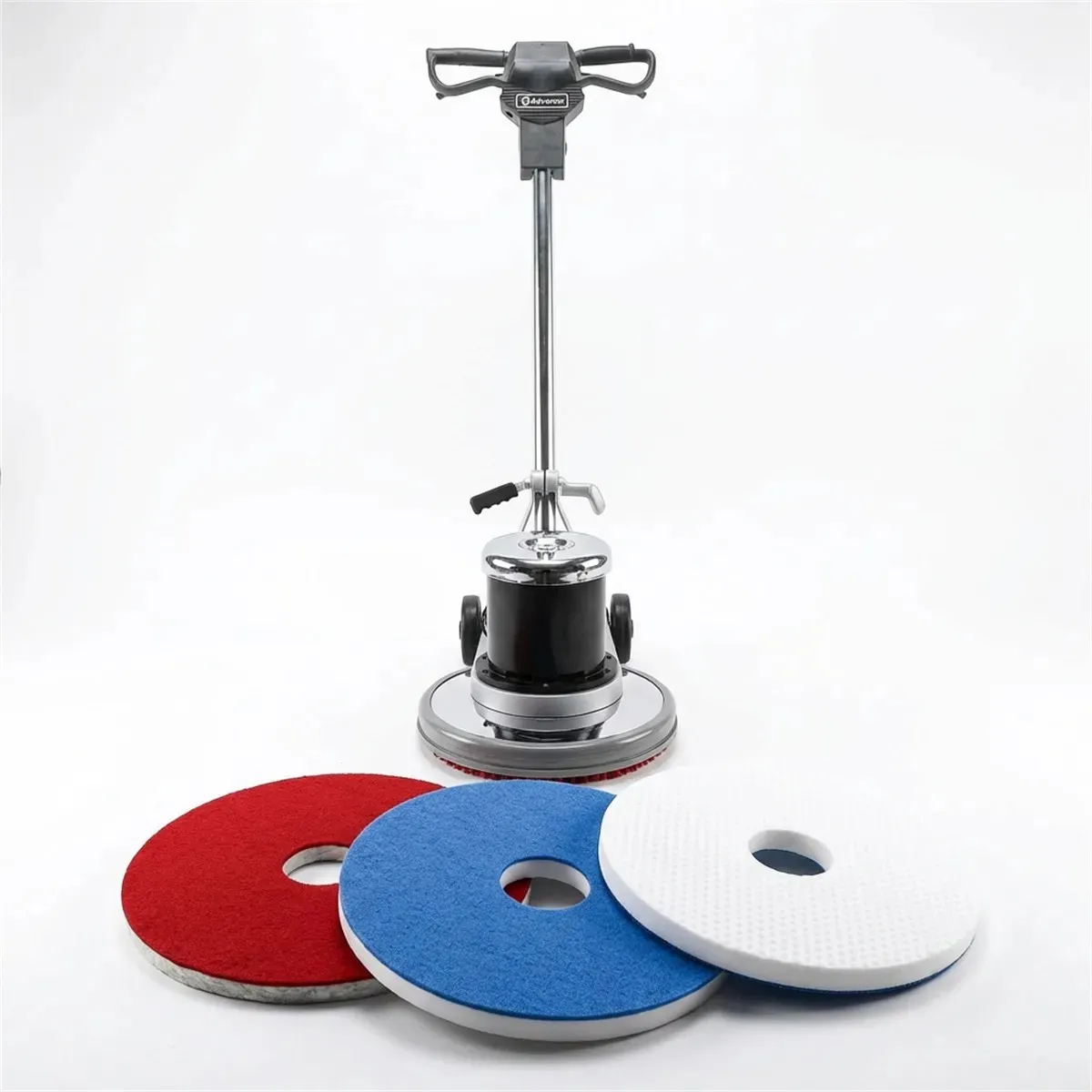
Micro-Abrasive Strut Action
The first principle relies entirely on the inherent hardness of the microscopic melamine struts. When melamine resin is foamed, it cures into an open-cell matrix composed of three-dimensional, multi-directional filaments. These thin struts are nearly as hard as glass. When your automatic floor machine spins the pad across a dingy surface, these micro-struts function like thousands of ultra-fine scrapers or microscopic sanding teeth.
This innovative cleaning tool is revolutionary in commercial facility maintenance due to its interaction with different material hardnesses. The plasticized fibers of the disk are hard enough to cut through dirt, rubber scuff marks and old floor wax that has bonded to the floor surface. However, the fibers are not hard enough to scratch very hard surfaces such as polished marble, glazed tile and very hard concrete. The unique structure of the disk is able to pick up dirt from the very fine micro-grooves and scratches in floors that regular abrasive floor pads are unable to remove.
Capillary Micro-Vacuum Adsorption
Once the micro-abrasive struts scrape the dirt loose, the second principle takes over. Because the foam possesses a remarkable 99.40% open-cell porosity, the interconnected microscopic pores act as a vast network of capillary tubes. When you soak the scrubber pad with water, these micro-voids generate an immediate capillary draw as the pad moves across the floor.
As the machine applies downward pressure, loosened dirt particles, micro-residues, and greasy liquids are literally sucked up into the internal skeleton of the foam. This capillary vacuum effect ensures that lifted grime is instantly held within the pad's core instead of being smeared back across the clean floor tiles. It simulates a continuous extraction process during a standard single-pass wash.
Softening Water-Activation Fluidity
The third principle is a fascinating thermodynamic and mechanical characteristic often referred to as intelligent hardness adjustment. In a completely dry state, melamine foam maintains a stiff, brittle structure due to its rigid resin roots. However, the material undergoes a temporary molecular structural change when thoroughly soaked with water.
Upon water absorption, the rigid micro-struts become significantly more compliant and flexible. This wet flexibility allows the rotating scrubber pad to perfectly contour itself to the minor imperfections, warped areas, and uneven grout lines of a commercial floor. Instead of hitting high spots and missing micro-depressions, the water-activated pad flattens smoothly across the entire surface texture, distributing even cleaning pressure across every square millimeter.
Real-World B2B Application Scenarios
In high-traffic commercial environments, relying solely on chemical cleaners can lead to soap scum buildup, slippery residue, and accelerated floor degradation. Transitioning to a water-only physical cleaning method solves several distinct facility maintenance bottlenecks.
Commercial Ceramic and Quarry Tiles: In large shopping malls, transit hubs, and hotel lobbies, ceramic grout lines frequently turn black over time. The micro-struts of the Melamine Floor Scrubber Pad penetrate deep into these recessed grout joints, lifting out embedded foot-traffic grime without eroding the grout itself.
Polished Marble and Terrazzo: Care needs to be taken when cleaning polished stone floors that have been treated with acid-based or alkaline-based cleaning products as they can readily strip the polished surface. A water-activated melamine disc pad offers an amazing polishing and cleaning option for the marble floor providing a deep clean by physically removing the microscopic dirt and grime from the stone surface leaving it looking freshly cleaned and clear.
Epoxy and Industrial Concrete Floors: Black rubber tire marks from forklifts can be particularly difficult to remove from the floors of manufacturing, warehouse and automotive repair facilities. The high micro-hardness of the melamine filaments on our Scrub Pad enables the melted rubber from forklift tire tracks to be sheared off cleanly without damage to the underlying epoxy coating.
To get the longest life out of your pads, always ensure the floor surface is kept thoroughly wet during the entire scrubbing cycle. Running a melamine pad on a completely dry floor drastically increases friction, causing the fine nano-struts to shear off rapidly and cause unnecessary wear on the material.
If you want to learn more, you can visit FoamTech
FAQ
Q1: Can you use a Melamine Floor Scrubber Pad with chemical detergents?
A: While these pads are specifically engineered to provide powerful deep cleaning with water alone, you can safely use them alongside neutral floor cleaners if local facility protocols require disinfection. However, you must absolutely avoid strong acid or highly alkaline stripping agents, as harsh chemicals can degrade the internal resin structure of the melamine foam and shorten the pad's operational lifespan.
Q2: How long does a single floor scrubber pad typically last in a commercial setting?
A: The service life depends heavily on the roughness of the floor, the rotational speed of your machine, and the down-pressure applied. On smooth surfaces like polished marble or smooth vinyl VCT, a single pad can clean a substantial area; however, highly abrasive or unpolished concrete surfaces will wear down the micro-struts faster. Always ensure the floor is flooded with water to minimize friction and maximize pad longevity.
Q3: Will this pad scratch or remove the wax coating on a glossy VCT office floor?
A: Because melamine foam operates via micro-abrasion, it will gradually remove microscopic layers of surface soil and scuffs. On a heavily waxed VCT floor, frequent use may slightly satin the high-gloss shine over time because it strips away micro-impurities and topcoat blemishes. It is highly recommended for deep scrubbing prior to a fresh recoat, or for periodic restoration cycles.
Q4: Is it necessary to rinse the floor after using the melamine pad?
A: No rinse is needed because the process is entirely physical. The high capillary micro-porosity of the pad sucks the loosened dirt directly up into its internal cells. As long as your scrubber machine's squeegee squeegees away the residual dampness efficiently, the floor will dry clean and completely streak-free with zero chemical film left behind.
Q5: How do I know when it is time to replace the floor pad?
A: Since melamine foam cleans through gradual physical wear, the pad will slowly compress and thin out over extended use. When the white melamine foam layer has worn down close to the driving backing pad or begins to tear significantly, it is time to swap it out for a fresh disc to maintain optimal surface contact.
Traditional commercial floor maintenance often relies heavily on strong chemical detergents and aggressive scrubbing action. This combination can easily degrade gloss and shorten the lifespan of premium flooring materials. However, a significant technological shift has occurred in the B2B cleaning industry with the introduction of advanced melamine foam technology. By utilizing a physical open-cell structure instead of chemical dissolution, modern facilities can achieve a deep, restoration-level clean using nothing more than pure water.
This post delves directly into the core material science and the three micro-nano engineering principles that explain why the modern Melamine Floor Scrubber Pad delivers unmatched cleaning efficiency without damaging delicate commercial surfaces.
The Core Science of Open-Cell Melamine Foam
For better understanding of the exceptional removal performance of this specialized floor pad on stubborn scuffs and heavy traffic stains, we would like to highlight and elaborate on the skeletal density and the porosity of the melamine raw material used for this High-Performance Floor Pad. Unlike standard, common household polyurethane-based foam sponges, this High-Performance Melamine Foam is light in weight, yet rigid in its skeletal structure. According to official true density and porosity test reports, top-tier compressed melamine foam exhibits an open-cell volume porosity as high as 99.40%.
This means that only a tiny fraction—specifically, about 0.60% of the material's apparent volume—consists of the actual solid resin skeleton and cell walls. The remaining 99.40% is an interconnected network of microscopic geometric voids. This creates an immense interior surface area capable of trapping minute soil particles that standard nylon floor discs completely glide over.
Furthermore, the mechanical properties of the foam are meticulously adjusted during the manufacturing process to ensure industrial durability. For instance, specialized formulations like the high-density compressed foam varieties show a recorded tensile strength of up to 264kPa and an elongation at break of 22% under strict laboratory ambient testing conditions. This prevents the scrubber pad from disintegrating prematurely when subjected to the high rotational speeds and continuous down-pressure of heavy walk-behind or ride-on automatic floor scrubbing machines.
3 Advanced Micro-Nano Cleaning Principles
The extraordinary cleaning power of a Melamine Floor Scrubber Pad is not the result of a chemical reaction, but rather a sequence of pure physical mechanisms operating simultaneously at the microscopic level.
Micro-Abrasive Strut Action
The first principle relies entirely on the inherent hardness of the microscopic melamine struts. When melamine resin is foamed, it cures into an open-cell matrix composed of three-dimensional, multi-directional filaments. These thin struts are nearly as hard as glass. When your automatic floor machine spins the pad across a dingy surface, these micro-struts function like thousands of ultra-fine scrapers or microscopic sanding teeth.
This innovative cleaning tool is revolutionary in commercial facility maintenance due to its interaction with different material hardnesses. The plasticized fibers of the disk are hard enough to cut through dirt, rubber scuff marks and old floor wax that has bonded to the floor surface. However, the fibers are not hard enough to scratch very hard surfaces such as polished marble, glazed tile and very hard concrete. The unique structure of the disk is able to pick up dirt from the very fine micro-grooves and scratches in floors that regular abrasive floor pads are unable to remove.
Capillary Micro-Vacuum Adsorption
Once the micro-abrasive struts scrape the dirt loose, the second principle takes over. Because the foam possesses a remarkable 99.40% open-cell porosity, the interconnected microscopic pores act as a vast network of capillary tubes. When you soak the scrubber pad with water, these micro-voids generate an immediate capillary draw as the pad moves across the floor.
As the machine applies downward pressure, loosened dirt particles, micro-residues, and greasy liquids are literally sucked up into the internal skeleton of the foam. This capillary vacuum effect ensures that lifted grime is instantly held within the pad's core instead of being smeared back across the clean floor tiles. It simulates a continuous extraction process during a standard single-pass wash.
Softening Water-Activation Fluidity
The third principle is a fascinating thermodynamic and mechanical characteristic often referred to as intelligent hardness adjustment. In a completely dry state, melamine foam maintains a stiff, brittle structure due to its rigid resin roots. However, the material undergoes a temporary molecular structural change when thoroughly soaked with water.
Upon water absorption, the rigid micro-struts become significantly more compliant and flexible. This wet flexibility allows the rotating scrubber pad to perfectly contour itself to the minor imperfections, warped areas, and uneven grout lines of a commercial floor. Instead of hitting high spots and missing micro-depressions, the water-activated pad flattens smoothly across the entire surface texture, distributing even cleaning pressure across every square millimeter.
Real-World B2B Application Scenarios
In high-traffic commercial environments, relying solely on chemical cleaners can lead to soap scum buildup, slippery residue, and accelerated floor degradation. Transitioning to a water-only physical cleaning method solves several distinct facility maintenance bottlenecks.
Commercial Ceramic and Quarry Tiles: In large shopping malls, transit hubs, and hotel lobbies, ceramic grout lines frequently turn black over time. The micro-struts of the Melamine Floor Scrubber Pad penetrate deep into these recessed grout joints, lifting out embedded foot-traffic grime without eroding the grout itself.
Polished Marble and Terrazzo: Care needs to be taken when cleaning polished stone floors that have been treated with acid-based or alkaline-based cleaning products as they can readily strip the polished surface. A water-activated melamine disc pad offers an amazing polishing and cleaning option for the marble floor providing a deep clean by physically removing the microscopic dirt and grime from the stone surface leaving it looking freshly cleaned and clear.
Epoxy and Industrial Concrete Floors: Black rubber tire marks from forklifts can be particularly difficult to remove from the floors of manufacturing, warehouse and automotive repair facilities. The high micro-hardness of the melamine filaments on our Scrub Pad enables the melted rubber from forklift tire tracks to be sheared off cleanly without damage to the underlying epoxy coating.
To get the longest life out of your pads, always ensure the floor surface is kept thoroughly wet during the entire scrubbing cycle. Running a melamine pad on a completely dry floor drastically increases friction, causing the fine nano-struts to shear off rapidly and cause unnecessary wear on the material.
If you want to learn more, you can visit FoamTech
FAQ
Q1: Can you use a Melamine Floor Scrubber Pad with chemical detergents?
A: While these pads are specifically engineered to provide powerful deep cleaning with water alone, you can safely use them alongside neutral floor cleaners if local facility protocols require disinfection. However, you must absolutely avoid strong acid or highly alkaline stripping agents, as harsh chemicals can degrade the internal resin structure of the melamine foam and shorten the pad's operational lifespan.
Q2: How long does a single floor scrubber pad typically last in a commercial setting?
A: The service life depends heavily on the roughness of the floor, the rotational speed of your machine, and the down-pressure applied. On smooth surfaces like polished marble or smooth vinyl VCT, a single pad can clean a substantial area; however, highly abrasive or unpolished concrete surfaces will wear down the micro-struts faster. Always ensure the floor is flooded with water to minimize friction and maximize pad longevity.
Q3: Will this pad scratch or remove the wax coating on a glossy VCT office floor?
A: Because melamine foam operates via micro-abrasion, it will gradually remove microscopic layers of surface soil and scuffs. On a heavily waxed VCT floor, frequent use may slightly satin the high-gloss shine over time because it strips away micro-impurities and topcoat blemishes. It is highly recommended for deep scrubbing prior to a fresh recoat, or for periodic restoration cycles.
Q4: Is it necessary to rinse the floor after using the melamine pad?
A: No rinse is needed because the process is entirely physical. The high capillary micro-porosity of the pad sucks the loosened dirt directly up into its internal cells. As long as your scrubber machine's squeegee squeegees away the residual dampness efficiently, the floor will dry clean and completely streak-free with zero chemical film left behind.
Q5: How do I know when it is time to replace the floor pad?
A: Since melamine foam cleans through gradual physical wear, the pad will slowly compress and thin out over extended use. When the white melamine foam layer has worn down close to the driving backing pad or begins to tear significantly, it is time to swap it out for a fresh disc to maintain optimal surface contact.
Related Recommendations


Family owned company, globalleader in development andmanufacturing of home careproducts for private label andcontract manufacturing
Copyright © 2026 FoamTech (Zhejiang) New Materials Co., Ltd.