Can Cleaning Sponge Sheets Remove Household Marks Without Harsh Cleaners?
2026-08-17
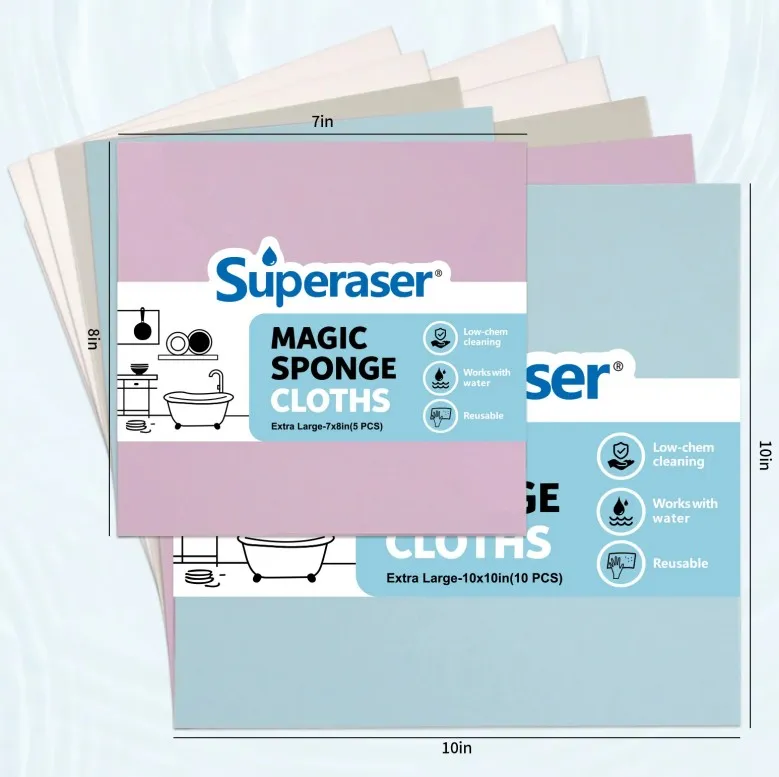
Not every stain needs to be smelly, scrubbed with a hard brush or left to soak for ages. There are some stains that are simply sitting on the surface of items and need to be better in contact with the cleaning agent. A wall scuff, a tea stain in a mug, a greasy edge to a work surface or a grayish mark on a sneaker are all examples of surface stains that are better to clean with a cleaning sponge sheet. These can bend, fold, wrap around items to name but a few features that enable cleaning of awkward access areas that a thick cleaning block would find a challenge to reach.
The idea is simple: wet the sheet, squeeze out extra water, wipe with light pressure, and rinse as needed. The result depends on the surface and the stain, but for many daily marks the process is quick and clean. FoamTech makes melamine cleaning sponge products for household cleaning, office cleaning, kitchen care, bathroom surfaces, and private-label supply, so this sheet format is part of a wider cleaning sponge range rather than a single novelty item.
What Makes a Cleaning Sponge Sheet Different?
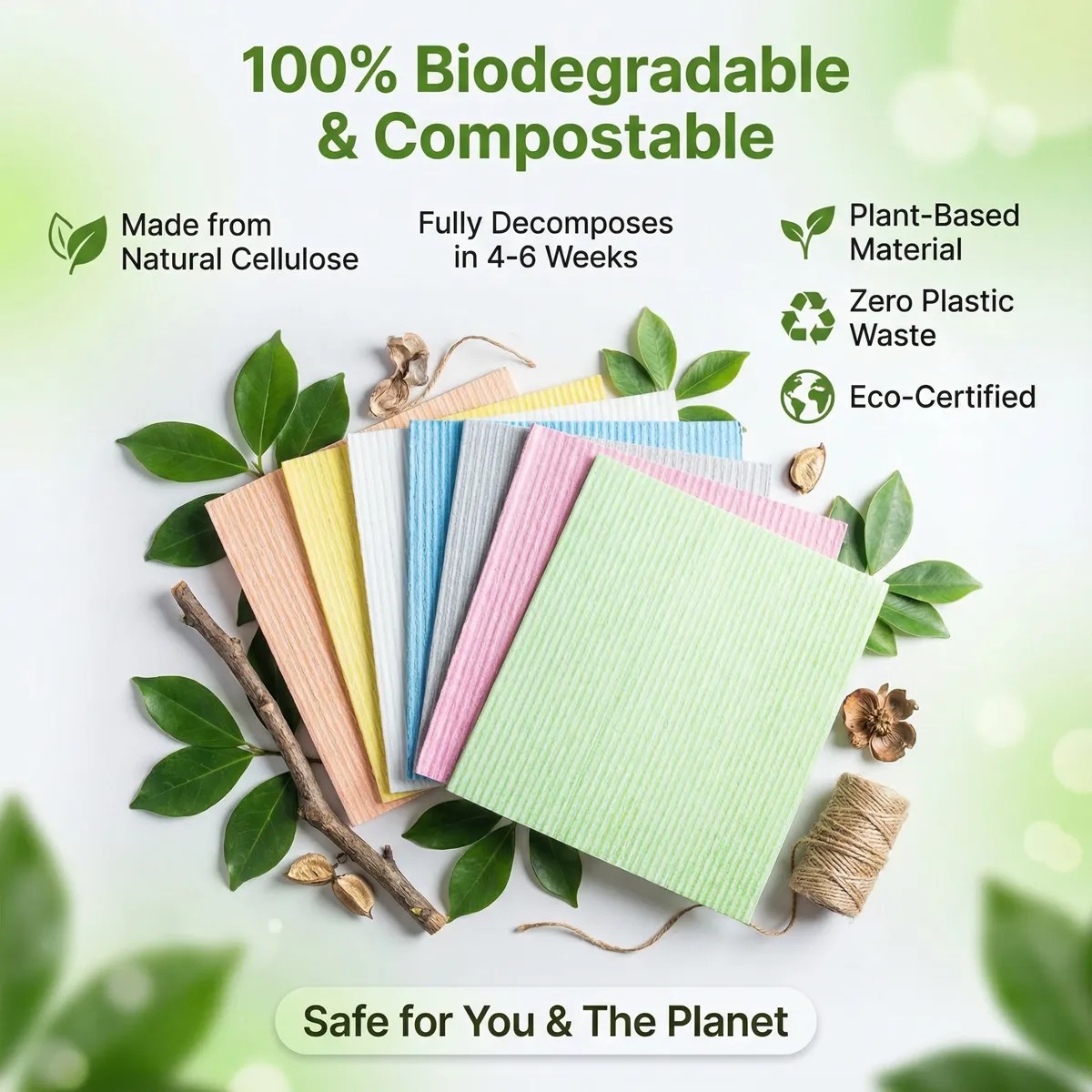
A thick Magic Sponge block is easy to hold and to use on open, flat surfaces. However, a Magic Sponge sheet is like cloth, and can be folded over a fingertip, for example, to clean into small areas, or wrapped around a faucet for instance, and then pressed into a corner or cut up to clean small areas in detail. This is crucial in real-life homes, where dirt rarely stays on a perfectly flat surface.
The Cleaning Sponge Sheet from FoamTech is made from melamine resin and has a listed thickness of 2.0 mm. Common sizes include 25.4 x 25.4 x 0.2 cm and 20 x 18 x 0.2 cm, with custom sizes available. The product page also notes 750 percent to 2000 percent water absorption, optional custom colors, 5-piece and 10-piece pack options, and use on sealed surfaces such as plastic, glass, stone, ceramic, wood, and stainless steel.
Those details explain why the product feels useful beyond one single stain. A thin sheet can touch more of an uneven surface at once. It can be folded to make a firmer edge. It can be used as a small piece when the stain is tiny, which is nice because nobody wants to wear down a whole sponge for one mark on a shoe sole.
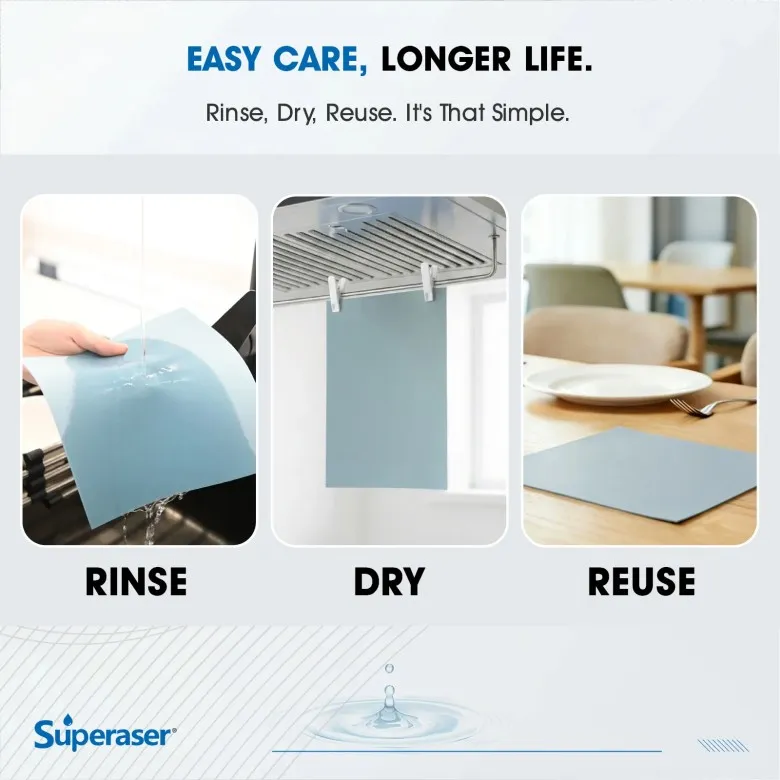
How Melamine Foam Cleans With Water
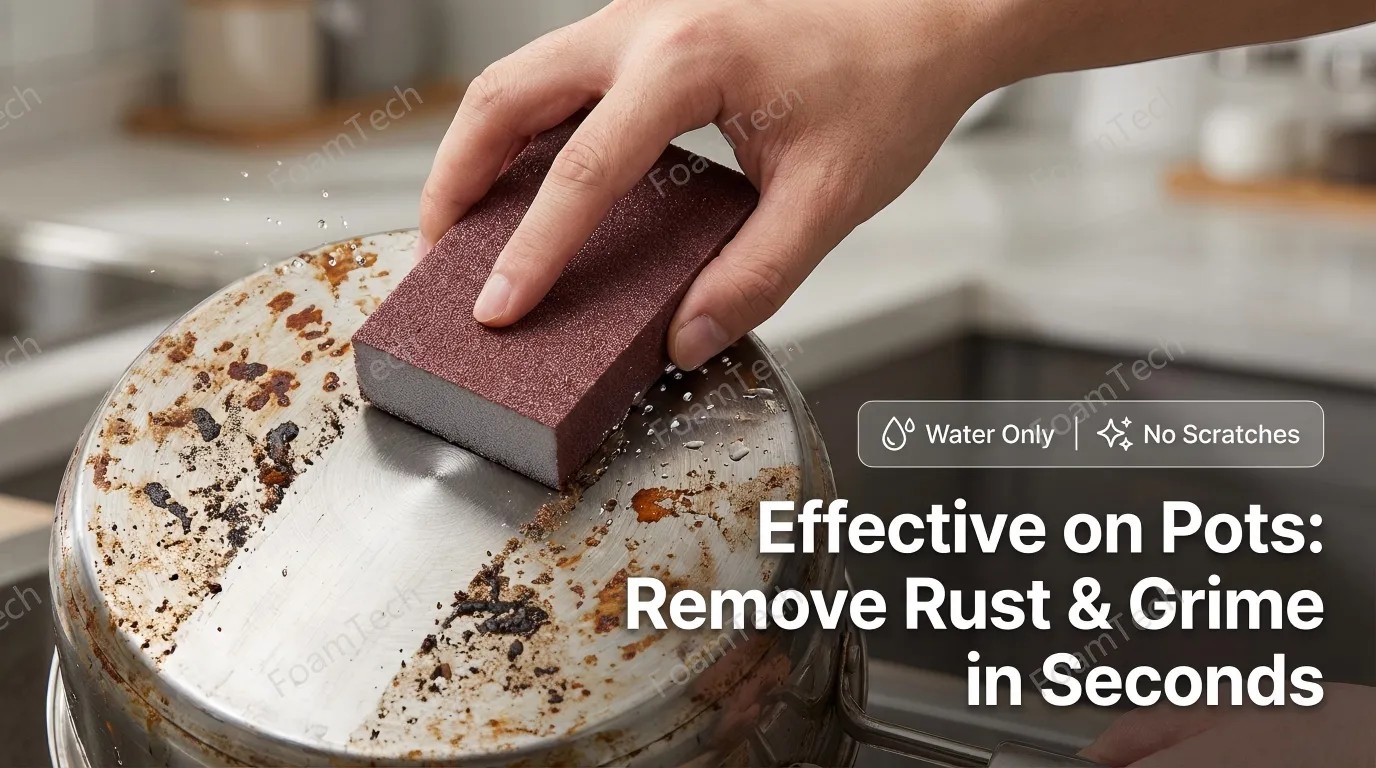
Melamine foam is often called a magic sponge because it can remove many marks with water alone. The cleaning action is physical. When wet, the foam’s fine structure is able to lift up surface marks using gentle friction. Such foam is far from being soft like cotton or a towel. On the other hand, it’s very far from a metal scouring pad or steel wool. In short, it’s somewhere in the middle: with more “bite” than a towel, yet much milder than steel wool.
This is why pressure matters. A sponge sheet does not have to be scrubbed hard in order to clean. Light wiping of a surface over and over again is in most cases better than rubbing with force against a surface. Harder rubbing can cause a sponge sheet to wear faster than necessary. On surfaces such as painted surfaces, glossy surfaces, coated surfaces and sensitive surfaces it is wise to test a small area first that is not visible.That one small step prevents most cleaning regrets.
Where a Cleaning Sponge Sheet Works Well Around the Home
A useful cleaning tool earns its place by handling common messes. The sheet format is especially practical for stains that are visible, annoying, and not worth a full deep-cleaning session. It is the kind of item people reach for between bigger cleaning days.
Kitchen Marks and Cup Stains
In the kitchen, for example, tea and coffee stains on mugs, and food marks on ceramics can be removed using a sheet. Light grease on a stovetop, gray marks on refrigerator handles, and dirt around the edge of a sink can also be removed using a sheet. The flexible sheet can be folded into tight corners and around handles and seams.Some baked-on grease marks may require a cleaner or soak before removal using a sheet. However, many surface marks that have already been wiped down can be removed using a sheet.
Bathroom and Glass Details
Bathroom cleaning often includes small details: water spots near faucets, soap marks on tile edges, residue around a toothbrush holder, and hard-to-reach corners on glass doors. A folded sheet gives better contact than a thick block on these narrow areas. It can also be useful on smooth sealed surfaces where water-safe cleaning is suitable.
Shoes, Walls, and Office Surfaces
Removing gray marks from white sneaker midsoles, wall scuffs, desk marks, plastic chairs, keyboard edges, and light-colored hard cases is possible. Removing gray marks with a damp sponge sheet is easy. Removing gray marks from walls depends on the paint finish. Test first and avoid rubbing the same spot too long. Removing gray marks from flat matte walls is usually more difficult and can be compared to removing gray marks from glossy tile or ceramic mug surfaces.
How to Use It Without Damaging the Surface
The safest cleaning method is not complicated. Wet the sheet fully, squeeze out extra water, wipe gently, and rinse the sponge often so lifted dirt does not move back onto the surface. If the sheet gets dirty or starts to break at the edge, fold to a clean part or use a new piece.
A few habits make the result better:
• Test first on painted, coated, polished, or high-gloss surfaces.
• Use light pressure and repeat the wipe instead of pressing hard.
• Keep the sponge wet, because dry rubbing can feel harsher.
• Rinse often during cleaning, especially on grease or dark stains.
• Do not use it on skin, food, or surfaces that cannot be wiped with water.
• Let the sponge dry after use to reduce damp odor.
The cleaning sheet is not meant to replace every brush or cloth. It is best treated as a quick surface-mark remover. That makes expectations clearer, and clear expectations usually lead to better reviews.
Why This Format Also Makes Sense for Cleaning Brands
For cleaning brands, distributors, and supermarket programs, the sheet format has practical advantages. It is slim, easy to pack, simple to cut into different sizes, and suitable for colorful multipacks. It can be sold as a daily cleaning sheet, a shoe cleaning sheet, a kitchen stain eraser, or an all-purpose home touch-up product, depending on the market.
FoamTech's service page describes support for packaging material selection, product design, and pre-production sample confirmation. That matters because cleaning sponge products are not only judged by material. The final pack has to explain the use clearly, protect the sponge during transport, and look trustworthy on the shelf or product listing. FoamTech's about page also introduces its production background, factory scale, foaming lines, OEM work, and private-label experience.
If you are planning a custom cleaning sponge sheet project, send the expected size, thickness, color, pack count, packaging style, and application scene through the contact page. A short but clear brief helps the sample stage move faster.
FAQ
Q1: Can cleaning sponge sheets remove stains without detergent?
A: Yes, many surface marks can be cleaned with water alone. Heavy grease or old buildup may still need soaking or a suitable cleaner.
Q2: Are cleaning sponge sheets safe for all surfaces?
A: No cleaning sponge should be treated as safe for every surface. Test first on painted, coated, polished, or delicate areas.
Q3: Why choose a sheet instead of a thick sponge block?
A: A sheet bends and folds more easily, so it is better for corners, seams, curved areas, sneaker edges, and small marks.
Q4: Can the sheet be cut into smaller pieces?
A: Yes. Cutting it into smaller pieces can reduce waste when cleaning small stains or narrow areas.
Q5: Is this product suitable for private-label cleaning brands?
A: Yes. The sheet format supports custom size, color, pack count, and packaging, making it suitable for retail and e-commerce cleaning ranges.
Not every stain needs to be smelly, scrubbed with a hard brush or left to soak for ages. There are some stains that are simply sitting on the surface of items and need to be better in contact with the cleaning agent. A wall scuff, a tea stain in a mug, a greasy edge to a work surface or a grayish mark on a sneaker are all examples of surface stains that are better to clean with a cleaning sponge sheet. These can bend, fold, wrap around items to name but a few features that enable cleaning of awkward access areas that a thick cleaning block would find a challenge to reach.
The idea is simple: wet the sheet, squeeze out extra water, wipe with light pressure, and rinse as needed. The result depends on the surface and the stain, but for many daily marks the process is quick and clean. FoamTech makes melamine cleaning sponge products for household cleaning, office cleaning, kitchen care, bathroom surfaces, and private-label supply, so this sheet format is part of a wider cleaning sponge range rather than a single novelty item.
What Makes a Cleaning Sponge Sheet Different?
A thick Magic Sponge block is easy to hold and to use on open, flat surfaces. However, a Magic Sponge sheet is like cloth, and can be folded over a fingertip, for example, to clean into small areas, or wrapped around a faucet for instance, and then pressed into a corner or cut up to clean small areas in detail. This is crucial in real-life homes, where dirt rarely stays on a perfectly flat surface.
The Cleaning Sponge Sheet from FoamTech is made from melamine resin and has a listed thickness of 2.0 mm. Common sizes include 25.4 x 25.4 x 0.2 cm and 20 x 18 x 0.2 cm, with custom sizes available. The product page also notes 750 percent to 2000 percent water absorption, optional custom colors, 5-piece and 10-piece pack options, and use on sealed surfaces such as plastic, glass, stone, ceramic, wood, and stainless steel.
Those details explain why the product feels useful beyond one single stain. A thin sheet can touch more of an uneven surface at once. It can be folded to make a firmer edge. It can be used as a small piece when the stain is tiny, which is nice because nobody wants to wear down a whole sponge for one mark on a shoe sole.
How Melamine Foam Cleans With Water
Melamine foam is often called a magic sponge because it can remove many marks with water alone. The cleaning action is physical. When wet, the foam’s fine structure is able to lift up surface marks using gentle friction. Such foam is far from being soft like cotton or a towel. On the other hand, it’s very far from a metal scouring pad or steel wool. In short, it’s somewhere in the middle: with more “bite” than a towel, yet much milder than steel wool.
This is why pressure matters. A sponge sheet does not have to be scrubbed hard in order to clean. Light wiping of a surface over and over again is in most cases better than rubbing with force against a surface. Harder rubbing can cause a sponge sheet to wear faster than necessary. On surfaces such as painted surfaces, glossy surfaces, coated surfaces and sensitive surfaces it is wise to test a small area first that is not visible.That one small step prevents most cleaning regrets.
Where a Cleaning Sponge Sheet Works Well Around the Home
A useful cleaning tool earns its place by handling common messes. The sheet format is especially practical for stains that are visible, annoying, and not worth a full deep-cleaning session. It is the kind of item people reach for between bigger cleaning days.
Kitchen Marks and Cup Stains
In the kitchen, for example, tea and coffee stains on mugs, and food marks on ceramics can be removed using a sheet. Light grease on a stovetop, gray marks on refrigerator handles, and dirt around the edge of a sink can also be removed using a sheet. The flexible sheet can be folded into tight corners and around handles and seams.Some baked-on grease marks may require a cleaner or soak before removal using a sheet. However, many surface marks that have already been wiped down can be removed using a sheet.
Bathroom and Glass Details
Bathroom cleaning often includes small details: water spots near faucets, soap marks on tile edges, residue around a toothbrush holder, and hard-to-reach corners on glass doors. A folded sheet gives better contact than a thick block on these narrow areas. It can also be useful on smooth sealed surfaces where water-safe cleaning is suitable.
Shoes, Walls, and Office Surfaces
Removing gray marks from white sneaker midsoles, wall scuffs, desk marks, plastic chairs, keyboard edges, and light-colored hard cases is possible. Removing gray marks with a damp sponge sheet is easy. Removing gray marks from walls depends on the paint finish. Test first and avoid rubbing the same spot too long. Removing gray marks from flat matte walls is usually more difficult and can be compared to removing gray marks from glossy tile or ceramic mug surfaces.
How to Use It Without Damaging the Surface
The safest cleaning method is not complicated. Wet the sheet fully, squeeze out extra water, wipe gently, and rinse the sponge often so lifted dirt does not move back onto the surface. If the sheet gets dirty or starts to break at the edge, fold to a clean part or use a new piece.
A few habits make the result better:
• Test first on painted, coated, polished, or high-gloss surfaces.
• Use light pressure and repeat the wipe instead of pressing hard.
• Keep the sponge wet, because dry rubbing can feel harsher.
• Rinse often during cleaning, especially on grease or dark stains.
• Do not use it on skin, food, or surfaces that cannot be wiped with water.
• Let the sponge dry after use to reduce damp odor.
The cleaning sheet is not meant to replace every brush or cloth. It is best treated as a quick surface-mark remover. That makes expectations clearer, and clear expectations usually lead to better reviews.
Why This Format Also Makes Sense for Cleaning Brands
For cleaning brands, distributors, and supermarket programs, the sheet format has practical advantages. It is slim, easy to pack, simple to cut into different sizes, and suitable for colorful multipacks. It can be sold as a daily cleaning sheet, a shoe cleaning sheet, a kitchen stain eraser, or an all-purpose home touch-up product, depending on the market.
FoamTech's service page describes support for packaging material selection, product design, and pre-production sample confirmation. That matters because cleaning sponge products are not only judged by material. The final pack has to explain the use clearly, protect the sponge during transport, and look trustworthy on the shelf or product listing. FoamTech's about page also introduces its production background, factory scale, foaming lines, OEM work, and private-label experience.
If you are planning a custom cleaning sponge sheet project, send the expected size, thickness, color, pack count, packaging style, and application scene through the contact page. A short but clear brief helps the sample stage move faster.
FAQ
Q1: Can cleaning sponge sheets remove stains without detergent?
A: Yes, many surface marks can be cleaned with water alone. Heavy grease or old buildup may still need soaking or a suitable cleaner.
Q2: Are cleaning sponge sheets safe for all surfaces?
A: No cleaning sponge should be treated as safe for every surface. Test first on painted, coated, polished, or delicate areas.
Q3: Why choose a sheet instead of a thick sponge block?
A: A sheet bends and folds more easily, so it is better for corners, seams, curved areas, sneaker edges, and small marks.
Q4: Can the sheet be cut into smaller pieces?
A: Yes. Cutting it into smaller pieces can reduce waste when cleaning small stains or narrow areas.
Q5: Is this product suitable for private-label cleaning brands?
A: Yes. The sheet format supports custom size, color, pack count, and packaging, making it suitable for retail and e-commerce cleaning ranges.
Prev: No data
Related Recommendations

Family owned company, globalleader in development andmanufacturing of home careproducts for private label andcontract manufacturing
Copyright © 2026 FoamTech (Zhejiang) New Materials Co., Ltd.