What Makes a Temperature-Responsive Scrub Sponge Useful for Grease, Glassware, and Delicate Cookware?
2026-08-20
A tough kitchen sponge can wipe greasy pans and sauce and wipe down sink areas with tough marks in them and a soft kitchen sponge won’t scratch delicate items like glassware, ceramics and some cookware Many people have several items in the sink area but still manage to pick up the wrong one at the wrong time. A temperature-responsive scrub sponge offers a more flexible solution as the sponge changes feel in response to the water temperature. The sponge will feel one way when dry and another when wet, depending on the temperature of the water, making it ideal for a variety of cleaning tasks around the home.
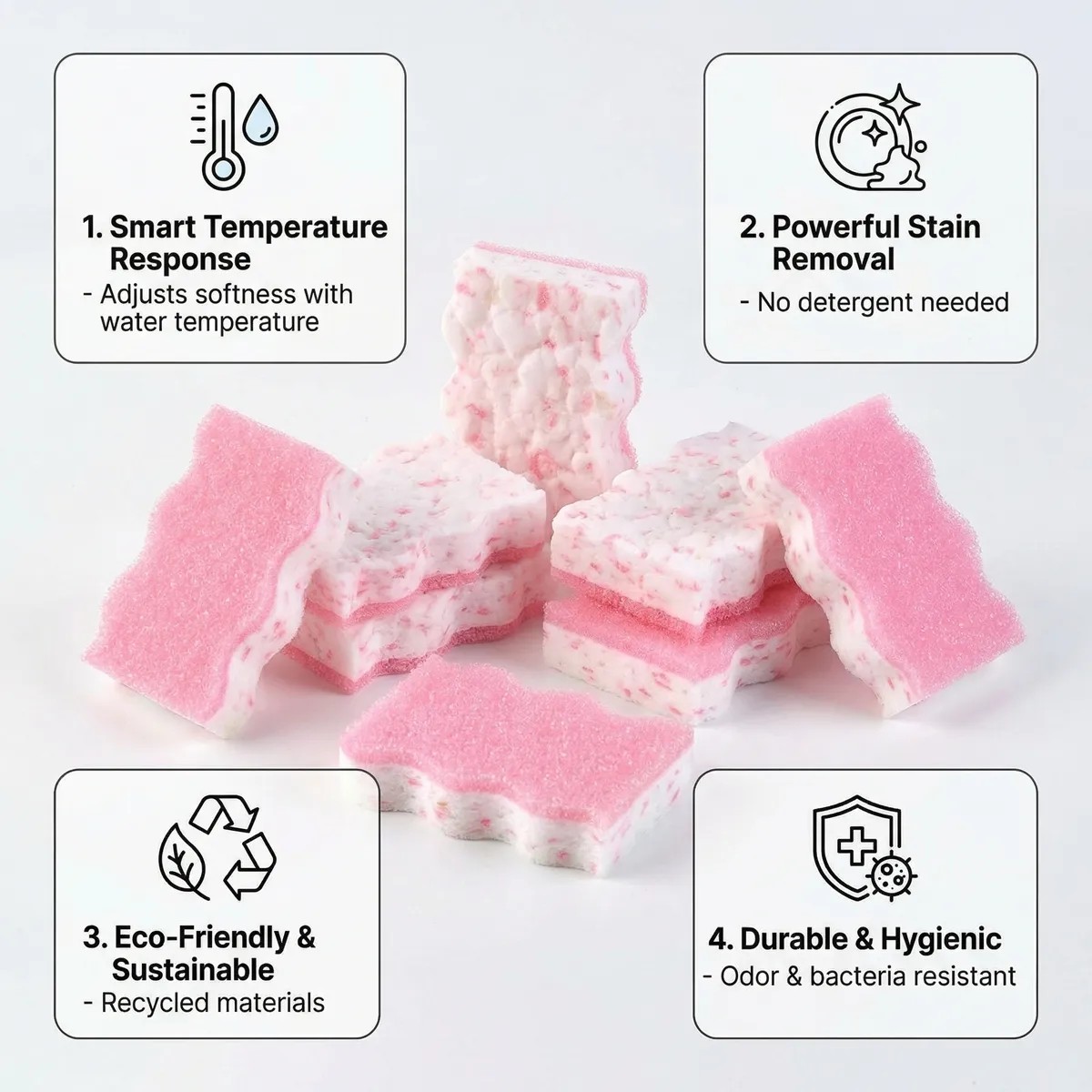
In cold water, the sponge becomes firmer for tougher residue. In warm water, it becomes softer for more careful washing. The feature is easy to understand because users can feel the change in their hands. That makes it more than a technical point. It becomes part of the daily cleaning habit. FoamTech offers this type of cleaning sponge for home cleaning, retail product lines, and customized supply.
Why One Kitchen Sponge Often Feels Like a Compromise
A regular soft sponge is very comfortable for washing up plates and cups but burnt food on a pan is another story altogether!A rough scouring pad is great for removing stubborn residue but can be a bit of a risk on non-stick surfaces, glass lids and glossy ceramic surfaces.The problem isn’t that one tool is bad. The problem is that a kitchen contains too many surface types for one fixed texture.
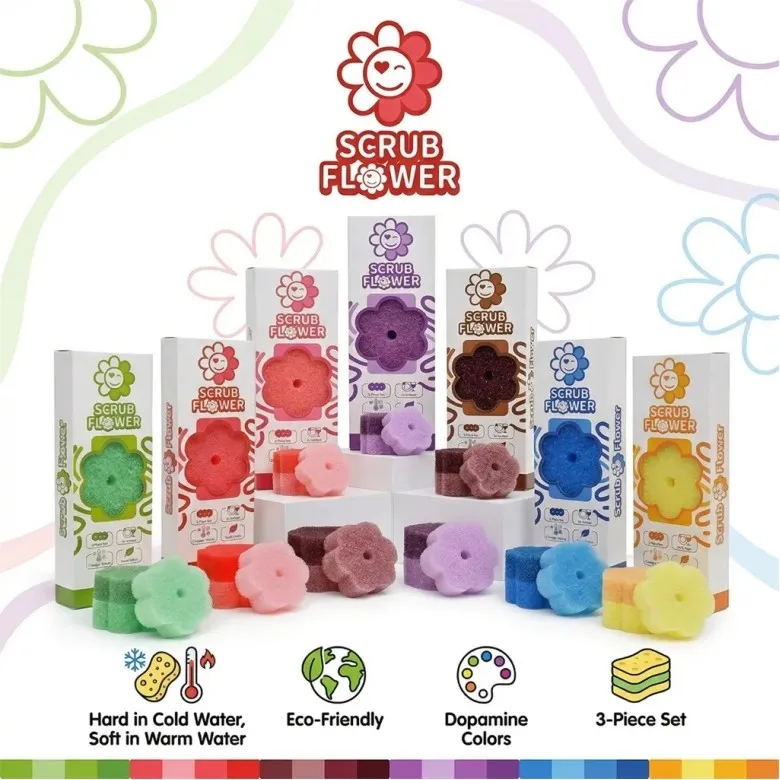
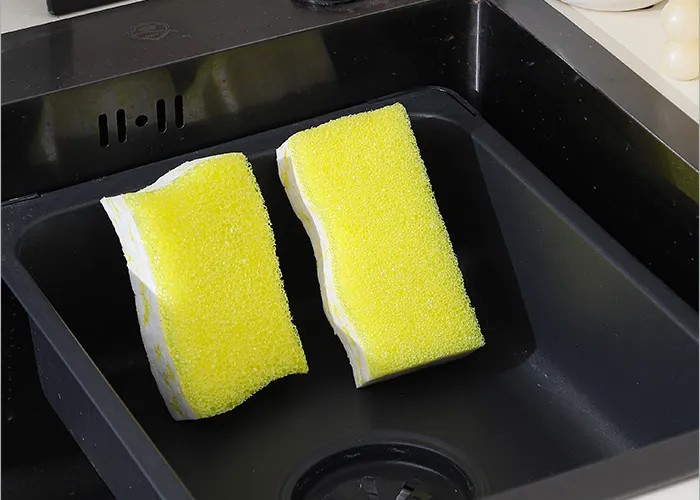
The Flower Scrub Cleaning Sponge is designed for this mixed-surface problem. FoamTech lists it as a temp-sensitive PU dish sponge with a dual texture. It becomes hard in cold water for roasting pan stains and soft in warm water for porcelain and more delicate washing. The listed standard size is 10 x 10 x 4 cm, with a 40 mm thickness, seven color choices, and custom packaging options.
This flower shape is not only decorative. The edges give fingers a better hold, and the open shape can help the sponge dry more easily than a dense block left flat in the sink. The colors also help separate tasks. Many households like using one color for pans, another for cups, and another for the sink area. It sounds small, but small habits keep kitchens cleaner.
Cold Water for Grip, Warm Water for Care
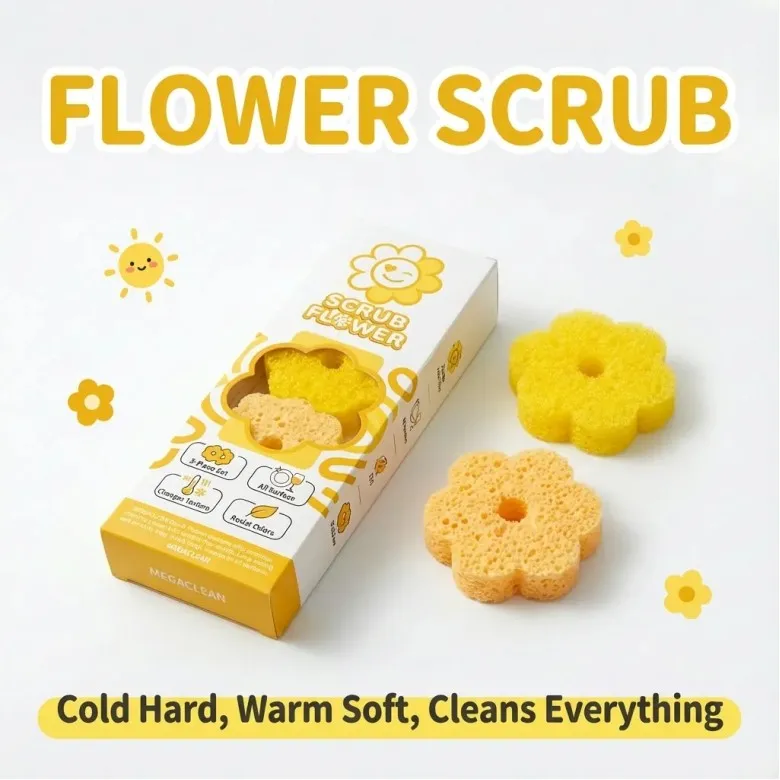
The core benefit of water temperature when using sponges is temperature control. Cold water is used for making a firmer sponge which is ideal for cleaning sticky things, burnt food, edges of pans and greasy utensils. Warm water is used for making a softer sponge which is ideal for cleaning glass, ceramic, porcelain etc. that require gentler cleaning.
This does not mean the sponge should be used with force on every surface. It means users can match the water temperature to the cleaning task. If a pan has heavy residue, start with cold water and light pressure. If the job moves to a glass lid or a ceramic cup, rinse the sponge with warm water and let it soften. The same tool can move between jobs more naturally.
The product information of FoamTech also lists the following features: odor resistant, antibacterial, high absorbent, decontamination ready. For the daily use of your FoamTech sponge it is also important to treat your sponge with care. After use, rinse the sponge and squeeze it out as much as possible. Let the sponge dry up as much as possible and hang it up to dry in a place where it can get some air. No sponge is pleasant when it has been left to sit in dirty water. That is not glamorous advice, but it is true.
Best Kitchen Uses for a Temperature-Responsive Sponge
This type of sponge is most useful where kitchens have both greasy tools and delicate items. It is less about one extreme cleaning job and more about daily switching between surfaces.
Greasy Pans and Food Residue
Using cold water to wipe oily pans, baking trays, pan bottoms, etc. with dried-on sauce, gives the sponge a firmer feel to wipe with, than using warm water and makes for easier removal of residue, than having to use a metal scrubber and risk scratching surface. However, burnt-on food is best left to soak in water first, before wiping with sponge, for best results. This is achieved when stain has loosened a little and surface is wet enough for smooth wiping with the sponge.
Glassware, Ceramic, and Porcelain
Warm water softens the sponge for glass cups, ceramic bowls, plates, and porcelain surfaces. This is useful after a meal when the same sink may hold both cookware and tableware. A softer sponge feels less aggressive, especially on surfaces where people care about shine and finish.
Sink Edges, Faucets, and Countertop Details
How to Use the Sponge for Better Results
Rinse your new temperature-responsive scrub sponge in cold water for extra scrubbing power or warm water for a gentler clean. Check out our range of firmer or softer scrub sponges to find the right one for your specific cleaning task. Add a bit of dish soap to the water when you are cleaning up after food to help remove grease. Rinse your sponge thoroughly after you have finished using it to make sure it is clean for next time.
For better results, keep these habits:
• Use cold water for stuck-on residue and warm water for delicate tableware.
• Let burnt food soak before scrubbing, especially on coated cookware.
• Avoid heavy pressure on glossy, painted, or delicate finishes.
• Use different colors for different cleaning tasks when possible.
• Rinse out oil and food particles after each use.
• Store the sponge in a dry, ventilated spot instead of leaving it in standing water.
These habits are easy enough for home users and useful for foodservice teams as well. In restaurants, cafes, and shared kitchens, color separation and quick drying can help keep cleaning routines more orderly.
Why Retailers and Distributors Pay Attention to This Category
This simple scrub sponge can be promoted in a simple way. To begin with, the scrub sponge becomes firmer in cold water and softer in warm water. Then, there are various uses for the sponge. The unique scrub sponge can be sold on kitchen aisles, in online shops, as part of cookware care products or in cleaning gift sets. As private-label home care products. It also photographs better than plain white sponge blocks because the flower shape and color options show the function at a glance.
For business orders, FoamTech's custom service page covers packaging material selection, product design, and sample confirmation. Its about page introduces the company's cleaning sponge manufacturing background, production scale, foaming equipment, and private-label capability. A distributor can start with a standard size and color mix, then adjust packaging based on the sales channel.
The most useful inquiry details are simple: target market, color set, pack count, packaging type, quantity, and any testing or certification requirements. You can send those details through the contact page before sample confirmation.
FAQ
Q1: What does temperature-responsive mean in a scrub sponge?
A: It means the sponge texture changes with water temperature. Cold water makes it firmer, while warm water makes it softer.
Q2: Can it replace a metal scouring pad?
A: It can handle many kitchen cleaning jobs, but it is not meant to replace every heavy-duty tool. For burnt-on food, soaking first is still helpful.
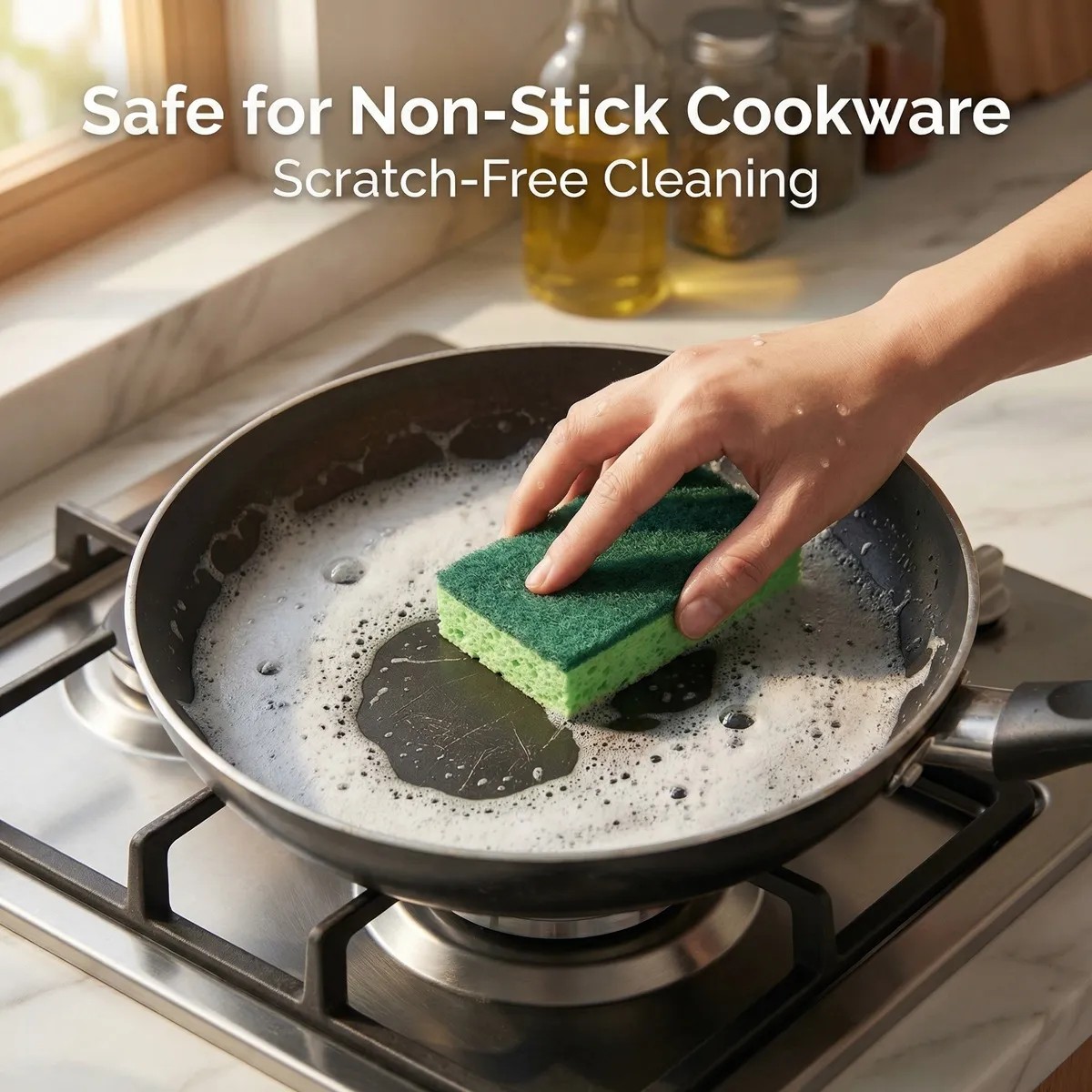
Q3: Is it suitable for non-stick cookware?
A: Warm water gives a softer feel, but users should still follow cookware care instructions and avoid hard pressure on delicate coatings.
Q4: Why does the flower shape matter?
A: The shape improves grip, gives more usable edges, and makes the sponge easier to identify in a colorful kitchen cleaning range.
Q5: Can the product be customized for private-label orders?
A: Yes. Size, color, packaging, and pack count can be discussed for retail, e-commerce, and distributor programs.
A tough kitchen sponge can wipe greasy pans and sauce and wipe down sink areas with tough marks in them and a soft kitchen sponge won’t scratch delicate items like glassware, ceramics and some cookware Many people have several items in the sink area but still manage to pick up the wrong one at the wrong time. A temperature-responsive scrub sponge offers a more flexible solution as the sponge changes feel in response to the water temperature. The sponge will feel one way when dry and another when wet, depending on the temperature of the water, making it ideal for a variety of cleaning tasks around the home.
In cold water, the sponge becomes firmer for tougher residue. In warm water, it becomes softer for more careful washing. The feature is easy to understand because users can feel the change in their hands. That makes it more than a technical point. It becomes part of the daily cleaning habit. FoamTech offers this type of cleaning sponge for home cleaning, retail product lines, and customized supply.
Why One Kitchen Sponge Often Feels Like a Compromise
A regular soft sponge is very comfortable for washing up plates and cups but burnt food on a pan is another story altogether!A rough scouring pad is great for removing stubborn residue but can be a bit of a risk on non-stick surfaces, glass lids and glossy ceramic surfaces.The problem isn’t that one tool is bad. The problem is that a kitchen contains too many surface types for one fixed texture.
The Flower Scrub Cleaning Sponge is designed for this mixed-surface problem. FoamTech lists it as a temp-sensitive PU dish sponge with a dual texture. It becomes hard in cold water for roasting pan stains and soft in warm water for porcelain and more delicate washing. The listed standard size is 10 x 10 x 4 cm, with a 40 mm thickness, seven color choices, and custom packaging options.
This flower shape is not only decorative. The edges give fingers a better hold, and the open shape can help the sponge dry more easily than a dense block left flat in the sink. The colors also help separate tasks. Many households like using one color for pans, another for cups, and another for the sink area. It sounds small, but small habits keep kitchens cleaner.
Cold Water for Grip, Warm Water for Care
The core benefit of water temperature when using sponges is temperature control. Cold water is used for making a firmer sponge which is ideal for cleaning sticky things, burnt food, edges of pans and greasy utensils. Warm water is used for making a softer sponge which is ideal for cleaning glass, ceramic, porcelain etc. that require gentler cleaning.
This does not mean the sponge should be used with force on every surface. It means users can match the water temperature to the cleaning task. If a pan has heavy residue, start with cold water and light pressure. If the job moves to a glass lid or a ceramic cup, rinse the sponge with warm water and let it soften. The same tool can move between jobs more naturally.
The product information of FoamTech also lists the following features: odor resistant, antibacterial, high absorbent, decontamination ready. For the daily use of your FoamTech sponge it is also important to treat your sponge with care. After use, rinse the sponge and squeeze it out as much as possible. Let the sponge dry up as much as possible and hang it up to dry in a place where it can get some air. No sponge is pleasant when it has been left to sit in dirty water. That is not glamorous advice, but it is true.
Best Kitchen Uses for a Temperature-Responsive Sponge
This type of sponge is most useful where kitchens have both greasy tools and delicate items. It is less about one extreme cleaning job and more about daily switching between surfaces.
Greasy Pans and Food Residue
Using cold water to wipe oily pans, baking trays, pan bottoms, etc. with dried-on sauce, gives the sponge a firmer feel to wipe with, than using warm water and makes for easier removal of residue, than having to use a metal scrubber and risk scratching surface. However, burnt-on food is best left to soak in water first, before wiping with sponge, for best results. This is achieved when stain has loosened a little and surface is wet enough for smooth wiping with the sponge.
Glassware, Ceramic, and Porcelain
Warm water softens the sponge for glass cups, ceramic bowls, plates, and porcelain surfaces. This is useful after a meal when the same sink may hold both cookware and tableware. A softer sponge feels less aggressive, especially on surfaces where people care about shine and finish.
Sink Edges, Faucets, and Countertop Details
How to Use the Sponge for Better Results
Rinse your new temperature-responsive scrub sponge in cold water for extra scrubbing power or warm water for a gentler clean. Check out our range of firmer or softer scrub sponges to find the right one for your specific cleaning task. Add a bit of dish soap to the water when you are cleaning up after food to help remove grease. Rinse your sponge thoroughly after you have finished using it to make sure it is clean for next time.
For better results, keep these habits:
• Use cold water for stuck-on residue and warm water for delicate tableware.
• Let burnt food soak before scrubbing, especially on coated cookware.
• Avoid heavy pressure on glossy, painted, or delicate finishes.
• Use different colors for different cleaning tasks when possible.
• Rinse out oil and food particles after each use.
• Store the sponge in a dry, ventilated spot instead of leaving it in standing water.
These habits are easy enough for home users and useful for foodservice teams as well. In restaurants, cafes, and shared kitchens, color separation and quick drying can help keep cleaning routines more orderly.
Why Retailers and Distributors Pay Attention to This Category
This simple scrub sponge can be promoted in a simple way. To begin with, the scrub sponge becomes firmer in cold water and softer in warm water. Then, there are various uses for the sponge. The unique scrub sponge can be sold on kitchen aisles, in online shops, as part of cookware care products or in cleaning gift sets. As private-label home care products. It also photographs better than plain white sponge blocks because the flower shape and color options show the function at a glance.
For business orders, FoamTech's custom service page covers packaging material selection, product design, and sample confirmation. Its about page introduces the company's cleaning sponge manufacturing background, production scale, foaming equipment, and private-label capability. A distributor can start with a standard size and color mix, then adjust packaging based on the sales channel.
The most useful inquiry details are simple: target market, color set, pack count, packaging type, quantity, and any testing or certification requirements. You can send those details through the contact page before sample confirmation.
FAQ
Q1: What does temperature-responsive mean in a scrub sponge?
A: It means the sponge texture changes with water temperature. Cold water makes it firmer, while warm water makes it softer.
Q2: Can it replace a metal scouring pad?
A: It can handle many kitchen cleaning jobs, but it is not meant to replace every heavy-duty tool. For burnt-on food, soaking first is still helpful.
Q3: Is it suitable for non-stick cookware?
A: Warm water gives a softer feel, but users should still follow cookware care instructions and avoid hard pressure on delicate coatings.
Q4: Why does the flower shape matter?
A: The shape improves grip, gives more usable edges, and makes the sponge easier to identify in a colorful kitchen cleaning range.
Q5: Can the product be customized for private-label orders?
A: Yes. Size, color, packaging, and pack count can be discussed for retail, e-commerce, and distributor programs.
Prev: No data
Related Recommendations

Family owned company, globalleader in development andmanufacturing of home careproducts for private label andcontract manufacturing
Copyright © 2026 FoamTech (Zhejiang) New Materials Co., Ltd.